


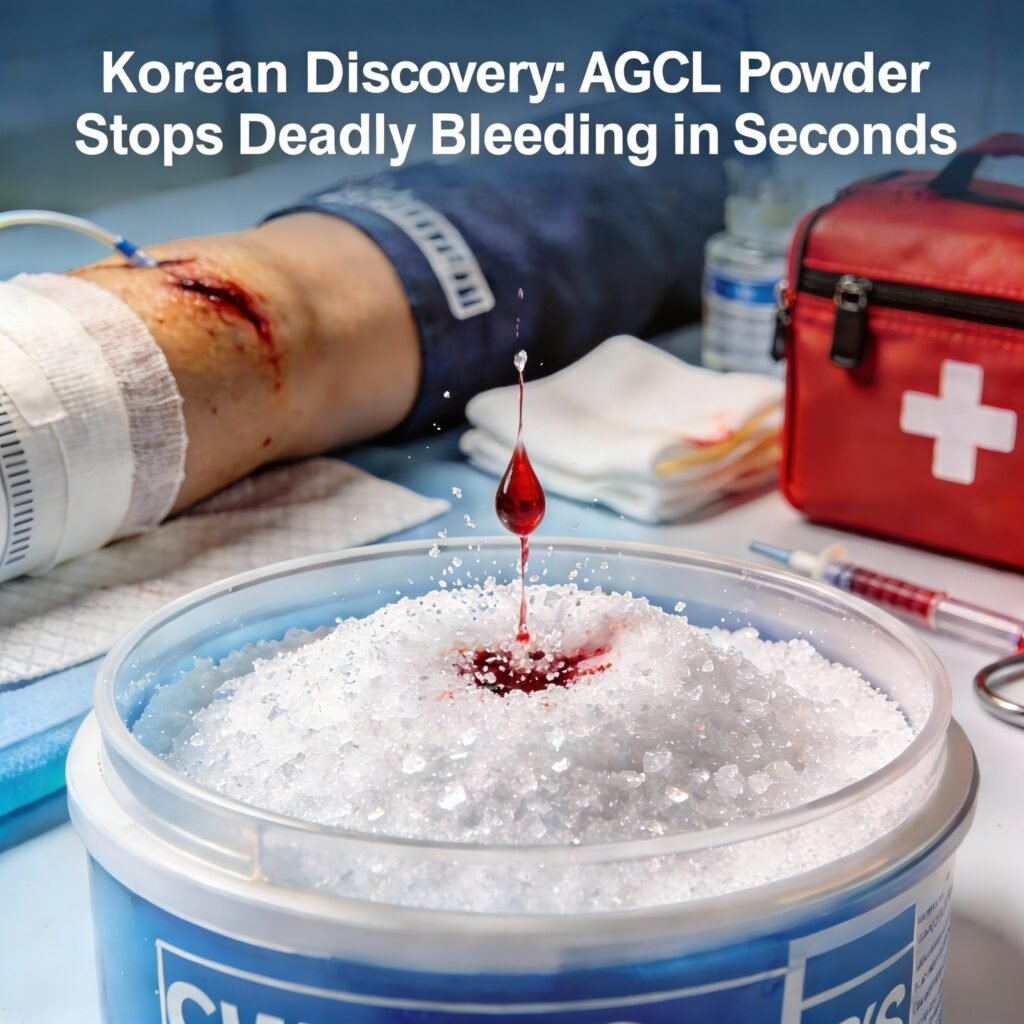
A team of scientists from South Korea has developed a revolutionary medical powder that can stop severe bleeding in a few seconds, a discovery that could dramatically reduce deaths caused by road accidents, violence, and natural disasters.
The technology was developed by the KAIST Institute of NanoCentury and introduced in the international journal Advanced Functional Materials.
They hope that it can become a game changer in emergency medicine and perhaps on the battlefield, a factory of potential uses, including treating trauma and cardiac arrest , to 911 calls for everything from concerns about stroke to opioid overdoses.
Bleeding that cannot be stopped, medically known as hemorrhage, is one of the leading causes of preventable death worldwide. As many as 40 percent of trauma fatalities are a result of bleeding that can’t be stopped in time, according to data from the World Health Organization and the Centers for Disease Control and Prevention.
Existing approaches, such as bandages, gauze, or tourniquets, may take minutes to become effective and can also prove inadequate in cases of severe injuries. “This is a major gap, one AGCL Powder fills by halting blood flow in virtually no time at all.
The AGCL Powder is composed of naturally occurring and bio-compatible materials that are approved for medical use, such as those found in seaweed, microbes, and shellfish.
When bleeding, apply this directly to a cut.
- The powder reacts right away when it comes into contact with blood
- Quick dissolving to a velvety gel within 1 second
- The gel stops the bleeding and takes in the massive amount of blood.
- The seal is stable even with a higher blood pressure
Instead of conventional products, the powder adapts to the shape of the wound and will not wash off during severe injuries.
In experimental models of serious injury in the laboratory and in animals, AGCL Powder proved especially effective:
- Hemorrhage halted in seconds, not minutes
- Decrease in blood loss up to 70%
- Low damage to normal blood cells
- Excellent antibacterial activity against common infections
- Over time, the material safely degrades within the body
No significant safety concerns were reported by researchers during testing, paving the way for further clinical trials of the powder.
Fast bleeding control could be the difference between life and death on the way to a hospital in cases of road crashes or industrial accidents.
The lightweight, shelf-stable powder can be carried easily by soldiers, paramedics, and rescue workers operating in remote or high-risk areas.
Surgeons can easily apply AGCL Powder during operations to better manage bleeding and minimize complications.
Without the need for refrigeration or electricity, the powder could be particularly valuable in rural and underdeveloped regions.
Medical experts note that AGCL Powder outperforms many existing bleeding control products by working faster, causing less tissue damage, and offering built-in infection protection — without generating heat or requiring complex application.
Although the results are promising, researchers emphasize that human clinical trials are the next critical step. Regulatory approvals from global health authorities will be required before public use.
If development continues as planned, experts believe AGCL-based products could reach emergency services and hospitals within the next few years.
Until such superior remedies as AGCL Powder are readily accessible, clinicians recommend:
- Press down on the wound
- Raise the injured area, if feasible
- Tourniquet is an option of last resort
- Seek emergency medical help immediately
Medical scientists insist that AGCL Powder is not just a scientific breakthrough but also the most viable means of saving thousands of lives every year by tackling one of the highest-priority issues in trauma care.
Disclaimer: This article is for informational purposes only and does not constitute medical advice. Clinical approval is pending.