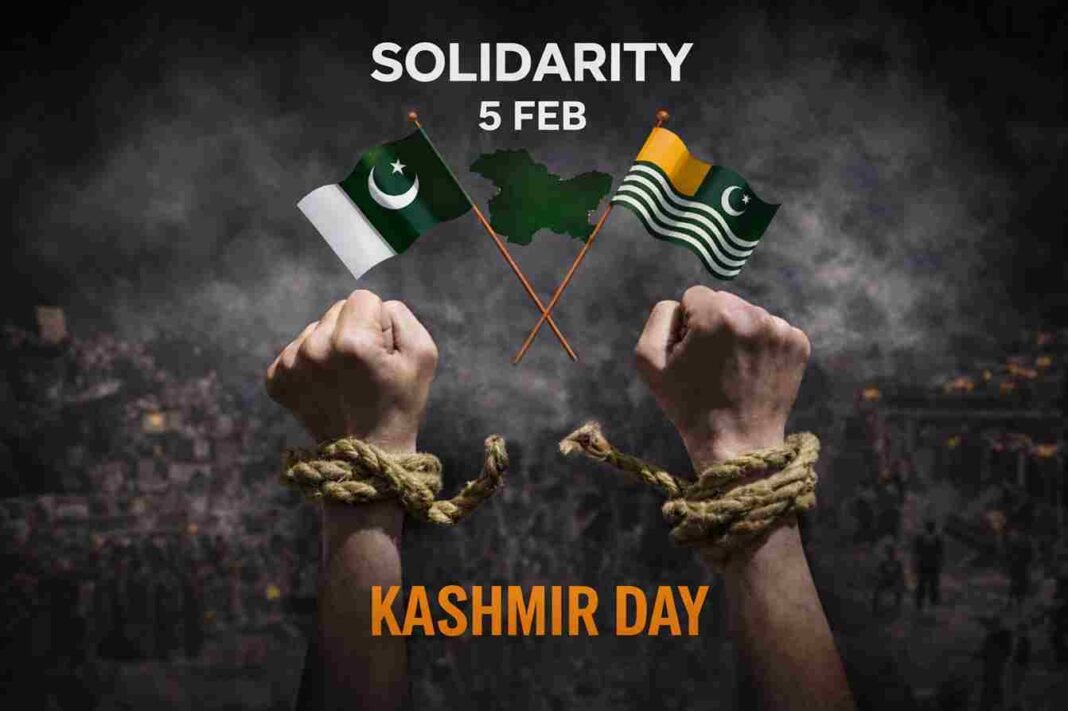
It is often said that some days are not remembered for celebration, but for conscience. Kashmir Day is observed in that spirit. Through it, solidarity is expressed with a people whose lives have been shaped by decades of conflict, uncertainty, and loss.
On this day, the Kashmir issue is gently but firmly brought back into global conversations. The world is reminded that unresolved disputes do not fade with time—they deepen. And it is quietly emphasized that when injustice is ignored, it does not disappear; it grows.
A History Marked by Struggle and Sacrifice
The story of Kashmir began to change in 1947, when the partition of the subcontinent left the region disputed. Since then, life in Kashmir has been lived under constant tension. Streets have been silenced by curfews, voices have been muted by communication shutdowns, and daily routines have been interrupted by uncertainty.
Yet, through years of hardship, something else has been preserved—hope. It has been passed from one generation to the next, like an inheritance. Even when circumstances were harsh, the belief in dignity and self-determination was not surrendered.
Human Rights at the Core of the Kashmir Issue
Over time, the Kashmir issue has come to be recognized not only as a political matter, but as a human one. Concerns have been raised by international organizations, and stories have been documented—of detentions, restrictions, and lives lived under constant surveillance.
These realities are not recalled to inflame anger, but to awaken empathy. On Kashmir Day, the world is urged to look beyond borders and policies, and to see people—families, children, and futures waiting to be protected.
The Role of Unity and Awareness
Each year, Kashmir Day is marked through prayers, gatherings, discussions, and digital campaigns. Voices are raised, not in noise, but in purpose. Stories are shared so they are not forgotten, and younger generations are reminded of why remembrance matters.
It is believed that awareness changes perspective. And when perspectives change, the path toward peace becomes clearer.
Pakistan’s Commitment and a Shared Global Duty
Kashmir Day is observed in Pakistan as a national expression of support. Through it, moral, political, and diplomatic backing is reaffirmed for the Kashmiri people. But the burden of responsibility is not placed on one nation alone.
The international community is repeatedly called upon to move beyond concern and toward action. Long-standing resolutions are meant to be implemented, and dialogue is meant to be facilitated—not delayed.
A Call for Peace, Justice, and Dignity
Kashmir Day is not marked to fuel hostility. It is observed to keep alive the idea of peace—peace that is built on justice and dignity. The right of people to decide their own future is emphasized as a principle, not a favor.
It is widely believed that lasting peace in South Asia cannot be achieved until this issue is resolved fairly and peacefully.
Final Note: Keeping Hope Alive
Kashmir Day continues to stand as a symbol of endurance. It reflects the belief that even long struggles are not endless, and that truth has a way of surviving silence. As long as voices are raised with conscience and unity, hope is kept alive.
The story of Kashmir is still being written.
And it is hoped that the world will continue to read, listen, and care.