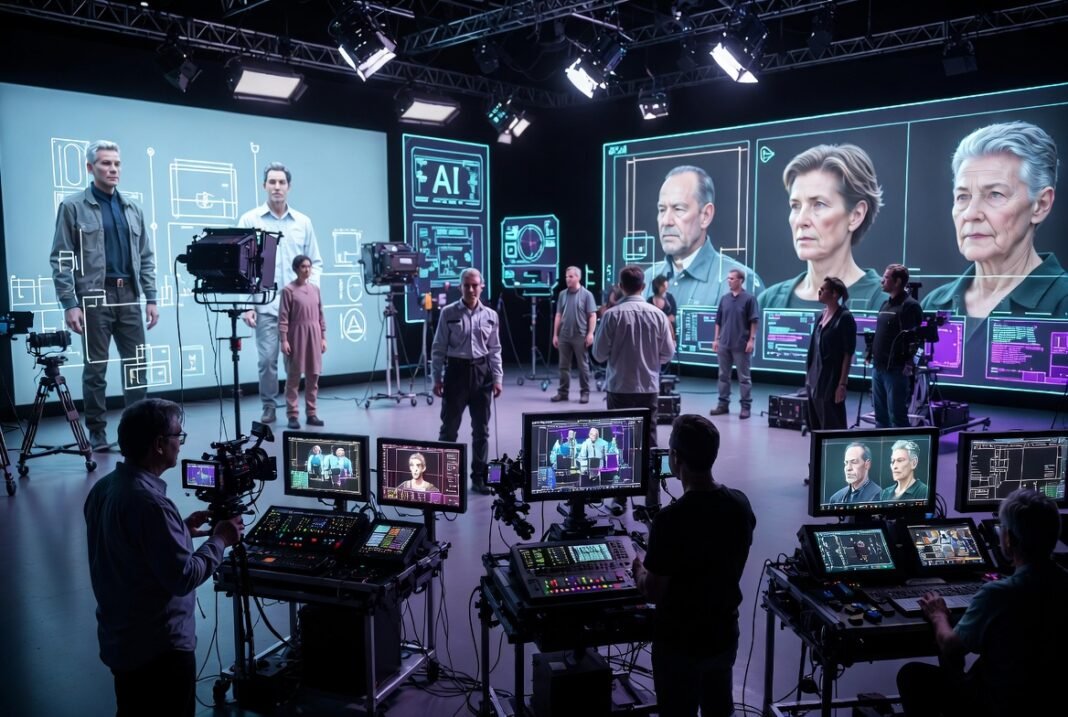
The film industry is changing rapidly. Filmmakers now rely on artificial intelligence (AI) for cameras, direction, music, and editing. AI is reshaping how films are made and how audiences experience them.
The Collective Artist Network, once famous for managing top actors’ careers, now creates digital actors. Their Bangalore studios produce films and series based on Hindu epics like Ramayana and Mahabharata using AI technology.
India produces more films than any other country. Stars like Shah Rukh Khan and Amitabh Bachchan attract millions of fans. But online streaming platforms reduce cinema audiences.
In 2019, over a billion people visited theaters. By 2025, the number dropped sharply. To adapt, filmmakers increasingly use AI. They create fully AI-generated films, add automated dubbing in multiple languages, and even re-edit old films with new endings. These AI innovations save time and cut costs, although audience reactions vary.
For example, Eros Media World used AI to release the 2013 film Raanjhanaa with a new ending showing the main character alive. Actor Dhanush criticized the change, saying it harmed the film’s original spirit. Despite this, the AI-edited version performed well commercially.
Companies like Neural Garage develop technology that dubs films in multiple languages while keeping lip movements natural. Global tech giants, including Microsoft, Google, and NVIDIA, collaborate with Indian filmmakers to improve AI tools for cinema.
Experts warn that excessive AI use can affect creativity. Renowned director Anurag Kashyap says that business priorities drive Indian filmmaking, which encourages more AI adoption.
AI helps filmmakers produce content faster and more efficiently. It allows them to experiment with new ideas and reach wider audiences. Filmmakers can reduce costs, shorten production times, and even revive classic films for modern viewers.
Yet, AI also raises questions. Can films retain their original essence and creative quality if AI handles key aspects of storytelling? Will audiences accept AI-driven movies as much as traditional ones?
Overall, AI is leading the film industry into a new era. Filmmakers gain speed, convenience, and flexibility, while audiences enjoy fresh experiences. However, maintaining creativity and the soul of cinema remains essential.
The future of filmmaking will likely combine human creativity and AI efficiency. Directors, writers, and editors will continue to craft stories, while AI enhances production. The industry stands at a crossroads: adapt to AI or risk losing touch with traditional artistry.