


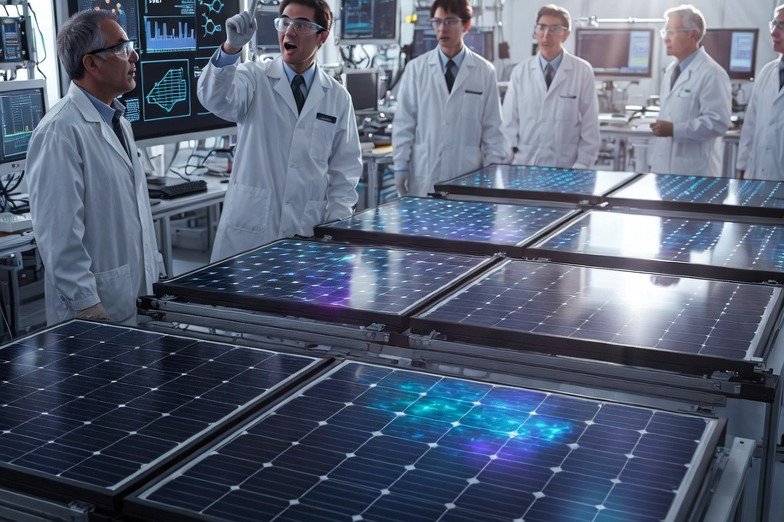
Japan has made a remarkable solar energy technology breakthrough. Scientists have created a new material that allows solar cells to generate more energy from sunlight than ever before.
A team of researchers at Kyushu University developed the material with a unique “spin-flip” emitter. This emitter captures energy from sunlight that usually converts to heat and goes to waste. By reclaiming this energy, solar cells become far more efficient.
Traditional solar cells can only convert a portion of sunlight into electricity. When high-energy photons hit the cell, a lot of energy is lost as heat. Before this discovery, solar cells could only use about one-third of the available sunlight.
The new material solves this problem. It allows solar cells to convert more of the sun’s energy into electricity. As a result, the energy production rate increased by 130%. This leap can revolutionize solar power generation.
The process works by converting photons into energy carriers called excitons. In conventional solar cells, many photons lose their energy as heat before they can create excitons. The spin-flip emitter recycles this lost energy and produces additional electricity.
Experts say this breakthrough has the potential to make solar energy more competitive with fossil fuels. Higher efficiency means fewer solar panels are needed for the same energy output. It also reduces costs for large-scale solar farms and residential installations.
The discovery could impact both renewable energy adoption and global efforts to reduce carbon emissions. More efficient solar cells mean cleaner electricity and lower dependence on non-renewable fuels.
Japanese researchers are now testing the material in different solar cell designs. Early results show consistent performance improvements under varying sunlight conditions. This indicates the technology is ready for practical use.
Industry leaders are optimistic. They believe this solar energy technology breakthrough will attract more investment in renewable energy projects worldwide. Solar panels using this material may appear in homes, offices, and power plants within a few years.
This advancement also encourages other countries to innovate in solar power. Scientists worldwide are exploring ways to further increase solar cell efficiency and reduce energy loss. Japan’s success may accelerate these efforts globally.
Beyond energy efficiency, the material is stable and durable. It can withstand high temperatures and intense sunlight without losing performance. This ensures a longer lifespan for solar panels and reliable energy production.
Governments and energy companies are closely watching this breakthrough. Many see it as a step toward a sustainable future. As solar cells become more efficient, clean energy adoption will accelerate, helping to combat climate change.
In summary, Japan’s development of a new solar cell material marks a major milestone in renewable energy. The solar energy technology breakthrough promises higher efficiency, lower costs, and cleaner electricity. It could change the way we harness sunlight and shape the future of energy worldwide.