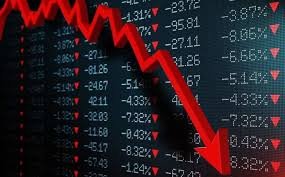
Middle East Tensions sent shockwaves through international financial markets, causing sharp declines across major global indices. Investors lost billions in market value as fear and uncertainty gripped trading floors worldwide.
The impact of Middle East Tensions became visible from the very first trading session of the week. Asian markets opened under intense selling pressure, reflecting growing investor anxiety over the escalating situation in the region.
Japan’s Nikkei index dropped by 1.6 percent as traders reacted cautiously to geopolitical developments. Hong Kong’s Hang Seng index fell by 1.7 percent, while Singapore’s Straits Times recorded a significant decline of 1.8 percent.
India’s Nifty 50 also slipped by 0.8 percent, highlighting how escalations affected even the broader South Asian markets. Meanwhile, the Shanghai and Australian markets reported losses of 0.5 to 0.6 percent.
Financial analysts say that these Tensions have created deep uncertainty in global markets. Investors fear disruptions in oil supply, trade routes, and regional stability. As a result, many shifted their investments toward safer assets, increasing volatility in equity markets.
The crisis has also influenced Gulf markets. Due to rising instability and economic uncertainty linked to Middle East Tensions, the United Arab Emirates officially announced the closure of the Dubai Stock Exchange on Monday and Tuesday to manage market risk.
In Pakistan, the effects were immediate and severe. The Pakistan Stock Exchange crashed shortly after opening on the first trading day of the week. Panic selling dominated the session as investors reacted to developments connected to war.
Market experts warn that if the Middle East Tensions continue to escalate, global markets may face further pressure in the coming days. Investors are now closely monitoring geopolitical updates, energy prices, and diplomatic responses.
For now, uncertainty remains high. Financial markets around the world continue to respond sharply to every development tied to Middle East Tensions, underscoring how deeply interconnected the global economy has become.