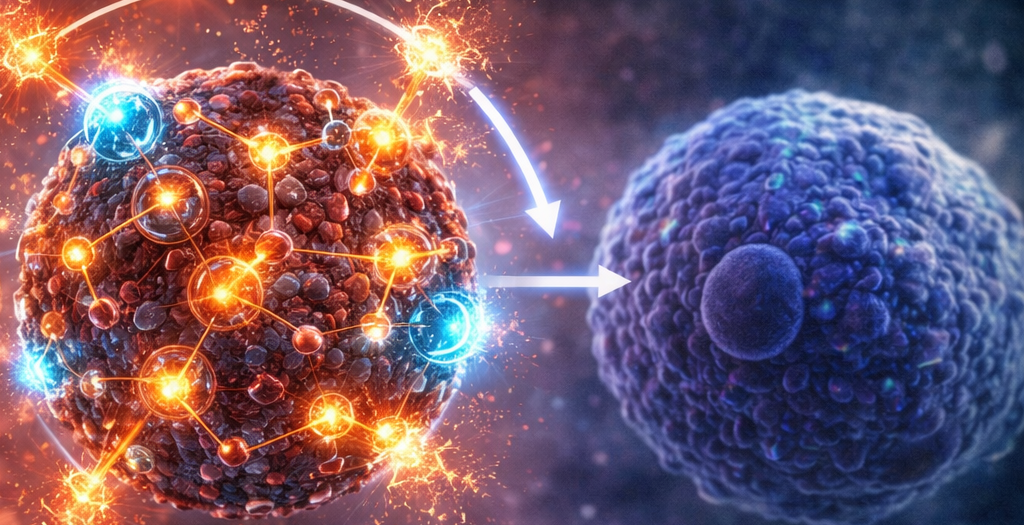
Corvallis, Oregon – Researchers at Oregon State University have developed a new nanomaterial designed to destroy cancer cells from within. The material triggers two chemical reactions inside tumor cells.
This innovative approach could change the way doctors treat tumors. The material triggers two chemical reactions inside tumor cells. This causes severe oxidative stress in the cancer cells, while leaving healthy tissue unharmed.
This discovery strengthens the field of chemodynamic therapy (CDT). CDT is a form of cancer treatment that uses the unique chemical environment inside tumors. Tumor cells are more acidic than normal cells.
They also have higher amounts of hydrogen peroxide. These properties make them ideal targets for this type of therapy.
Traditional CDT works by producing hydroxyl radicals. These molecules are highly reactive. They attack cancer cells by damaging fats, proteins, and DNA.
Modern CDT techniques also generate singlet oxygen inside tumors. Singlet oxygen is another reactive molecule. Its unique electron spin state makes it highly effective at destroying cancer cells.
According to lead researcher Olya Teratolake, existing CDT agents have limitations. They can either produce hydroxyl radicals or singlet oxygen, but not both.
They also lack the catalytic power to sustain long-term production of reactive molecules. This limits their effectiveness. Often, tumors shrink only partially, and long-term benefits are minimal.
To overcome these challenges, the team developed a new CDT nanomaterial using an iron-based metal-organic framework (MOF). This nanomaterial can produce hydroxyl radicals and singlet oxygen simultaneously. This dual action significantly increases its cancer-fighting potential.
Tests show that the MOF has a strong toxic effect on various cancer cell lines. At the same time, it causes minimal damage to normal cells.
This selective targeting makes it a safer option than many traditional therapies. Experts describe this as a promising step in precision cancer treatment.
The nanomaterial also opens possibilities for personalized therapy. Each tumor has a unique chemical environment. With this approach, scientists can design treatments that exploit these differences. This could improve outcomes and reduce side effects.
Furthermore, the MOF-based nanomaterial is highly versatile. Researchers are exploring ways to combine it with other therapies, such as chemotherapy and immunotherapy. Early studies suggest that combining these methods could enhance overall effectiveness.
Patients and healthcare providers are hopeful. Current cancer treatment methods, including surgery, radiation, and chemotherapy, often harm healthy cells. This new approach offers a targeted alternative.
By attacking tumor cells specifically, it could reduce side effects and improve patient quality of life.
The discovery also highlights the importance of nanotechnology in medicine. Small-scale materials can have powerful effects. They can reach cells directly, trigger precise reactions, and reduce collateral damage.
This MOF-based nanomaterial is a prime example of how nanotechnology can advance cancer treatment.
In conclusion, this research marks a major milestone. The ability to destroy cancer cells from within while sparing healthy tissue is groundbreaking. Scientists hope further studies will confirm its safety and effectiveness in humans. If successful, this could become a key tool in the fight against cancer.