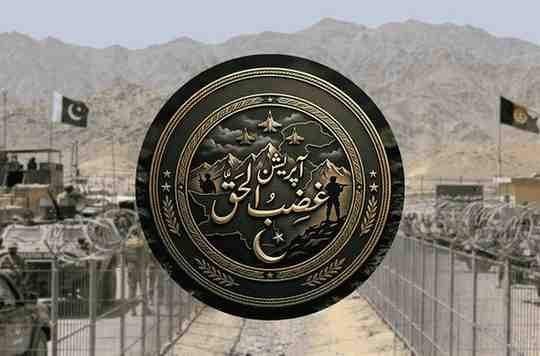
The geopolitical landscape of South Asia shifted fundamentally on the night of February 26, 2026. What had been decades of cold tension and sporadic border skirmishes along the 2,640km Durand Line erupted into what Pakistani officials are now calling an “Open War.”
Under the banner of Operation Ghazab Lil Haq (Righteous Fury), the Pakistan Armed Forces have transitioned from a policy of “strategic restraint” to a full-scale military offensive against the Afghan Taliban regime.
This comprehensive analysis explores the roots of this conflict, the timeline of the “Black Week” in February, and the tactical breakdown of the operation that has the world holding its breath.
What is Operation Ghazab Lil Haq?
Operation Ghazab Lil Haq, literally translated as “Wrath for the Truth” or “Righteous Fury” (Ghazab Lil Haq), is the code name for Pakistan’s 2026 large-scale military offensive into Afghan territory.
Launched officially in the late hours of February 26, 2026, it marks the first time in modern history that the Pakistan military has openly and officially conducted high-intensity, multi-service kinetic operations targeting the central military infrastructure of the Afghan Taliban regime.
The operation is not merely a border skirmish; it is a declared “Open War” response to what Islamabad terms “unprovoked aggression” and the consistent hosting of terrorist proxies.
While previous operations like Zarb-e-Azb or Radd-ul-Fasaad were internal counter-terrorism efforts, Ghazab Lil Haq is an externalized campaign involving precision airstrikes on sovereign Afghan cities, including Kabul and Kandahar and a ground offensive to seize strategic border heights.
133 Taliban Killed, 27 Posts Destroyed in Major Pakistan Strike
The Genesis of the Conflict: A Three-Year Buildup
To understand Operation Ghazab Lil Haq, one must look back at the power vacuum created after the 2021 withdrawal of NATO forces from Kabul.
While the world expected the Taliban to focus on internal governance, Pakistan found itself increasingly at odds with its neighbor over two primary issues: the Durand Line and the Tehrik-i-Taliban Pakistan (TTP), also known as Fitna al-Khawarij.
The Durand Line, established in 1893, has never been formally recognized by any Afghan government, including the current Taliban administration. In 2024 and 2025, the Taliban frequently disrupted Pakistan’s efforts to complete its border fencing project, leading to “fencing brawls” that often turned lethal.
Islamabad’s primary grievance has been the presence of TTP and ISIS-K (Khorasan Province) hideouts on Afghan soil. Despite the 2020 Doha Agreement’s promise that Afghan soil would not be used for terrorism, Pakistan recorded a 60% surge in terror attacks throughout 2025, all traced back to cross-border planning.
No Compromise on National Defence: PM Warns
Historical Context: The Durand Line Dispute
The Durand Line remains the core geographical bone of contention. For over a century, Afghan leaders have viewed the 1893 treaty between Sir Mortimer Durand and Amir Abdur Rahman Khan as a “colonial imposition.” The Afghan Taliban, despite being historically supported by elements in Pakistan, have proven even more nationalist regarding this border than their predecessors.
Throughout 2025, the Taliban began constructing military outposts directly on the line, often encroaching into Pakistani territory. Pakistan’s multi-billion dollar border fencing project, intended to stop smuggling and militant infiltration, became a target of vandalism. Each time a fence was cut or a Pakistani post was fired upon, the tension ratcheted up.
By early 2026, the diplomatic channels were exhausted, and the military logic of “pre-emptive defense” began to dominate the GHQ in Rawalpindi.
The Rise of Terrorism: TTP and the Sanctuary Issue
The most immediate catalyst for Operation Ghazab Lil Haq was the intolerable rise of the Tehrik-i-Taliban Pakistan (TTP). In 2025, the TTP transitioned from fragmented cells to a more organized force, reportedly using sophisticated night-vision gear and American-made weaponry left behind by NATO.
Pakistani intelligence (ISI) provided the Taliban regime with “dossiers” containing GPS coordinates of TTP camps in Nangarhar and Khost.
However, Kabul consistently denied their existence or claimed they were “refugee camps.” This denialism reached its peak in late 2025 when the TTP launched a series of “spring offensives” within Pakistan, killing hundreds of security personnel.
The Pakistani state concluded that the Afghan Taliban were not just unable but unwilling to stop the TTP, viewing them as a strategic asset to keep Pakistan off-balance.
The 2025 Skirmishes: A Year of Escalation
The road to “Open War” was paved with the blood of skirmishes in 2025. In October 2025, a major border clash near the Torkham crossing resulted in the capture of three Pakistani soldiers. Although they were released in January 2026 following Saudi Arabian mediation, the trust between the two military establishments was permanently shattered.
On February 11, 2026, Defense Minister Khawaja Asif issued a public ultimatum, stating that Pakistan would “not hesitate to hunt down terrorists inside Afghanistan” if the Taliban did not dismantle TTP camps before the start of Ramadan. This was followed by a formal démarche to the Afghan ambassador on February 19.
The situation reached a breaking point during what analysts are calling the “Black Week” of February 2026. On February 6, a devastating suicide bombing at a Shiite mosque in Islamabad killed 31 worshippers.
While ISIS-K claimed responsibility, Pakistani intelligence provided evidence of logistical support from within Afghan territory. On February 16, TTP militants rammed an explosives-laden vehicle into a checkpoint in the Bajaur sector, killing 11 security personnel.
Phase One: The Intelligence-Based Strikes (February 21 – 22)
On February 21, 2026, the Pakistan Air Force (PAF) broke the “sovereignty barrier.” In a series of intelligence-based operations (IBOs), PAF jets—specifically the JF-17 Block III and F-16 C/D Block 52s—targeted seven specific militant camps in Nangarhar, Paktika, and Khost provinces.
The strikes killed an estimated 80 TTP and ISIS-K militants, including high-value commanders. However, the Taliban regime responded by claiming that the strikes hit civilian homes and a religious seminary, reporting 18 civilian deaths in the Bihsud district of Nangarhar.
This “truth gap” fueled a massive propaganda war on social media, with the United Nations Assistance Mission in Afghanistan (UNAMA) reporting that while infrastructure was destroyed, the civilian toll remained a point of intense contention
The Turning Point: Unprovoked Border Fire (February 26)
The official launch of Operation Ghazab Lil Haq was a direct response to what the Ministry of Information described as a “massive miscalculation” by the Taliban.
At approximately 8:00 PM local time on February 26 (the 9th of Ramadan), Afghan Taliban forces initiated a coordinated, multi-point assault on Pakistani border positions.
Using light weaponry, heavy mortars, and repurposed quadcopter drones, they targeted sectors in Chitral, Khyber, Mohmand, Kurram, and Bajaur. The initial barrage martyred two Pakistani soldiers—Zia-ul-Haq and Muhammad Tariq—and injured three others.
By 11:00 PM, the Prime Minister’s spokesperson for foreign media confirmed that “patience had run out” and a decisive counter-offensive under the banner of Ghazab Lil Haq had been authorized.
Hour-by-Hour Timeline: February 26-27, 2026
February 26, 8:00 PM: Afghan Taliban forces open fire on multiple border posts in KP.
February 26, 10:30 PM: GHQ Rawalpindi authorizes “Operation Ghazab Lil Haq.”
February 27, 12:15 AM: PAF jets scramble from bases in Peshawar and Risalpur.
February 27, 1:45 AM: First reports of massive explosions in Kabul near the 313 Badri Brigade HQ.
February 27, 2:30 AM: Precision strikes hit Kandahar and Paktia military targets.
February 27, 3:00 AM: Pakistan Army ground forces (XI Corps) launch assaults in the Nawagai and Tirah sectors.
February 27, 5:00 AM: PAF strikes reported near Kabul International Airport.
February 27, 9:00 AM: Information Minister Attaullah Tarar announces the destruction of 16 Taliban posts and heavy casualties.
February 27, 12:00 PM: Pakistani flag hoisted at captured posts in the Gursal sector.+3
Tactical Breakdown: The Air Campaign
Unlike previous skirmishes, Operation Ghazab Lil Haq is a joint-services kinetic operation involving the Pakistan Army’s XI and XII Corps and the Pakistan Air Force. It is designed to degrade the military infrastructure that facilitates cross-border aggression.
The Strategic Targets in Kabul
The PAF campaign was not limited to the border. In Kabul, strikes targeted the 313 Badri Brigade HQ and the 201 KBW Brigade HQ. Reports from local sources, including Aamaj News, indicated massive explosions near Kabul International Airport around 5:00 AM on February 27.
These strikes were intended to send a clear message: the sanctuary of the capital would no longer protect the Taliban military leadership from the consequences of border provocations.
The Kandahar and Paktia Fronts
In Kandahar, precision munitions struck the 205 Corps HQ, as well as a large ammunition depot and logistics base. Kandahar is the spiritual heart of the Taliban movement, and striking here was a psychological blow as much as a tactical one.
Further strikes in Paktia neutralized another Corps Headquarters, effectively paralyzing the regional command structure of the Taliban forces in the eastern and southern zones.
Tactical Breakdown: The Ground Offensive
On the ground, Pakistani troops launched effective “sweep and clear” operations. The goal was to seize the high ground that allowed the Taliban to fire down into Pakistani valleys.
Nawagai and Tirah Sectors
In the Nawagai (Bajaur) and Tirah (Khyber) sectors, the Pakistan Army overran multiple hostile posts. Images began circulating on state media showing the Pakistani national flag being hoisted over captured positions in the Gursal sector and near the Kharlachi Terminal.
These are rugged, mountainous terrains where the Pakistan Army utilized specialized mountain warfare units and combat drones to outmaneuver the Taliban fighters.
Seizing Border Heights
Security sources confirmed the destruction of an Afghan Taliban base at Barikot near Chitral and several sanctuaries near the Kurram sector. In South Waziristan’s Shawal sector, a strategic post in Afghanistan’s Paktika province was seized.
By taking these posts, Pakistan has created a “buffer zone” several kilometers deep into Afghan territory to prevent future mortar fire on Pakistani civilians
Hardware and Technical Specifications: The Machinery of War
The success of Operation Ghazab Lil Haq relied heavily on Pakistan’s recent technological advancements.
The Pakistan Air Force (PAF)
The JF-17 Block III played a starring role, utilizing its AESA radar and long-range PL-15 and PL-10 missiles to maintain air superiority, although the Afghan Taliban have no air force to speak of.
The more critical tool was the use of “Smart Standoff Weapons” (SSW) that allowed PAF jets to hit targets in Kabul while remaining close to the border.
Unmanned Aerial Vehicles (UAVs)
Pakistan deployed the Shahpar-II and Bayraktar TB2 drones for continuous surveillance and precision strikes. These drones were instrumental in “thwarting quadcopter attacks” launched by the Taliban, as they could loiter over the border and strike launch teams before they could retreat.
Artillery and Ground Assets
The Pakistan Army utilized the SH-15 self-propelled howitzers for high-mobility artillery support. On the ground, the Al-Khalid and VT-4 tanks were seen moving toward the border, though the terrain limited their use primarily to valley floors and major crossings.
Statistical Impact: Casualties and Losses (As of February 27, 2026)
The following data summarizes the impact reported by official Pakistani sources and international monitoring agencies:
Taliban Losses:
- 274 Taliban regime personnel and Khawarij fighters confirmed killed in action (KIA).
- Over 400 fighters wounded.
- More than 74 Taliban regime border posts completely destroyed.
- 18 Taliban posts seized and are now under Pakistan’s control.
- 115 enemy tanks, armored vehicles, and artillery systems destroyed.
- Infantry Brigade Headquarters targeted in Kabul.
- Brigade Headquarters destroyed in Kandahar.
- 22 terrorist hideouts targeted.
- Drone attacks in Abbottabad and Nowshera successfully neutralized.
Pakistan Losses:
- 12 soldiers martyred .
- 27 soldiers injured.
- No loss of territory or captured posts reported by Islamabad.
The Taliban’s spokesperson, Zabihullah Mujahid, has countered these claims, alleging that 40 to 55 Pakistani soldiers were killed and 19 posts captured.
However, these claims have not been backed by visual evidence, while Pakistan has released drone footage of destroyed Taliban installations.
The Information War: Propaganda and Social Media
A significant component of the 2026 conflict is the information warfare. Information Minister Attaullah Tarar and Defense Minister Khawaja Asif have both publicly accused the Taliban regime of acting as a “proxy of India.” They noted that Indian social media accounts were actively spreading false narratives to amplify Taliban claims of Pakistani losses.
The Pakistani government has warned that the Taliban are utilizing “guerrilla mindsets” to hide behind civilian casualties while their military infrastructure is systematically dismantled. In response, the Taliban’s chief spokesperson claimed their “retaliatory operation” had killed numerous Pakistani soldiers. Pakistan has branded these claims as “humiliation-saving rumors.
Geopolitical Analysis: China, Iran, and the World
The international community has reacted with deep concern as the conflict moves toward an “Open War” status.
China’s Strategic Concern
China, through Foreign Ministry spokesperson Mao Ning, has called for an immediate ceasefire. Beijing is in a delicate position; it is a major investor in both nations and needs a stable Afghanistan to connect the CPEC to Central Asia. A full-scale war between two of its key partners is a nightmare scenario for the Belt and Road Initiative.
Iran’s Diplomatic Offer
Iran has also offered to facilitate dialogue. Having its own border issues with the Taliban over water rights and ISIS-K infiltration, Tehran understands Pakistan’s frustration but fears a wider regional collapse that could send millions more refugees across its borders.
The Western Response
The United States and the EU have largely remained neutral, though they have expressed concern over “sovereignty violations.” However, many Western analysts privately acknowledge that Pakistan is doing what the US-led coalition could not: holding the Taliban accountable for their hosting of international terrorist groups.
The “India Proxy” Narrative: Pakistan’s Strategic View
A recurring theme in the official Pakistani narrative of Operation Ghazab Lil Haq is the allegation of Indian involvement. Defense Minister Khawaja Asif stated that after the withdrawal of NATO, it was hoped Afghanistan would focus on peace, but instead, the Taliban “turned Afghanistan into a colony of India.”
Pakistan believes that New Delhi is providing intelligence and financial support to the TTP and the Taliban to keep Pakistan’s western border “bleeding.” By labeling the Taliban as a “proxy,” Pakistan is framing the conflict not just as a border dispute, but as a struggle for national survival against a coordinated regional effort to destabilize it.
Future Scenarios: Peace or Perpetual Conflict?
As Operation Ghazab Lil Haq moves into its next phase, three scenarios emerge:
Scenario 1: Decisive Deterrence. The heavy losses inflicted on the Taliban military infrastructure force Kabul to the negotiating table. The Taliban agree to push the TTP away from the border and stop interfering with fencing, leading to a fragile ceasefire.
Scenario 2: Low-Intensity Attrition. The “Open War” settles into a long-term conflict where the border remains a permanent combat zone. Pakistan maintains its buffer zones, and the Taliban continue to launch guerrilla raids, leading to a permanent closure of trade and a humanitarian crisis.
Scenario 3: Regional Escalation. If the Taliban launch successful retaliatory strikes deep inside Pakistan, or if India becomes more overtly involved, the conflict could draw in other regional powers, turning the Durand Line into a major flashpoint for a broader Asian war.
Conclusion: The New Border Reality
As of the afternoon of February 27, 2026, Operation Ghazab Lil Haq continues with high intensity. DG ISPR Lt. Gen. Ahmed Sharif Chaudhry has stated that the military will continue to respond “decisively, immediately, and effectively.
What is clear is that Pakistan’s security doctrine has fundamentally changed. The launch of “Righteous Fury” signals that the era of “soft borders” and “strategic patience” is over. For the first time, Pakistan has demonstrated that it views the Taliban regime as a state actor responsible for the actions of militants on its soil. Whether this leads to a more secure Pakistan or a more volatile region depends on the diplomatic maneuvers of the coming days.
For now, the roar of the JF-17s over Kabul and the Pakistani flag over the heights of Nawagai serve as a stark reminder that the Durand Line is no longer a line in the sand—it is a front line.