


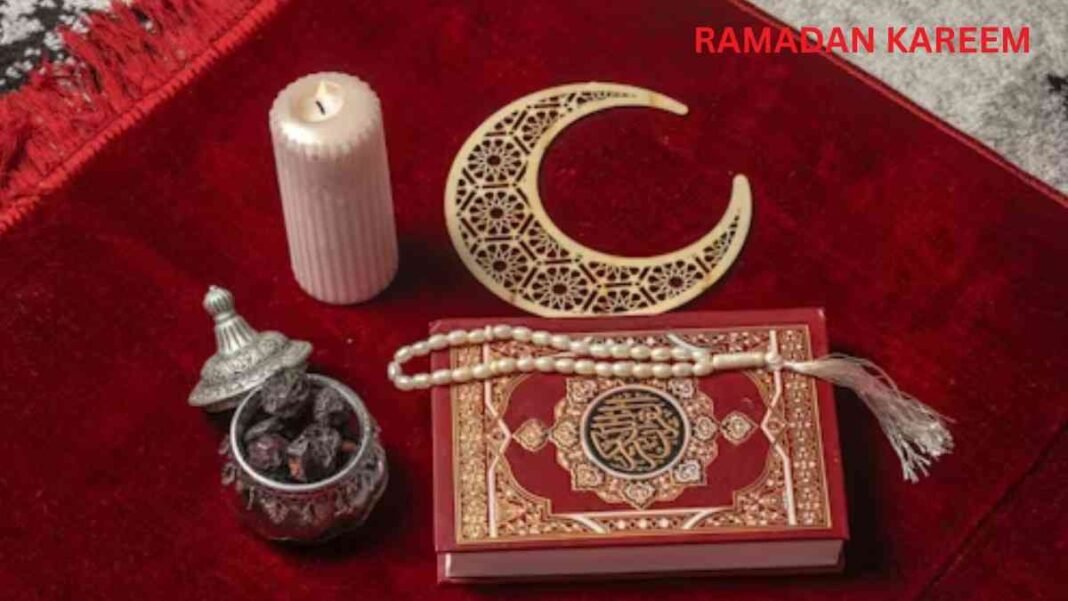
Ramadan 2026 (1447 AH) has arrived, and with it, a familiar, bittersweet realization is spreading through the Ummah: Why does the holiest month of the year always seem to pass the fastest? You spend months in anticipation, you prepare your kitchen and your soul, and then, almost in a blink, the last ten nights are upon us.
This feeling isn’t just a trick of the mind. It is a profound intersection of Islamic spirituality (Barakah) and modern cognitive psychology. If you feel like Ramadan is “slipping through your fingers,” it is actually a sign of your deep emotional and spiritual engagement. Let’s explore why this happens and how to anchor ourselves before the moon of Shawwal appears.
1. The Anticipation Effect: Why “Looking Forward” Speeds Up the Clock
The more value we place on an upcoming event, the faster the brain seems to process it once it arrives. Ramadan 2026 is not just a calendar month; for many, it is a spiritual “recharge station.”
In psychology, this is often linked to the “Vacation Paradox.” When you are in a state of high emotional focus, praying, fasting, and attending Taraweeh, your brain is intensely “present.” However, when you look back at a period when you were highly stimulated and happy, your mind compresses those memories. This compression makes a 30-day journey feel like a single, beautiful weekend.
2. Structured Routines and the “Flow State.”
During Ramadan 2026, our daily lives undergo a radical structural shift. We move from the chaos of modern life into a disciplined rhythm:
Suhoor: The pre-dawn blessing.
Ibadah: Focused windows of prayer and the Quran.
Iftar: The communal joy of breaking the fast.
Taraweeh: The nightly standing in devotion.
When your days have a clear purpose and a recurring rhythm, you enter what psychologists call a “Flow State.” In this state, “random distractions” and “mental noise” disappear. Because your time flows smoothly, without the friction of boredom or indecision, it feels like it’s going by incredibly fast. Smooth time is fast time.
3. The Psychological Reality of “Memory Compression.”
There is a scientific reason why the middle of Ramadan (the “days of forgiveness”) seems to vanish. Our brains are designed to “group” similar experiences together to save space.
Because the days of Ramadan follow a consistent pattern, waking and eating at the same time, and praying the same way, the brain creates a single unified memory block. Instead of remembering 30 distinct days of fasting, your mind remembers “The Month of Ramadan.” Later, when you reflect on the month, that single block of memory makes the entire period seem much shorter than it actually was.
4. Understanding Barakah: The Spiritual Dimension of Time
Beyond psychology lies the concept of Barakah (Divine Blessing). In the Islamic tradition, Barakah doesn’t just apply to wealth; it applies to time and energy.
In Ramadan, the Barakah of time allows a believer to accomplish in one hour what might take three hours in any other month. You find the strength to stand for an hour in prayer after a long day of work; you find the focus to read Juz after Juz of the Quran. When time carries this specific Divine blessing, it feels “light.” Just as a light object is easier to carry, “light time” feels shorter and less burdensome.
5. Why the “Speed” of Ramadan is Actually a Mercy
If a month feels long, heavy, and dragging, it is usually because it lacks meaning or joy. The fact that Ramadan 2026 feels like it is “flying by” is a testament to your spiritual connection.
It is an emotional attachment. As the last ten nights (the days of Najat or freedom from fire) approach, our awareness of the month’s end increases. We realize the days are limited, and, like a precious guest about to leave, we notice every second of their departure. This “speed” is a spiritual signal that tells you your heart is awake and that you value the guest.
6. How to Make Your 2026 Ramadan Experience More Lasting
While we cannot stop the clock, we can deepen our experience of it. To combat the feeling of “vanishing time,” try these three strategies:
Practice Radical Mindfulness: During your Dua or Dhikr, try to be physically aware of the moment. Instead of rushing through a checklist, spend five minutes in total silence after Fajr. Silence “stretches” time in our perception.
Keep a Spiritual Journal: To fight “Memory Compression,” write down one unique thing you felt or one specific verse that touched you each day. This gives every day of Ramadan its own unique “ID tag” in your brain.
Limit the “Digital Blur”: Social media scrolling is a “time-thief.” It creates a mental fog that makes hours disappear without any spiritual return. Protect your focus to protect your time.
Final Thoughts: Ramadan as a Lesson for Life
Ramadan 2026 is a powerful reminder that life itself is short. Just as the crescent moon of the first night quickly turns into the crescent of the last, our years and opportunities disappear quietly.
The feeling that Ramadan is “too fast” is a call to action. It tells us to Pray now, Forgive now, and Grow now. Don’t mourn the speed of the month; celebrate the depth of the impact it leaves on your soul. When the month ends, and you say, “It went too fast,” let it be because your heart was too full to notice the clock.