More than 100 legal experts in the United States have raised serious concerns after recent statements by Donald Trump regarding possible military action against Iran. They warn that targeting civilian infrastructure could violate international law and potentially amount to war crimes.
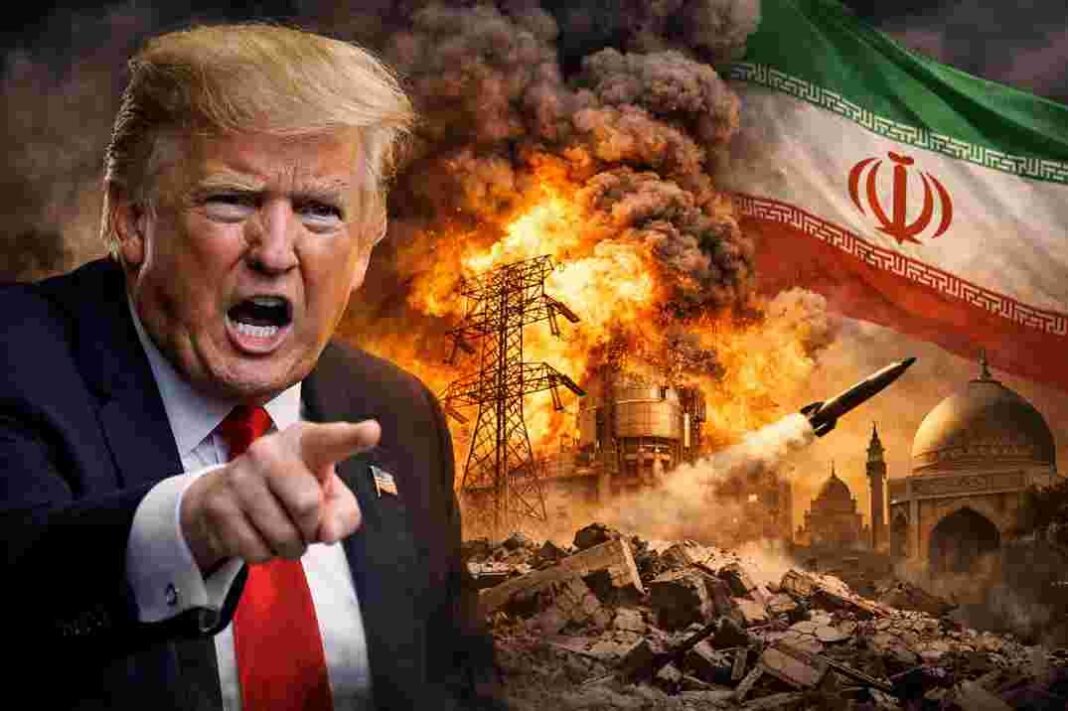
Trump recently suggested that the US could strike Iran’s electricity facilities if an agreement is not reached. He also used strong language, stating that Iran could be pushed “back to the Stone Age,” which has intensified global debate over the legality and ethics of such actions.
International humanitarian law, particularly the Geneva Conventions, strictly prohibits attacks on infrastructure essential for civilian survival. This includes power plants, water systems, and healthcare facilities.
Despite these legal frameworks, Trump shared footage of destroyed infrastructure and indicated that further attacks could follow. Iranian authorities have already reported damage to key facilities, including a historic medical research center, the Pasteur Institute.
In addition, Trump has suggested the possibility of targeting oil fields. This has drawn comparisons to the environmental and humanitarian consequences seen during the Gulf War, when oil facilities were set on fire.
A group of prominent legal scholars from institutions such as Harvard University, Yale University, and Stanford University issued a joint statement highlighting concerns about potential violations of both human rights and humanitarian law. The statement pointed to remarks by US officials that appeared to dismiss traditional rules of engagement.
Experts also expressed alarm over reported strikes on civilian locations, including schools and homes. One particularly concerning incident involved a girls’ school, where investigations suggested possible US involvement. Iranian sources reported significant casualties from that strike.
Human rights organizations have warned that disabling Iran’s power grid would severely impact civilians. According to analysts, such actions could disrupt hospitals, water supply systems, and other essential services, leading to widespread humanitarian consequences.
Under international law, attacks on civilian infrastructure are only permitted if the target directly contributes to military operations. However, legal experts argue that Trump’s statements suggest a broader intent that may not meet this requirement.
Scholars such as Tom Dannenbaum and Robert Goldman have emphasized that attacking energy infrastructure could be considered disproportionate due to its predictable harm to civilians.
While concerns about accountability remain, immediate legal consequences for US officials appear unlikely. The United States has historically opposed actions by the International Criminal Court, limiting the chances of prosecution in the near term.
However, experts note that war crimes fall under universal jurisdiction, meaning cases could be pursued by other countries in the future. Even if action is delayed, legal accountability may still arise over time.
Beyond legal risks, analysts warn of long-term reputational damage. Undermining established international norms could weaken protections for all nations and potentially encourage similar actions by others.
As tensions continue, observers stress that adherence to international law remains critical to preventing further escalation and protecting civilian populations.