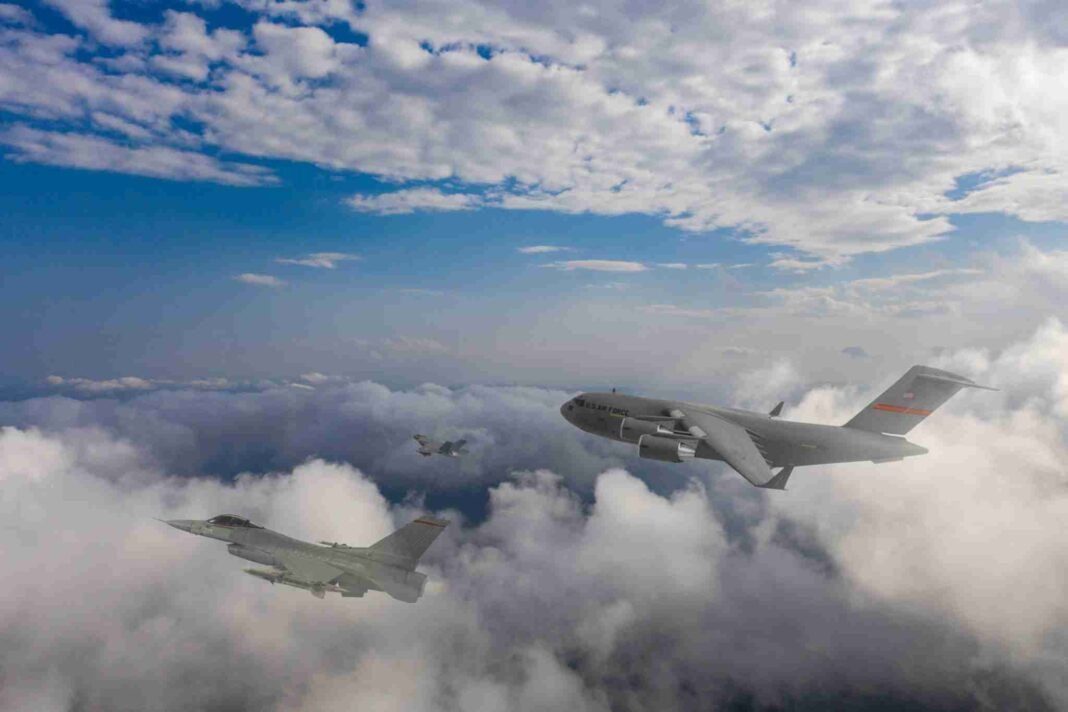
The aircraft, operating under the call sign SAM091, departed from Maryland early in the morning. It followed a carefully coordinated route that aligned closely with the Vice President’s aircraft.
Interestingly, the US core flight landed in Paris just 10 minutes before the Vice President’s plane. Shortly after, both aircraft prepared for the next phase of the journey.
Later, the core flight departed Paris slightly ahead of the main aircraft. However, due to lower speed, it lagged behind during the long-haul segment toward Pakistan.
As both aircraft approached South Asia, the US core flight entered Pakistan’s airspace alongside the Vice President’s plane. This synchronized movement reflects standard high-security aviation protocols.
However, the flight path took an interesting turn afterward. Once the Vice President’s aircraft landed in Islamabad, the US core flight continued its route. It passed through Skardu and moved toward Ladakh before entering Indian airspace.
Subsequently, the aircraft traveled through Leh and entered Chinese airspace. At that point, it switched off its transponder, which made further tracking impossible.
Aviation experts state that such actions are common in high-profile military or diplomatic missions. The use of a US core flight ensures operational security and provides backup support throughout the journey.
Overall, the mission reflects the complexity and precision involved in international diplomatic travel, especially when sensitive geopolitical discussions are involved.