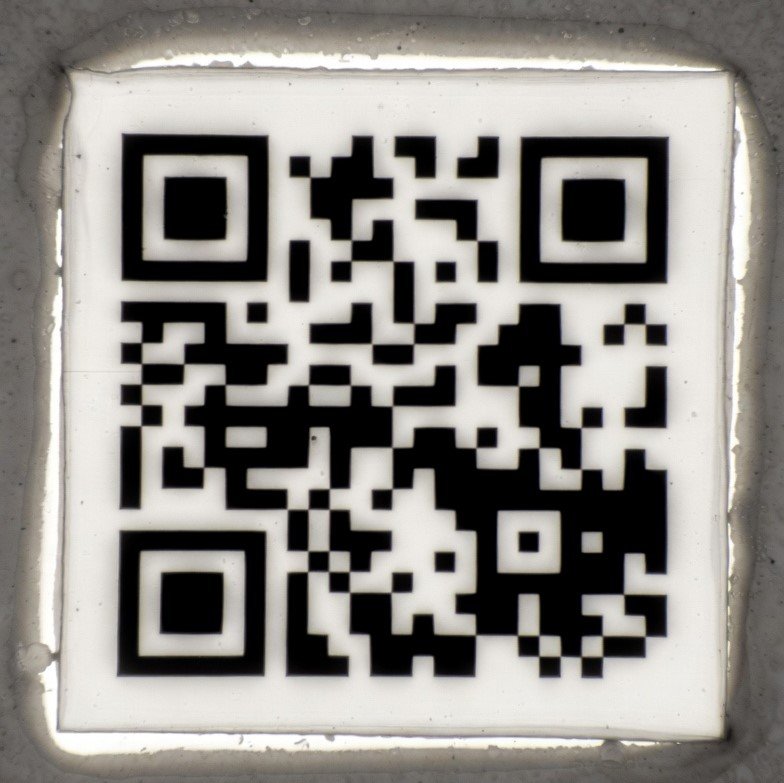
VIENNA – Scientists at Vienna University have created the smallest QR code ever made. This tiny code is smaller than a single bacterium.
The team used charged particle beams to engrave the code onto a special type of ceramic. This material can store data for many years. The data remains readable over time.
The QR code measures only 1.98 square micrometers. Guinness World Records confirmed it as the smallest QR code in the world.
The code links to the university’s website when scanned. However, it is so tiny that it cannot be seen with the naked eye. Only an electron microscope can reveal its details.
This breakthrough opens new possibilities in data storage. Experts say it can store information in extremely small spaces. The method could also make data more durable and long-lasting.
The research team said this tiny QR code could help in many fields. For example, it could be used in microelectronics, medical research, or secure identification.
Creating such a small code was challenging. The scientists had to ensure that the data remained readable despite the tiny size. The ceramic surface and charged particles made it possible.
“This QR code shows how far miniaturization has advanced,” a team member said. “We can now store more data in less space than ever before.”
The project took months of testing. The team experimented with different materials and engraving techniques. Only with precise control of the particle beams did the QR code meet the standards.
Guinness World Records recognized the achievement in early 2026. The recognition highlights the importance of innovation in technology and science.
Researchers hope to improve the technology further. They aim to create even smaller codes and find new ways to scan them. This could lead to more secure data storage methods.
The smallest QR code is not meant for everyday use yet. Ordinary smartphones cannot scan it. Special instruments like electron microscopes are required.
However, the achievement is significant for science. It shows that data can be stored at scales smaller than living organisms. It also demonstrates the potential of advanced materials like ceramics for data preservation.
The team at Vienna University continues to explore other applications. They believe that tiny QR codes could one day be embedded in products, electronics, or medical devices for authentication and tracking.
Experts say this is an important milestone in nanotechnology. It combines material science, data storage, and precision engineering. Such innovations may shape the future of information technology.
This tiny QR code is a record-setting achievement. It marks the first time a functional code smaller than a bacterium has been created. Scientists hope it inspires further breakthroughs in miniaturization and data storage.