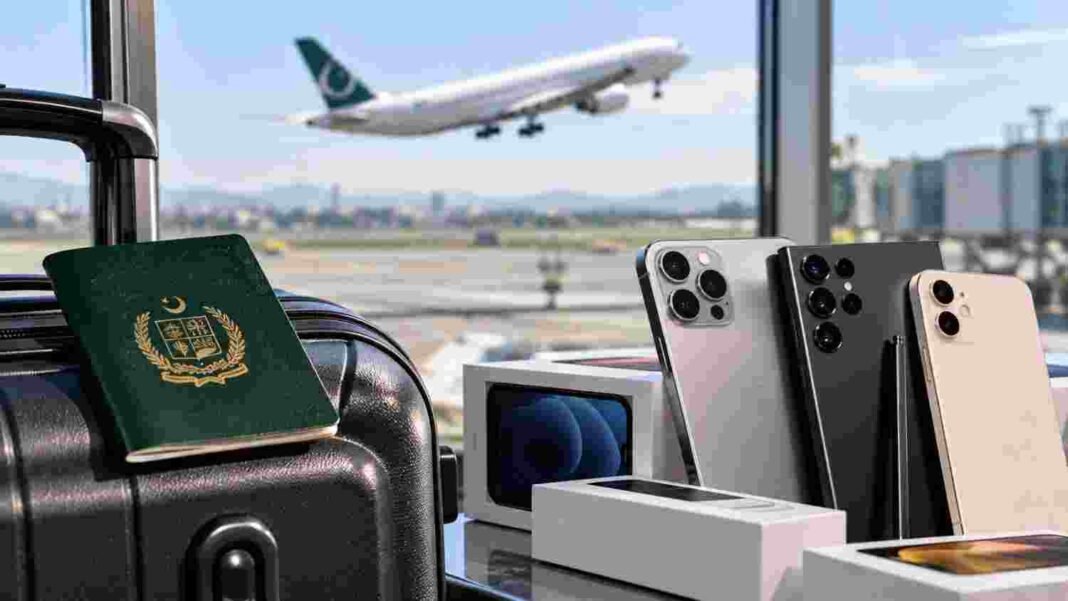
Pakistan’s Federal Board of Revenue has introduced a new payment facility for people who bring imported mobile devices into the country. Citizens can now pay sales tax on Mobile Phones from abroad in installments instead of paying the full amount at once.
The new arrangement aims to reduce the immediate financial burden on travelers and other users of imported smartphones. Previously, users had to pay all applicable taxes before they could fully use their devices on Pakistani mobile networks.
According to the Federal Board of Revenue, the government has formally approved the installment facility for imported mobile phones. The new system will cover devices imported commercially as well as phones that individuals bring into Pakistan for personal use.
Moreover, the FBR has introduced this facility through changes to the Ninth Schedule of the Sales Tax Act, 1990. The amendment creates a legal mechanism that allows eligible users to divide their sales tax payments into manageable installments.
The development comes around two months after the Pakistan Telecommunication Authority announced plans for a tax installment program. Now, the FBR has provided the necessary framework to support the payment facility.
Under the new procedure, people bringing Mobile Phones from abroad will no longer need to arrange the entire sales tax amount immediately. Instead, they can divide their payments under the new system.
However, the government has also placed an important condition on the installment option. Mobile phone owners must clear the complete outstanding sales tax amount before the end of the relevant financial year.
Therefore, the installment facility does not remove or reduce the tax liability on imported phones. It simply gives users additional time and flexibility to manage their payments during the financial year.
The Pakistan Telecommunication Authority will connect the facility with its Device Identification, Registration and Blocking System. Most users know this platform as DIRBS, which manages the registration status of mobile devices operating on Pakistani networks.
Through DIRBS, authorities identify mobile phones and check whether users have completed the necessary registration and tax requirements. The system also helps control the use of unregistered or non-compliant devices on local cellular networks.
The latest decision could make registration easier for owners of Mobile Phones from abroad, especially those who struggle to pay large tax amounts in a single transaction. Expensive smartphones can attract significant taxes, which often create an immediate financial burden.
The installment option may therefore help travelers, overseas Pakistanis, and local consumers plan their expenses more effectively. Instead of paying a large amount at one time, eligible users can spread the cost over the permitted payment period.
Pakistan changed its rules for passengers several years ago. In July 2019, the government ended the previous facility that allowed travelers to bring a mobile phone without paying the applicable taxes.
Since that change, people who bring imported phones into Pakistan have generally needed to clear duties and taxes before using those devices normally on local networks. The requirement has affected many travelers and overseas Pakistanis returning home with personal smartphones.
Consequently, taxes on Mobile Phones from abroad remain a major concern for users, particularly when a device carries a high market value. The new installment system addresses the payment timing rather than eliminating the government’s tax requirement.
The FBR’s latest measure could also encourage more users to register their devices through official channels. Easier payment arrangements may reduce the pressure on consumers who otherwise delay registration because of the upfront cost.
At the same time, users will still need to follow PTA registration rules and meet the deadlines linked to their tax obligations. Failure to complete the required payments within the specified period could affect the device’s registration status.
The government expects the new system to provide greater financial flexibility without changing the overall tax structure. People can manage their payments more conveniently while the authorities continue collecting the required sales tax.
For overseas Pakistanis and frequent international travelers, the change could offer particular relief. Many people bring smartphones for personal use when they travel to Pakistan, and paying a large tax immediately can create an additional expense.
The installment system for Mobile Phones from abroad could make that process more manageable. Users would still pay the full amount, but they would have more control over when they make individual payments within the allowed period.
Furthermore, the new facility links tax collection with Pakistan’s existing digital device-registration infrastructure. This approach could help the FBR and PTA manage imported devices while making the payment process more practical for consumers.
People planning to use imported smartphones should still check the applicable tax amount and registration requirements for their specific device. Tax liability can depend on the value and category of the mobile phone involved.
The decision does not restore the tax-free mobile phone facility that ended in 2019. Instead, it changes how eligible consumers can pay the sales tax on their imported devices.
Overall, the new FBR arrangement gives owners of Mobile Phones from abroad more flexibility when handling their tax payments. Consumers can now pay in installments while ensuring they clear all outstanding dues before the relevant financial year ends.