The debate over new provinces in Pakistan is no longer a quiet political discussion. It is rapidly becoming one of the most important questions about how Pakistan should govern itself in the future.
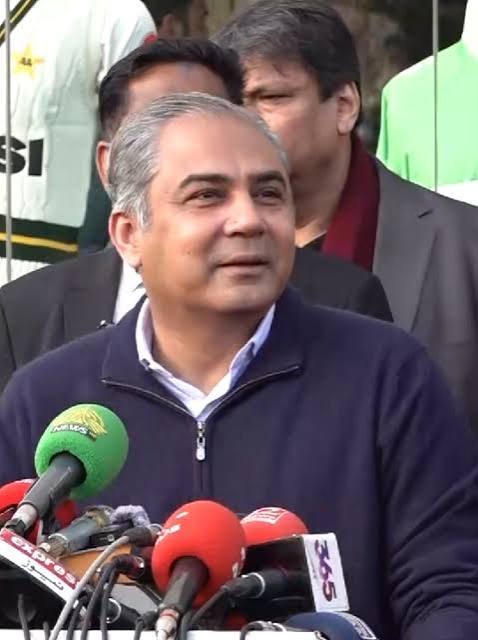
Interior Minister Mohsin Naqvi brought the issue back into the national spotlight on Saturday while addressing the National Policy Dialogue on “Devolution of Powers and Good Governance in Pakistan” in Lahore.
His message went much further than simply suggesting another province.
Naqvi argued that Pakistan’s administrative system needs a “reset” after nearly eight decades. However, he carefully explained that by reset he did not mean overthrowing a government, breaking the existing political system or replacing one political party with another.
He was talking about changing the way Pakistan is administered.
That distinction matters.
Naqvi’s remarks should therefore not be viewed only as another political statement about new provinces in Pakistan. They raise a much larger question: has Pakistan become too populous, too complex and too administratively stretched to continue operating through essentially the same provincial structure?
Naqvi’s basic argument is easy to understand.
Pakistan has changed enormously since independence. Its population has multiplied, cities have expanded, new economic centres have emerged and citizens now expect faster access to education, healthcare, policing, sanitation and other public services.
Yet the basic provincial structure remains dominated by four large provinces.
Punjab alone has a population larger than many countries. Sindh contains Karachi, one of the world’s largest urban centres, alongside vast rural areas with completely different administrative challenges.
Khyber Pakhtunkhwa has also expanded administratively following the merger of the former tribal areas, while Balochistan presents another challenge because of its enormous territory and relatively scattered population.
Naqvi’s argument appears to be that governance structures must evolve when the population and its needs evolve.
He used the example of a growing family. A house may be sufficient when a family is small. However, as the family expands, eventually more space becomes necessary.
His political message follows the same logic.
Pakistan cannot necessarily expect an administrative structure designed for an earlier period to perform equally well under completely different demographic and economic conditions.
This is where the debate becomes interesting.
The strongest argument for new provinces in Pakistan is not ethnicity, language or political identity. It is administrative accessibility.
Consider the everyday relationship between a citizen and government.
People need schools, hospitals, police services, courts, land administration, municipal services, roads, water systems and employment opportunities. When decision-making becomes concentrated far away from communities, citizens often struggle to make their voices heard.
Creating smaller administrative units could theoretically bring decision-makers closer to the population.
However, creating another provincial capital does not automatically create good governance.
That is the most important weakness in the entire argument.
Pakistan could create eight provinces, twelve provinces or even more administrative units. Yet if those governments reproduce the same bureaucracy, political patronage, corruption, weak local governments and inefficient public institutions, citizens may see very little improvement.
Therefore, the real debate should not simply ask:
How many provinces does Pakistan need?
It should ask:
How much power should actually reach ordinary citizens?
That difference changes everything.
Pakistan already has administrative divisions and districts. However, many important financial and political powers remain concentrated at provincial levels.
A genuine governance reset would therefore require much more than drawing new lines on a map.
It would require strong local governments.
It would require elected mayors with meaningful authority.
It would require districts with financial resources.
It would require greater accountability for public officials.
Most importantly, it would require governments to measure success through public services rather than political control.
Naqvi himself placed service delivery at the centre of his argument. He pointed towards persistent problems involving education, healthcare, clean drinking water and sanitation despite decades of governments, budgets and development plans.
That criticism deserves serious attention.
Pakistan has changed governments repeatedly. Political parties have entered and left office. Development programmes have appeared under different names.
Yet basic governance problems remain remarkably familiar.
That is why the phrase “system reset” has political power.
It suggests that the problem may be deeper than whichever party happens to govern at a particular moment.
However, Naqvi also understood that the phrase could create political uncertainty. He therefore clarified that his call for a reset did not mean breaking the system or targeting a particular political party.
His explanation was simple: what is wrong should be corrected.
That clarification is important because constitutional restructuring in Pakistan is an extremely sensitive subject.
The moment politicians discuss new provinces in Pakistan, questions of identity immediately emerge.
Punjab raises the South Punjab question.
Khyber Pakhtunkhwa brings the Hazara debate.
Sindh brings concerns over Karachi and the territorial integrity of the province.
Balochistan raises completely different questions involving geography, representation, resources and political inclusion.
Therefore, administrative logic cannot simply erase political history.
This is probably why Naqvi repeatedly stressed public consent.
He argued that neither one politician, one political party nor one government should impose such a major change. Instead, political consensus and the wishes of citizens should guide any restructuring.
That may be the most important part of his entire speech.
Because creating provinces without public consent could create more problems than it solves.
A province is not simply an administrative office.
It involves identity, representation, resources, political power and constitutional rights.
People naturally ask difficult questions.
Where will the provincial capital be?
Which districts will become part of it?
How will resources be distributed?
How many seats will it receive in parliament?
How will government employees and institutions be divided?
What happens to water and development allocations?
Who controls taxation and policing?
These are not minor details.
They determine whether administrative restructuring becomes a governance reform or another political conflict.
This is particularly visible in Sindh.
PPP leaders have strongly resisted suggestions that could lead to the division of Sindh. Former Senate chairman Raza Rabbani has also argued that creating provinces is not simply a matter for federal ministers and must follow constitutional requirements and the will of the relevant province.
Meanwhile, Khawaja Asif has argued that devolution has become inevitable and accused the PPP of taking contradictory positions when discussing possible provinces in Punjab compared with Sindh.
That disagreement reveals the political difficulty ahead.
Almost everyone can support “better governance.”
Agreement becomes much harder when someone draws the proposed boundaries.
This is why Pakistan needs to separate two ideas that politicians often mix together: administrative decentralisation and ethnic division.
A new administrative unit does not necessarily have to represent a new ethnic identity.
Naqvi himself attempted to address this concern. He argued that a Sindhi would remain Sindhi and a Punjabi would remain Punjabi, suggesting that administrative restructuring should not force people to abandon their cultural identities.
That is a sensible principle.
However, political reality will be more complicated.
Pakistan’s provinces carry deep historical and cultural meaning. Therefore, any serious proposal must respect those identities instead of pretending they do not exist.
Another particularly interesting part of Naqvi’s argument concerns Islamabad.
He described himself as a strong supporter of provincial status for the federal capital.
His argument revolves partly around fiscal arrangements. He said Islamabad does not receive a provincial share through the National Finance Commission Award and argued that if Pakistan begins creating new provinces, Islamabad should also enter that discussion.
This proposal deserves more attention than it has received.
Islamabad is not simply Pakistan’s seat of government anymore.
It is a large and rapidly expanding urban area with its own population, housing problems, transport needs, policing challenges and local governance questions.
However, turning Islamabad into a province would create another set of constitutional and administrative questions.
Would the federal capital remain entirely inside that province?
Would Pakistan need a separate federal district?
What powers would an Islamabad provincial government exercise?
How would its finances work?
These questions show why slogans are easy but restructuring is difficult.
The debate also becomes more significant because Naqvi is not alone in questioning Pakistan’s existing administrative structure.
Planning Minister Ahsan Iqbal recently proposed a much broader restructuring model involving around 15 provinces, arguing that Pakistan needs smaller administrative units to improve governance.
Meanwhile, reports surrounding the debate have also attributed support for additional provinces to Prime Minister Shehbaz Sharif, although the exact model supported by different political figures remains far from settled.
This means the conversation is moving beyond one minister.
And that should make Pakistanis pay attention.
Still, there is another side to the argument.
New provinces cost money.
Every province needs institutions.
It needs an assembly, secretariat, departments, administrative machinery and other government infrastructure. Creating several provinces could therefore increase administrative expenditure significantly.
Economists and business leaders discussing the issue have already pointed towards this potential cost alongside the possible governance benefits.
That concern cannot simply be dismissed.
Pakistan already struggles with fiscal pressure.
Creating expensive new bureaucracies without improving productivity could make matters worse.
Therefore, any proposal for new provinces in Pakistan should include a detailed financial model before political leaders ask citizens to support it.
How much would each new province cost?
How much revenue could it generate?
How would the NFC Award change?
How would federal transfers work?
Would existing government departments be divided or duplicated?
Would administrative savings eventually outweigh initial costs?
The public deserves answers to these questions.
Naqvi himself acknowledged the need to examine the benefits, methods and financial consequences of creating new administrative units. He also called for parliament, experts and the public to debate the proposals before a final decision.
That is exactly where the debate should go next.
Pakistan does not need another emotional political campaign.
It needs a blueprint.
For example, imagine that policymakers propose 10 or 12 provinces.
They should publish the proposed map.
Then publish population figures for each proposed unit.
Show projected revenues.
Show administrative costs.
Explain representation.
Explain how resources will move.
Explain how local governments will operate.
Then let economists, constitutional experts, political parties, academics and ordinary citizens challenge the model.
That would turn a political slogan into a serious national policy discussion.
There is another issue that deserves equal attention.
What happens if Pakistan creates new provinces but still refuses to empower cities and districts?
Karachi provides an obvious example of why this matters.
A mega-city requires powerful urban governance regardless of which province contains it.
The same applies to Lahore, Faisalabad, Rawalpindi, Multan, Peshawar, Quetta and other growing urban centres.
A provincial chief minister cannot effectively manage every local issue.
Pakistan therefore needs to discuss empowered local governments at the same time it discusses new provinces.
Otherwise, power may simply move from one provincial capital to several new provincial capitals.
Citizens could remain at the bottom of the same system.
That would not be a reset.
It would merely be a rearrangement.
This is where Naqvi’s reference to strong local leadership becomes particularly relevant. During his speech, he pointed towards models in which mayors understand their cities and citizens closely.
Pakistan has historically struggled to build stable and powerful local government systems.
Provincial governments often hesitate to transfer meaningful political and financial authority downward.
That creates an obvious contradiction.
Politicians can demand greater devolution from Islamabad to the provinces while resisting devolution from provincial capitals to districts and cities.
A genuine reform programme must challenge both forms of centralisation.
The federal government should not unnecessarily control provincial responsibilities.
At the same time, provincial governments should not unnecessarily control functions that elected local governments can manage better.
That is what real devolution looks like.
The debate over new provinces in Pakistan can therefore become useful even if the country does not immediately create a single new province.
Why?
Because it forces Pakistan to ask uncomfortable questions about how power works.
Why does a citizen sometimes need political influence to solve an ordinary administrative problem?
Why do local governments remain financially weak?
Why does development often depend on access to provincial leadership?
Why do basic services vary so dramatically between districts?
Why do governments announce huge development budgets while citizens continue complaining about water, sanitation, schools and hospitals?
These questions are bigger than provincial boundaries.
They concern the relationship between the Pakistani state and its citizens.
That is why Naqvi’s “reset” argument should neither be accepted blindly nor dismissed automatically.
It should be tested.
If smaller provinces can demonstrably improve governance, reduce administrative distance and strengthen accountability, Pakistan should seriously consider them.
If the proposal merely creates more ministers, more assemblies, more government buildings and more political positions, citizens should reject it.
The burden of proof belongs to those proposing the change.
They must show exactly how an ordinary Pakistani would benefit.
Would a farmer receive faster access to government services?
Would a student get a better school?
Would a patient find a better hospital?
Would businesses face fewer bureaucratic hurdles?
Would policing improve?
Would municipal services become more reliable?
Would citizens gain greater control over how their taxes and public resources are spent?
If the answer to those questions is yes, restructuring deserves serious consideration.
If not, changing boundaries achieves little.
Pakistan should also avoid turning the discussion into a battle between Punjabi, Sindhi, Pashtun, Baloch, Saraiki, Hazara or other identities.
That road could transform an administrative debate into an emotional national confrontation.
Instead, policymakers should establish objective criteria.
Population could be one factor.
Geographical size could be another.
Economic sustainability, administrative accessibility, infrastructure, cultural considerations and public consent could also form part of the formula.
The same principles should apply across Pakistan.
That consistency matters.
A formula cannot become acceptable in Punjab but unacceptable in Sindh simply because political interests change.
Likewise, Islamabad cannot dictate solutions to provinces without following the Constitution and securing the necessary political support.
Pakistan needs rules, not selective political convenience.
Naqvi has said the process must remain constitutional and depend on political consensus and public will.
That commitment should become the starting point for everything that follows.
The next stage should therefore not involve louder speeches.
It should involve serious research.
Parliament could establish a national commission involving constitutional experts, economists, urban planners, provincial representatives, local government specialists and demographic experts.
That commission could examine several models rather than presenting one predetermined map.
One model could strengthen existing provinces while massively empowering local governments.
Another could create a limited number of new provinces.
A third could reorganise Pakistan around smaller administrative units.
Citizens could then compare costs and benefits.
That approach would be slower than political slogans.
But constitutional reform should be slow enough to prevent irreversible mistakes.
Pakistan has spent decades debating South Punjab, Hazara and other possible provinces without reaching a lasting settlement.
The renewed debate provides an opportunity to do something different.
Instead of asking politicians which province they want, Pakistan should ask what kind of government citizens need.
That is the real question hidden inside Mohsin Naqvi’s speech.
His call for a “system reset” becomes meaningful only if the reset changes how power reaches ordinary people.
New lines on a map cannot teach children.
They cannot treat patients.
They cannot provide clean water.
They cannot automatically stop corruption.
Institutions do those things.
Accountability does those things.
Competent local leadership does those things.
Therefore, new provinces in Pakistan could become part of the solution, but they cannot become the entire solution.
Pakistan certainly needs a serious conversation about whether its present administrative structure can serve a population and economy vastly different from those of earlier decades.
Naqvi has helped push that question into the national conversation.
Now political parties must move beyond slogans.
They should tell Pakistanis exactly what they propose, where the boundaries would lie, how much the restructuring would cost, how resources would be distributed and—above everything else—how citizens would gain more power over their own communities.
Only then can Pakistan decide whether new provinces represent genuine reform or simply another political experiment.
The most important part of Naqvi’s message may therefore not be his demand for additional administrative units.
It is the admission that the current system is not delivering enough.
That diagnosis will resonate with many Pakistanis.
The real test, however, is the prescription.
If Pakistan uses the debate to decentralise power, strengthen local governments, improve accountability and bring public services closer to citizens, the discussion could mark the beginning of meaningful governance reform.
But if politicians use new provinces in Pakistan merely to redraw political territories, create new offices or fight old ethnic battles, the country may end up changing its map without changing the lives of its people.
And ultimately, changing people’s lives—not changing the number of provinces—is the only “system reset” worth pursuing.