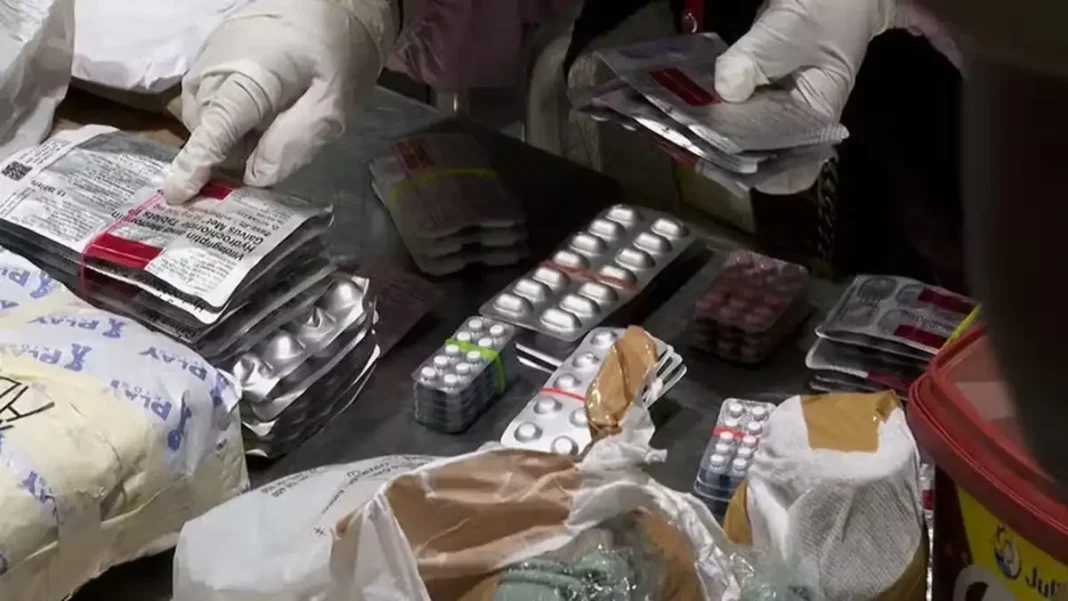
Customs officials have arrested a female passenger at Karachi’s Jinnah International Airport after recovering 50,340 foreign medicine tablets from her possession, in a seizure valued at Rs8.05 million. The smuggled medicines Karachi airport case is being treated as an attempt to bring restricted drugs into the country in commercial quantities.
According to Assistant Collector Khizar Faiz, the passenger had arrived from Muscat and was intercepted in the airport’s arrivals area following a tip-off. The seized tablets, valued at Rs8,054,400, could not be imported without certification from the Drug Regulatory Authority of Pakistan (DRAP), officials said.
Smuggled medicines Karachi airport case: commercial quantities, no DRAP check
Customs described the interception as a smuggling attempt involving restricted foreign medicines. The tablets were seized under the Customs Act, and a case was registered against the passenger before her arrest.
Faiz said the woman had been named in other criminal cases registered by customs collectorates at different airports. He did not share further details about those cases or their current status.
Officials clarified that the restriction concerns importing the medicines without the required DRAP certification, rather than an unconditional ban on the medicines themselves.
Why DRAP certification matters
DRAP certification is Pakistan’s gatekeeping mechanism for drug safety. Foreign medicines cannot legally enter the country in commercial quantities unless the regulator has verified their source, quality and storage standards. Medicines that bypass this check carry risks of counterfeiting, improper storage and unknown origin, which is why customs treats such consignments as restricted goods under the Customs Act.
The enforcement push comes amid wider action against irregular medicine trade. Authorities have previously moved against illegal online medicine sales in Pakistan, where DRAP’s role in policing the drug supply was also central. The Karachi airport seizure shows the same regulatory net extending to physical smuggling routes, with repeat offenders now on customs’ radar across airports.
The arrest also fits a broader pattern of economic-crime enforcement at the country’s entry points. The Federal Board of Revenue has pursued large tax and wealth fraud cases this year, while courts have taken up major postage and customs-related fraud indictments. Together, these cases point to tighter scrutiny of goods and money moving through Pakistan’s airports and ports.
What happens next
The seized medicines remain in customs custody. The registered case will proceed under the Customs Act, and investigators are expected to examine the passenger’s travel history and the other cases registered against her at different airports to determine whether she was part of a wider smuggling network.
Frequently asked questions
What was seized at Karachi airport?
Customs recovered 50,340 foreign medicine tablets worth Rs8,054,400 from a female passenger arriving from Muscat, and arrested her.
Why were the medicines seized?
They were being brought in commercial quantities without certification from the Drug Regulatory Authority of Pakistan (DRAP), which is required for legal import.
Is the passenger facing other cases?
Assistant Collector Khizar Faiz said she had been named in other criminal cases registered by customs collectorates at different airports, but gave no further details.
What law applies to the seizure?
The tablets were seized under the Customs Act, and a case was registered against the passenger before her arrest.