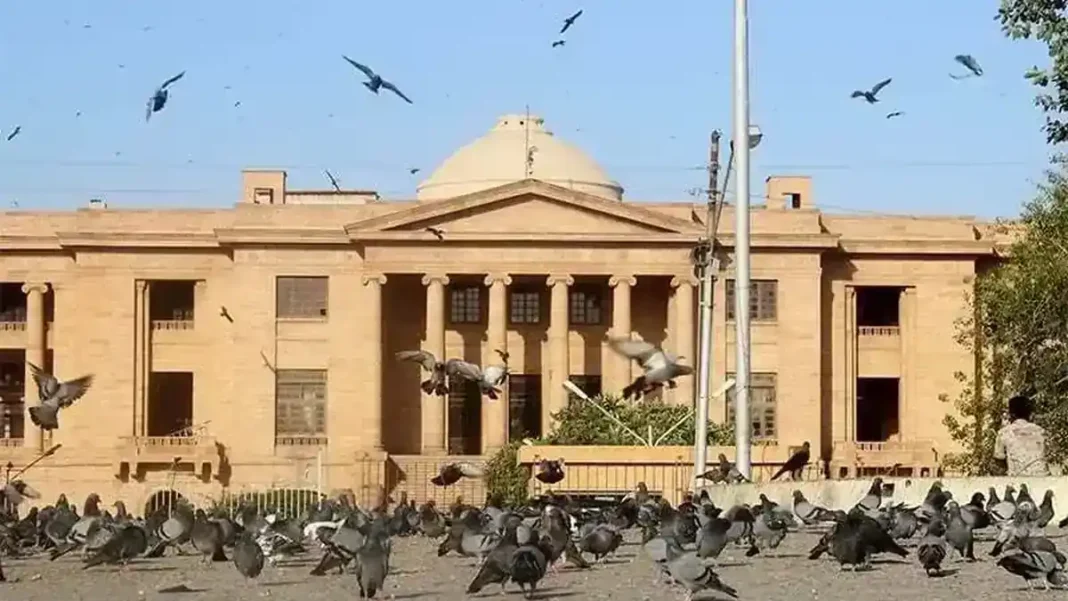
SHC Restores Christian Divorce Rights in Sindh
The Sindh High Court has restored Christian divorce rights, reviving a provision of the Divorce Act of 1869 that was removed in 1981. Christian couples in the province now have a way to end a broken marriage after 45 years.
A two-judge constitutional bench headed by Justice Yousuf Ali Sayeed ruled on Wednesday that the omission was inconsistent with the Constitution. Christian couples in Sindh can now seek dissolution on ordinary grounds, rather than only on proof of adultery. Ziaul Haq had removed Section 7 of the Act through an ordinance in July 1981.
The case before the court
An NGO that provides free legal representation to marginalised people, including religious minorities, filed the petition with two Christian citizens in 2023. They asked the court to declare the omission unconstitutional and without legal effect, and to direct the district and family courts of Sindh to disregard it. The petitioners argued that the omission had frozen the law in its 19th-century form, compelling a spouse to remain bound for life in a broken marriage unless he or she could prove adultery, with conversion or a false accusation of adultery as the only practical means of exit. They also argued that the omission violated the rights to liberty and dignity, and discriminated against Christian citizens and against Christian women.
The federal and provincial law officers could not answer the petitioners’ case. They fell back on Article 270A to argue that the ordinance was protected, and that fresh legislation remained under consideration.
The Archbishop’s objection
The Archbishop of Karachi strongly opposed the petition. He argued that it was not maintainable, since the petitioners lacked standing to bring proceedings on behalf of the Christian community, and that reform must be preceded by consultation with all Christian denominations and representative bodies. He also argued that the Roman Catholic Church regards marriage as a holy sacrament governed by Canon Law, and that reform interfering with sacramental doctrine would offend Article 20, which protects freedom of religion.
The bench did not accept that objection. It held that the omission was inconsistent with Articles 9, 14, 20 and 25(2) of the Constitution, and was void to the extent of that inconsistency under Article 8(1).
The old law and Christian divorce rights
The bench noted that cruelty and desertion for two years or more could win a decree of judicial separation, but not dissolution. A spouse who proved such conduct could live apart, but the bond continued and neither party could remarry.
Under the old law, a husband could only get a dissolution on proof of adultery. A wife needed adultery plus an aggravating circumstance, or conversion plus a further marriage, or rape, sodomy or bestiality. The bench said the disparity was evident on the face of the provision.
The court added: “We are unable to conceive of a more intrusive restriction on personal liberty than one that obliges an individual to remain bound in a relationship from which all substance has departed, with no prospect of release, save on terms that the individual cannot or will not meet.”
The Lahore precedent
The bench drew on the Lahore High Court, which revived the same provision in 2017, but only in Punjab. The Sindh bench called it a lucidly reasoned judgement, which examined the omission against guarantees of dignity, equality and freedom of religion. After the 18th Amendment, marriage and divorce came within the residual legislative competence of the provinces, and the authority to alter the Act now lies with the Provincial Assembly of Sindh, which has not acted.
The ruling matters beyond the courtroom. The Supreme Court ruled this week on a gift deed in similar terms. Many women in Pakistan still struggle to claim their own property from their parents. The president and prime minister have both stressed minority rights. Punjab has already cleared a Christian marriage bill that raises the minimum age to 18.
Frequently asked questions
What did the Sindh High Court decide?
It restored Section 7 of the Divorce Act 1869, omitted in 1981, so Christian couples in Sindh can now seek dissolution on ordinary grounds.
Why could Christian couples not divorce before this ruling?
After the 1981 omission, adultery was the only ground for dissolution, with stricter conditions for a wife than for a husband.
Who brought the case?
An NGO giving free legal help to marginalised people, including religious minorities, filed the petition with two Christian citizens in 2023.
Did the Lahore High Court not decide this already?
Yes, the Lahore High Court revived the provision in 2017, but only in Punjab. The Sindh High Court has now done the same for Sindh.
What happens next?
Christian couples in Sindh can now approach district and family courts for dissolution on ordinary grounds, including cruelty and desertion.