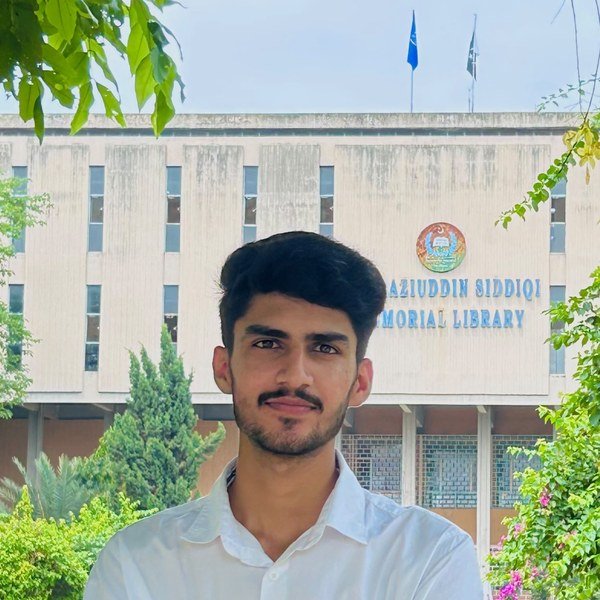
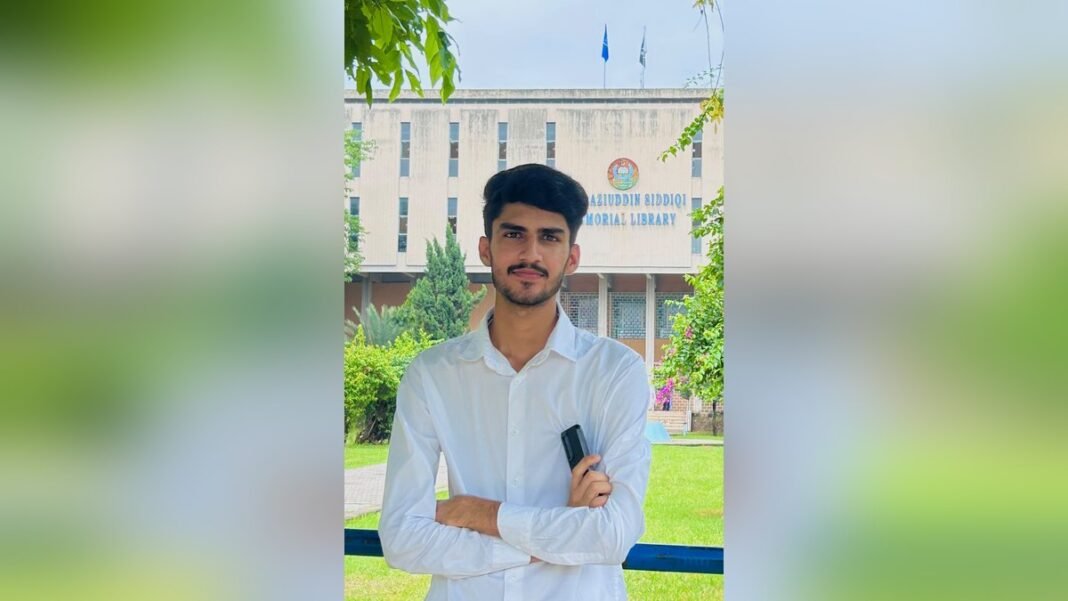
In short: Pakistan's young people are called the nation's greatest asset, yet they face unemployment, uneven education and a widening gap between merit and opportunity. Ahmar Ali, a BS Statistics student at Quaid-i-Azam University, explores what this generation hopes for, what the state and society owe them, and what they owe themselves.
Somewhere in Pakistan tonight, a university graduate folds another rejection letter and quietly slips it into his drawer already filled with forgotten hopes. Downstairs, his parents pretend not to notice the silence that has settled over the house. Like millions of young Pakistanis, he is not waiting for a miracle. He is waiting for an opportunity.
Although his story is fictional, its profound emotions depict an actual degenerating situation. It echoes in the lives of countless young men and women across Pakistan who rise each morning carrying immense aspirations alongside equally immense uncertainties. They are often described as the country's "greatest asset" and "future leaders." Such phrases are repeated so frequently that they sometimes lose their meaning. Yet behind these optimistic declarations lies a generation confronting rising inflation, unemployment, educational inequality, political instability, and an increasingly competitive global economy.
A Generation Between Hope and Uncertainty
To understand the hopes and aspirations of Pakistani youth, therefore, one must move beyond slogans and statistics. One must understand the dreams they nurture, the obstacles they face, the inexplicable conditions they face off with, and the remarkable tenacity with which many of them continue to thrive forward despite recurring disappointments.
Pakistan is one of the youngest countries in the world. This demographic reality is often celebrated as a demographic dividend, but such a dividend is not automatic. A young population becomes a national strength only when it is equipped with high quality education, meaningful employment, good health, and institutions with ruling meritocracy. Otherwise, the same youthful energy can gradually transform into hopelessness, social unrest and such bright individuals engulfed into vexation. The future of Pakistan, therefore, is inseparable from the future of its youth.
Unlike previous generations, today's Pakistani youth have grown up in an era where the realms of knowledge have expanded dramatically. Through a mobile phone connected to the internet, a student residing in a remote village can attend lectures delivered by world-renowned professors, learn programming from international experts, publish creative work for a global audience or establish a freelance career that transcends national borders.
Undoubtedly, technology has widened their horizons, but it has also intensified their awareness of inequality. Every success story they witness abroad becomes both a source of inspiration and a reminder of opportunities they often struggle to find at home. This duality has created a generation that is ambitious yet restless, hopeful yet frequently disillusioned. The aspirations of Pakistani youth extend far beyond the pursuit of financial security.
Talent Is Not Scarce, Support Is
Pakistan's history itself offers inspiring reminders of what young minds can achieve when talent is nurtured rather than neglected. Arfa Karim became the world's youngest Microsoft Certified Professional at the age of nine, proving that excellence is not determined by age or geography. Likewise, Abdus Salam demonstrated that a child educated in the towns of Punjab could one day transform modern physics and earn the Nobel Prize.
Their achievements were not miracles; they were the natural outcomes of intellect meeting opportunity. They remind us that Pakistan does not suffer from a scarcity of talent. It suffers when that talent is left unsupported.
They aspire to become scientists whose discoveries improve human lives, entrepreneurs who generate employment, doctors who heal underserved communities, teachers who awaken curiosity and critical thinking instead of encouraging rote memorization, engineers who build resilient infrastructure, journalists who speak truth with integrity, artists who preserve cultural identity, and public servants who restore public trust in institutions. Beneath these diverse ambitions lies a common desire in contemporary Pakistan: to live with dignity and to contribute meaningfully to society.
Unfortunately, aspirations do not flourish in a vacuum. They are shaped by the conditions in which individuals are born and educated. Education, which ought to be the great equalizer, remains deeply uneven in Pakistan. While some students enjoy modern classrooms, digital laboratories, and internationally recognized universities, millions continue their studies in overcrowded schools where basic facilities are scarce and outdated curriculum leaves them ill-prepared for the demands of the modern world.
Such disparities are not merely educational; they become economic and social inequalities that persist throughout life. A nation cannot expect equal outcomes when opportunities themselves are profoundly unequal.
The challenges do not end with graduation. For many young Pakistanis, earning a university degree represents the culmination of years of personal sacrifice and family investment. Parents sell property, borrow money, or forego their own comforts so that their children may receive an education they themselves never had. Graduation day, therefore, is often accompanied by enormous expectations. Yet the transition from university to the labor market frequently proves far more difficult than anticipated. Countless graduates encounter prolonged unemployment, underemployment, or positions unrelated to their qualifications.
The Gap Between Merit and Opportunity
The disappointment is not merely economic; it is emotional. Every rejection letter quietly erodes confidence, leaving many to question whether hard work alone is still sufficient to secure success. These experiences have contributed to one of the defining dilemmas confronting Pakistani youth: the widening gap between merit and opportunity.
Many young people believe that ability, perseverance, and integrity should determine success, yet they often encounter systems where favoritism, unequal access, or institutional inefficiency appear to overshadow merit. Such experiences create vexation not because young people fear competition, but because they seek fairness. They do not expect guaranteed success; they simply ask for a level playing field where talent is recognized irrespective of one's social background or financial circumstances. As Muhammad Ali Jinnah wisely declared:
Work, work and work, and we are bound to success.
Yet hard work flourishes only where justice and merit prevail. When institutions reward competence instead of connections, they do more than employ individuals; they strengthen the foundations of the nation itself.
Despite these hardships, it would be profoundly mistaken to portray Pakistani youth as a defeated generation. If adversity has tested them, it has also cultivated resilience. Across cities, towns, and villages, countless young people continue preparing for competitive examinations, acquiring digital skills through self-learning, launching small businesses, volunteering in their communities, and supporting their families while pursuing their own ambitions. Their circumstances may differ, but they share an unwavering refusal to surrender completely to despair. That quiet resilience, often unnoticed amid headlines dominated by crisis and conflict, remains one of Pakistan's greatest sources of hope.
An Education That Awakens, Not Just Tests
Yet resilience alone cannot build a nation unless it is accompanied by opportunity. The hopes of Pakistani youth are not merely confined to earning a livelihood; they are rooted in a far deeper longing to live in a society where effort is rewarded, justice is impartial, and every individual, regardless of their background, is allowed to realize his or her potential.
Contrary to the popular guise that young people are impatient or unrealistic, most of their aspirations are remarkably modest. They do not seek shortcuts to success; they seek a system in which success is the natural consequence of merit, discipline, and perseverance. Perhaps the strongest aspiration shared by the younger generation is the extreme desire for an education that nurtures the intellect instead of just testing memory.
For decades, the educational discourse in Pakistan has revolved around examinations, grades, and certificates, while creativity, research, and critical thinking have often remained secondary. Students spend years mastering textbooks, only to discover that the modern world demands qualities and skills that cannot be measured through rote learning alone. Employers increasingly value problem-solving, communication, adaptability, and innovation, yet these skills receive limited attention in many classrooms. As a result, a troubling contradiction emerges: thousands of graduates possess degrees but lack the confidence to compete in a rapidly evolving global economy.
The youth, however, have begun to recognize this reality. They are rapidly turning towards online courses, research communities, digital platforms, and self-directed learning to bridge the gap between formal education and practical competence. This intellectual curiosity deserves admiration, for it demonstrates that learning is gradually becoming an attitude rather than merely a requirement. Such a transformation, though often unnoticed, carries immense significance for Pakistan's future.
A nation progresses not when its citizens memorize information but when they question assumptions, challenge obsolete ideas, and possess the courage to think freely and independently. Healthy questioning, far from weakening society, strengthens it by preventing stagnation and encouraging innovation.
This vision echoes the philosophy of Allama Muhammad Iqbal, who believed that education should awaken the individual's creative potential rather than produce passive followers. His concept of Khudi was never an invitation to arrogance; it was a call to self-belief, intellectual independence, and moral responsibility.
Work, Dignity and the Pull to Leave
Another aspiration that echoes throughout the country is the desire for meaningful employment. Employment is not merely a source of income; it is a source of dignity. It enables young people to support aging parents, establish families, contribute to national productivity, and experience the satisfaction of becoming self-reliant.
Unfortunately, persistent unemployment and underemployment have created an atmosphere of uncertainty that weighs heavily upon countless households. Behind every unemployed graduate lies a family that invested years of sacrifice, believing education would open the doors to a better future. When those expectations remain unfulfilled, disappointment extends far beyond the individual. It becomes a collective emotional burden shared by entire families.
This economic uncertainty has also accelerated the phenomenon of migration. Every year, thousands of highly educated Pakistanis leave their homeland in search of opportunities abroad. Their departure is often interpreted as a decline in patriotism, yet such a conclusion oversimplifies a far more complex reality. Most do not leave because they love Pakistan less; they leave because they seek environments where merit receives recognition, institutions function efficiently, and professional growth is determined by competence rather than circumstance.
The tragedy of brain drain, therefore, is not simply the movement of skilled individuals across borders. It is the silent departure of ideas, innovation, and possibilities that could have strengthened the nation had suitable opportunities existed at home.
Despite these challenges, Pakistani youth have displayed remarkable adaptability in embracing the digital economy. Freelancing, software development, e-commerce, digital marketing, artificial intelligence, content creation, and technological entrepreneurship have opened avenues that barely existed a generation ago. Across the country, young individuals are earning international recognition while working from modest homes equipped with little more than determination, a computer, and an internet connection. Their achievements challenge the old assumption that success depends exclusively upon conventional employment. Instead, they reveal a generation willing to create opportunities where none previously existed.
The Society They Want to Live In
And beyond economic aspirations lies another struggle that receives far less attention: the search for identity and purpose. Today's youth inhabit a world shaped simultaneously by tradition and globalization, by religious values and secular influences, by national identity and global citizenship. They frequently find themselves acting as interlocutors between different generations, attempting to reconcile inherited beliefs with contemporary realities. Such intellectual and moral dilemmas are rarely simple. They require thoughtful reflection rather than impulsive judgment.
In this journey of self-discovery, many young Pakistanis seek not to abandon their cultural roots but to reinterpret them in ways that remain relevant within a rapidly changing world.
Equally significant, though often neglected, is the question of mental well-being. Academic competition, financial insecurity, social expectations, and constant comparison through digital media have intensified feelings of anxiety and emotional exhaustion among many young people. Unfortunately, discussions surrounding mental health continue to encounter misunderstanding and stigma. Strength is frequently mistaken for silence, while vulnerability is perceived as weakness. Yet no nation can expect its youth to build a prosperous future while ignoring the invisible burdens they carry. Compassion, accessible counselling, and greater public awareness are not luxuries; they are essential investments in the nation's human capital.
The aspirations of Pakistani youth also extend towards a society characterized by justice, tolerance, and mutual respect. They wish to live in a country where differences of language, ethnicity, or social class do not become barriers to opportunity. They dream of institutions that inspire confidence rather than skepticism, where laws apply equally to all and public trust is earned through integrity instead of rhetoric. Such aspirations are neither utopian nor unattainable. They represent the fundamental principles upon which every stable and progressive society is ultimately built.
During the devastating floods of 2022, thousands of young volunteers from universities, welfare organizations, and local communities stepped forward to distribute food, rescue stranded families, and rebuild damaged villages. Their actions illustrated that patriotism is expressed not merely through words but through service when the nation needs it most.
Yet perhaps the most inspiring quality of Pakistan's younger generation is that, despite repeated setbacks, hope continues to survive. It is found in the student who studies beneath dim lights during power outages, the young woman determined to pursue higher education despite social constraints, the entrepreneur who transforms failure into experience, and the volunteer who quietly serves communities affected by floods, poverty, or illiteracy without expecting recognition. These individuals remind us that while circumstances may impose limitations, they cannot permanently subjugate the human spirit.
Their perseverance is not loud, but it is profound. It is this quiet courage, sustained by hope rather than certainty, that continues to illuminate the path toward a better Pakistan.
Hope Needs Partners
The future of Pakistan, however, cannot rest upon hope alone. Hope is a powerful force, but unless it is supported by opportunity, justice, and visionary leadership, it gradually gives way to frustration. The aspirations of Pakistani youth can only be transformed into national progress when the state, society, and the youth themselves recognize that they are partners in shaping the country's destiny. Blaming one another may provide temporary satisfaction, but it does little to alter reality.
History has never been transformed by complaints alone; it has been transformed by individuals and nations that possessed the tenacity to confront adversity with wisdom, discipline, and collective purpose. The vision articulated by Quaid-e-Azam remains as relevant today as it was at independence:
With faith, discipline and selfless devotion to duty, there is nothing worthwhile that you cannot achieve.
These words are not simply historical rhetoric; they continue to provide a practical blueprint for a generation searching for direction amid uncertainty.
What the State and Society Owe Them
The foremost responsibility lies with the state. No country can unlock the potential of its younger generation while treating education, research, healthcare, and employment as secondary concerns. Educational institutions must evolve from places where students merely memorize information into environments where they learn to think, question, innovate, and solve problems. Universities should become centres of research capable of addressing Pakistan's economic, agricultural, technological, and environmental challenges.
At the same time, policies must encourage entrepreneurship, support small businesses, and create conditions in which merit becomes the defining predicate of success rather than wealth, influence, or social connections. When young people begin to believe that honesty and competence are rewarded, their confidence in national institutions is naturally restored.
Society also carries a profound responsibility. Parents who sacrifice everything for their children's education deserve admiration, yet they must also understand that success cannot always be measured by a particular profession or salary. Every child possesses unique abilities, and those abilities flourish only when curiosity is encouraged rather than suppressed. Teachers must aspire to become mentors instead of mere instructors, inspiring students to ask difficult questions rather than fearing them.
The media, too, should highlight stories of innovation, scientific achievement, and social service instead of allowing sensationalism to dominate public discourse. Nations are shaped not only by governments but by the values practiced daily in homes, schools, workplaces, and communities.
What the Youth Owe Themselves
Yet no discussion of Pakistan's future would be complete without acknowledging the responsibilities of the youth themselves. While institutional reform is indispensable, lasting change also requires individual character. Young Pakistanis cannot afford to surrender to despair simply because circumstances are imperfect. Every generation inherits challenges it did not create, but history remembers those who confronted those challenges instead of escaping them.
The temptation to blame society for every failure may appear comforting, but genuine progress begins with self-improvement. Continuous learning, discipline, integrity, resilience, and empathy remain qualities that no economic crisis can diminish. This does not imply that every young person must remain within the country regardless of personal circumstances. Some will pursue education or careers abroad, and their decisions deserve understanding rather than condemnation.
What matters is not merely where Pakistanis live but whether they continue contributing to the development of their homeland through knowledge, investment, innovation, or mentorship. A nation is strengthened not only by those who remain but also by those who carry its identity with dignity across the world and maintain meaningful ties with the society that shaped them.
Another responsibility resting upon the younger generation is the rejection of cynicism. Years of political instability, economic hardship, and institutional shortcomings have understandably produced disappointment. However, cynicism has never built a school, discovered a medicine, established a business, or lifted a family out of poverty. It is hope combined with action that changes societies. Hope is not the refusal to acknowledge problems; it is the refusal to believe that problems are permanent. Every great transformation in history appeared impossible until courageous individuals challenged what others accepted as inevitable.
There is also a need to rediscover the moral dimension of national development. Prosperity cannot be sustained by economic growth alone if honesty, compassion, justice, and public responsibility are neglected. A society where corruption becomes acceptable gradually loses not only wealth but also trust. Likewise, a society that values titles more than character eventually weakens its own foundations. Pakistani youth possess the opportunity to redefine leadership by demonstrating that integrity is not a weakness but a strength.
Whether they become scientists, entrepreneurs, teachers, civil servants, journalists or ordinary citizens, their greatest contribution will ultimately be measured not merely by what they achieve but by the principles through which they achieve it.
Perhaps the greatest mistake one can make is to reduce Pakistani youth to statistics alone. Reports may speak of unemployment rates, literacy levels, inflation or migration, but numbers cannot capture the emotions hidden behind them. They cannot measure the sleepless nights of a student preparing for competitive examinations, the silent sacrifices of parents determined to educate their children, the quiet determination of a young entrepreneur rebuilding after failure, or the unwavering commitment of volunteers serving communities during floods, earthquakes, or other national emergencies.
These stories rarely dominate headlines, yet they reveal the true character of Pakistan's younger generation. Beneath every statistic lies a human being carrying dreams, fears, responsibilities, and an unspoken desire to leave the world better than they found it.
The Future Rides on Them
Ultimately, the hopes and aspirations of Pakistani youth are inseparable from the hopes and aspirations of Pakistan itself. The nation's future will not be secured by its natural resources alone, nor by temporary political victories, but by the manner in which it nurtures the minds and character of its young citizens. A country that neglects its youth gradually mortgages its future, whereas a country that invests in them multiplies its possibilities for generations to come.
As Pakistan moves through an era marked by uncertainty, one truth remains beyond question: every challenge confronting the nation is accompanied by an equally extraordinary reservoir of human potential. That potential resides not in abstract policies or distant promises but in the millions of young Pakistanis who wake each morning with dreams larger than the circumstances surrounding them.
Some study beneath flickering lights, some travel miles to attend school, some build businesses from a single laptop, some care for ageing parents while pursuing higher education, and others devote themselves to serving communities that may never know their names. Their stories seldom appear on the front pages of newspapers, yet they quietly define the soul of the nation.
If Pakistan can provide these young men and women with justice instead of favoritism, education instead of neglect, opportunity instead of obstacles, and trust instead of doubt, they will not merely transform their own lives; they will transform the destiny of the country. The greatest wealth of Pakistan has never been hidden beneath its mountains or flowing through its rivers. It has always existed within the minds, hearts, and unwavering resolve of its people.
Every prosperous nation has experienced moments when its future appeared uncertain. South Korea emerged from the devastation of war to become a technological powerhouse, while Singapore transformed its limited natural resources into human capital. Their greatest investment was neither land nor minerals but education, innovation, and capable institutions. Pakistan's greatest resource is similarly not hidden beneath its soil but walks daily into classrooms, universities, workshops, laboratories, and offices carrying dreams that deserve an opportunity to flourish.
The young man standing on the rooftop at the beginning of this essay is still looking toward the city. The lights before him have not changed, nor have all the hardships suddenly disappeared. Yet dawn has a remarkable habit of arriving after even the longest night.
The future of Pakistan will not be determined by whether darkness once existed; it will be determined by whether its youth continue walking towards the first light of morning with courage in their hearts, wisdom in their minds, and hope that refuses to surrender. For when a nation begins to believe in its youth, its youth, in turn, begin to build a nation worthy of belief.
Frequently Asked Questions
What do young Pakistanis hope for most?
Their aspirations are remarkably modest: an education that nurtures intellect rather than testing memory, meaningful employment with dignity, and a fair system where merit, discipline and perseverance decide success.
Why do so many educated Pakistanis leave the country?
Most do not leave because they love Pakistan less. They leave seeking environments where merit is recognised, institutions function efficiently, and professional growth depends on competence rather than circumstance.
What does this essay ask of the state, society and youth?
The state must treat education, research, healthcare and employment as priorities; society must encourage curiosity and measure success by more than salary; and the youth themselves must reject cynicism and keep learning with discipline and integrity.
Related reading on Feature Pakistan: Talent Without Opportunity: The Struggle of Young Pakistanis by Aqsa Nazeer and Talent Without Opportunity: The Struggle of Young Pakistanis by Aqsa Nazeer.
The views expressed in this article are the writer’s own and do not necessarily reflect the editorial policy of Feature Pakistan.