India Unveils Dollar Curbs to Defend Rupee as Currency Nears Record Low
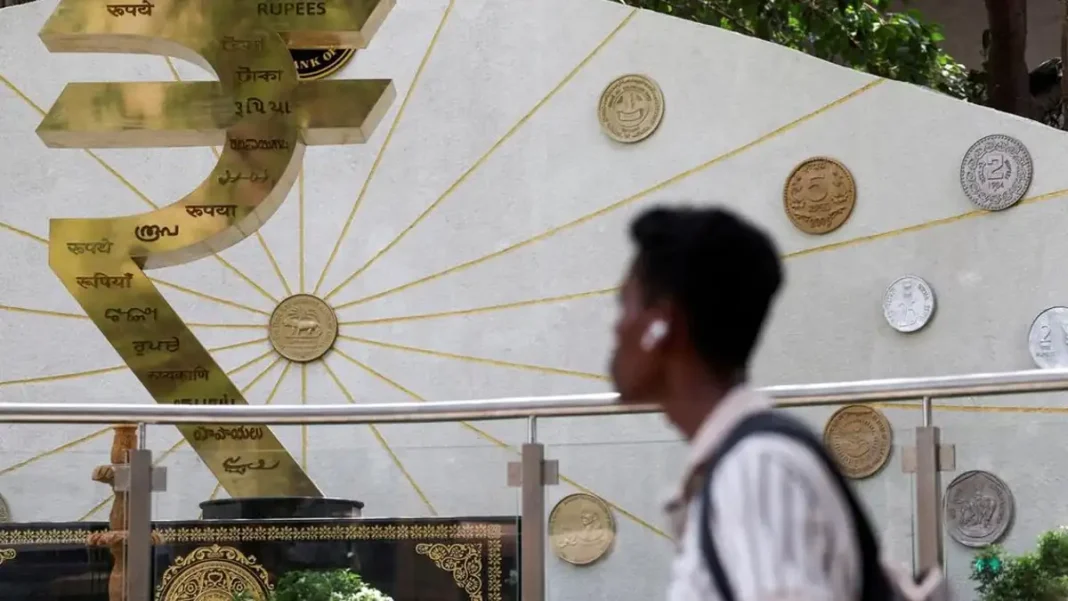
India’s central bank on Saturday unveiled its most aggressive defence of the rupee in over a decade: a special dollar window for state-run oil companies and sweeping curbs on currency derivatives. The India dollar curbs aim to take pressure off a currency that has fallen more than 7 per cent this year and now trades within touching distance of its all-time low.
The measures redirect the dollar purchases of three state oil marketing companies away from the open market and tighten the rules on hedging, as surging oil prices and global bond yields keep the rupee under strain.
In Short
- On Saturday, October 10, 2026, the RBI opened a special dollar window for three state oil firms.
- The window covers the full daily dollar needs of Indian Oil, BPCL and HPCL from October 12.
- The RBI also cut the no-proof hedging limit from $100 million to $5 million.
- Dealers must now hold a 20 per cent cash reserve on large rupee derivative contracts.
- The rupee had closed at 96.73 per dollar on October 9, near its record low of 96.96.
India dollar curbs: what the RBI announced
The package has five main planks. From October 12, the RBI will meet the entire daily dollar requirements of Indian Oil Corporation, Bharat Petroleum and Hindustan Petroleum through a special facility, selling dollars from its reserves through designated banks. The window stays open until further notice. The three refiners are among the largest single sources of dollar demand in India’s market, since the country imports more than 85 per cent of its crude oil, so taking their purchases off the spot market removes a large, predictable block of daily dollar buying.
On derivatives, authorised dealers can no longer let clients rebook rupee forex contracts once the originals are cancelled, though rollovers at maturity are still allowed. The limit for derivative transactions undertaken without proof of an underlying exposure drops from $100 million to $5 million, and the same cap applies to rupee positions in exchange-traded currency derivatives.
The RBI also introduced a “foreign exchange risk reserve”: dealers must hold cash with the central bank equal to 20 per cent of the rupee notional on eligible derivative contracts above $2 million used to hedge current-account exposures. Users must additionally declare that the same exposure has not been hedged through another dealer.
Background: India dollar curbs and the 2013 playbook
The India dollar curbs follow an old RBI playbook. In May 2013, the US Federal Reserve hinted it would cut market support. Capital rushed out of emerging markets, and the rupee fell fast. It hit a then record low of 68.85 per dollar on August 28, 2013. On that same day, the RBI opened a swap window for the same three oil firms. The rupee gained 225 paise the next day, and closed at 66.55.
The 2013 window used sell/buy swaps, so the dollars had to return later. The 2026 window is a direct sale of dollars, with no return leg stated. On December 2, 2013, the RBI said the oil firms had gone back to buying dollars in the market. The 2026 facility, by contrast, stays open until further notice.
The RBI had already moved before October 10. On June 5, 2026, it opened a window for foreign currency deposits to pull in dollars. That window closed early, on August 31. Then, on October 7, the Monetary Policy Committee raised the repo rate by 25 basis points to 5.50 per cent. It was the first hike since February 2023, and the vote was unanimous. The rate rise did not stop the rupee testing its record low that same day. Therefore, the RBI reached for the currency curbs three days later.
| 2013 | 2026 | |
|---|---|---|
| Trigger | US taper tantrum, capital flight | High oil prices, strong dollar, weak flows |
| Record low | 68.85 per dollar (Aug 28, 2013) | 96.96 per dollar (May 2026) |
| Tool | Forex swap window for 3 oil firms | Dollar sale window for 3 oil firms |
| Start date | August 28, 2013 | October 12, 2026 |
| Exit | Firms back to the market on Dec 2, 2013 | Open until further notice |
India dollar curbs: the numbers in brief
The scale of the move is large. The Hindu estimated that the three oil firms need about $300 million every day to pay for crude imports. HSBC said the window reroutes around $11–12 billion of monthly dollar demand away from the spot market. Crude oil makes up about 25 per cent of India’s imports, so the oil bill drives much of the pressure on the rupee.
The cash reserve also has a real cost. The RBI’s own example shows how it works. A $10 million hedge struck at 95 rupees has a notional value of 95 crore rupees. The dealer must lock 19 crore rupees in cash with the RBI. At the new repo rate of 5.50 per cent, that locked cash is a direct cost, and banks can pass it into hedge prices. Forward dollar purchases by firms fell 35 per cent in October, to $49.5 billion.
| Figure | Detail |
|---|---|
| 96.73 | Rupee per dollar, close on October 9, 2026 |
| 96.96 | Record low, touched in May 2026 |
| $300m | Estimated daily dollar need of the three oil firms (The Hindu) |
| $11–12bn | Monthly dollar demand rerouted by the window (HSBC) |
| $5m | New cap on derivatives without proof of exposure, down from $100m |
| 20% | Cash reserve on eligible contracts above $2 million |
| $785.7bn | FX reserves peak, week to September 4, 2026 |
| $734.61bn | FX reserves, week to October 2, 2026 |
Why the RBI acted now
The rupee closed on Friday at 96.73 to the dollar, barely changed on the day but perilously close to its record low of 96.96 touched in May. The currency’s slide this year reflects a familiar mix of pressures: Brent crude near $103 a barrel has swollen India’s import bill, while high US bond yields have kept foreign capital cautious.
India’s foreign exchange reserves have fallen for four straight weeks to $734.61 billion, down nearly $13 billion in the latest reported week, as the central bank sells dollars to smooth the rupee’s fall. The strain shows in hedging demand too: importers’ appetite for dollars has far exceeded exporter supply for months, and the cost of protection against further rupee weakness has climbed steadily.
The intervention follows an already busy week for the central bank, which raised its benchmark repo rate to 5.5 per cent in its first hike in nearly four years, after earlier pulling in more than $140 billion through one-off steps to encourage overseas deposits and offshore borrowing.
What happens next
The first test comes on Monday, when the dollar window for oil companies goes live and onshore markets reopen. Early signs were encouraging for the RBI: after the announcement, the rupee strengthened about 0.6 per cent against the dollar in the non-deliverable forward market, with the one-month contract falling roughly 40 paise in thin Saturday trading.
“Addressing oil companies’ dollar requirements removes one of the largest sources of demand from the FX market, which should help reduce volatility, but it will show up in a depletion of reserves,” said Dhiraj Nim, foreign exchange strategist at ANZ Bank in Mumbai.
Analysts cautioned that the curbs treat the symptoms rather than the causes. The underlying drivers, from oil prices and capital flows to the dollar’s global strength, remain in place, and every dollar supplied through the special window still comes out of reserves. For the region, it is a reminder of how quickly global shocks travel: Pakistan’s own currency sits far lower in global rankings, and its central bank faces the same oil-price pressures with reserves of about $26.8 billion, a fraction of India’s war chest.
What happened since the India dollar curbs
The India dollar curbs worked at first. On Monday, October 12, the rupee closed 96 paise higher at 95.77. HSBC said the window reroutes about $11–12 billion of monthly dollar demand. By October 14, the rupee had steadied near 95 per dollar. The RBI governor said the bank would do whatever is needed for orderly movement in the market.
The recovery then gathered pace. On November 6, the rupee closed at 93.91, its strongest finish since April 22. Foreign investors bought more than $12 billion of Indian shares in November. On November 20, the rupee closed at 92.67, its best close since April. Brent crude also fell 3.4 per cent that week, to $92.57 a barrel. However, reserves kept falling. They dropped $14.205 billion to $705.342 billion in the week to November 13. On November 23, the rupee snapped a five-day winning run and closed at 92.91. A Reuters survey found 56 of 61 economists expect another rate hike in December.
| Date | Rupee per dollar | What happened |
|---|---|---|
| Oct 9, 2026 | 96.73 | Close the day before the RBI acted |
| Oct 12, 2026 | 95.77 | Dollar window opens; rupee gains 96 paise |
| Nov 6, 2026 | 93.91 | Strongest close since April 22 |
| Nov 20, 2026 | 92.67 | Strongest close since April; foreign buying tops $12bn |
| Nov 23, 2026 | 92.91 | Five-day winning run ends; RBI buys dollars |
Sources: RBI press release 2026-2027/1306, Moneycontrol via TradingView, HSBC Global Asset Management, Livemint, BRICS24, Informist Media.
Frequently asked questions
When does the RBI’s dollar window for oil companies start?
It opens on October 12 and stays available until further notice. From that date, the RBI will supply the full daily dollar needs of Indian Oil, Bharat Petroleum and Hindustan Petroleum through designated banks.
How far has the Indian rupee fallen in 2026?
More than 7 per cent against the US dollar. It closed on October 9 at 96.73 per dollar, close to its all-time weakest level of 96.96 reached in May.
What are the new hedging limits under the curbs?
Derivative deals without proof of an underlying exposure are capped at $5 million, down from $100 million. Dealers must also hold a 20 per cent cash reserve with the RBI on eligible rupee derivative contracts above $2 million, and clients can no longer rebook cancelled contracts.
Will the curbs stop the rupee’s slide?
They should dampen volatility by taking the oil companies’ bulk dollar demand off the spot market. But oil prices and capital flows remain the underlying drivers, so the real test is how reserves and the rupee behave in the coming week.
Did the India dollar curbs work?
Yes, in the short term. The rupee rose from 96.73 on October 9 to 92.67 by November 20, 2026. However, reserves fell to $705.34 billion, so the cost was real. The curbs bought time, but oil prices and capital flows still set the trend.