


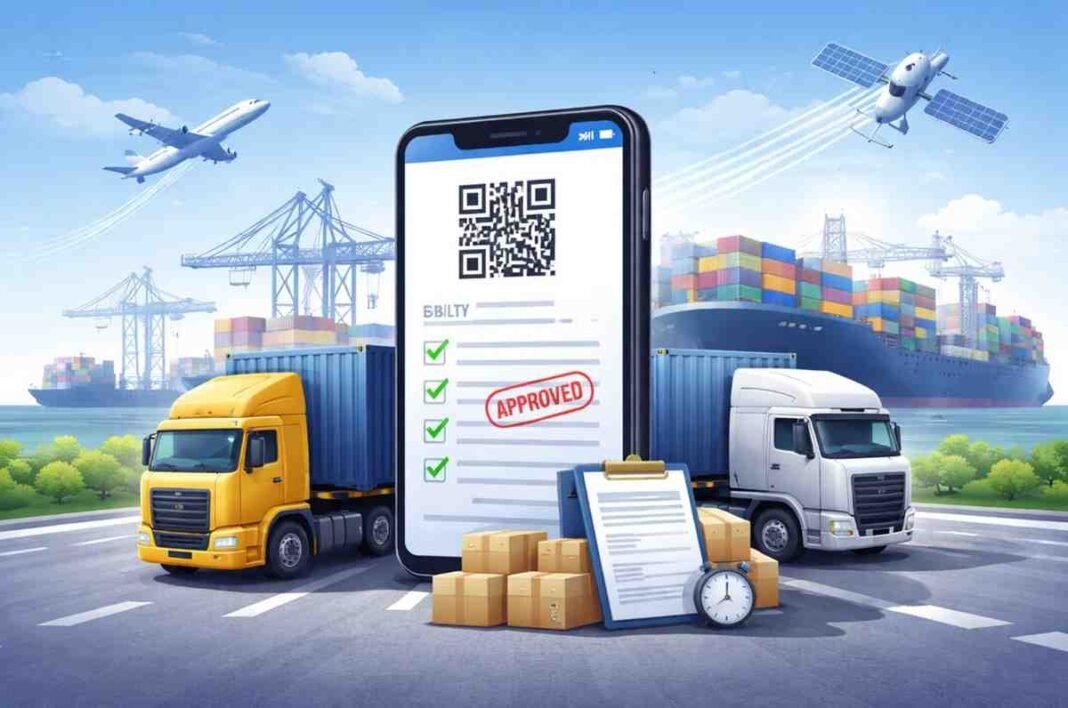
Islamabad: The Federal Board of Revenue has started work on a new digital cargo monitoring system. The plan includes introducing the E-Bility System across Pakistan. The new system will replace the traditional paper bill used in goods transportation.
FBR recently signed an agreement to initiate a feasibility study and technical design for a National Cargo Tracking System. This platform will work together with the E-Bility System to monitor cargo movement more efficiently.
The project is part of the Pakistan Raises Revenue Program. The World Bank also provides financial support for the initiative. And the National Targeting Center will lead the development of the system.
For many years, transport companies have used paper bill of lading documents to record shipments. This manual process often causes delays. It also creates opportunities for tax evasion and smuggling. Officials believe that this system will solve many of these problems.
Under the new plan, each shipment will receive a digital transport document. This document will be generated through the E-Bility System. It will also completely replace the traditional paper bill.
The cargo tracking platform will monitor shipments from the origin to the destination. Each cargo record will include a unique QR code. The QR code will be created through the E-Bility System.
Enforcement teams will scan the QR code during inspections, which will verify cargo information instantly. This process will help authorities quickly identify suspicious shipments.
Officials say the E-Bility System will also support legitimate traders. Businesses will face fewer delays during cargo transport. The system will simplify documentation and verification.
FBR leadership calls the E-Bility System an important step toward a digital economy. The new system will also connect with existing platforms. These include WeBOC, the Sales Tax Real-Time Invoice Verification System, and the Anti-Smuggling Portal.
Integration with these systems will reduce loopholes. Criminal networks often exploit these gaps to commit tax fraud. This new system will help authorities track cargo data more accurately.
Officials also expect fewer roadside inspections after the system launches. Enforcement teams will rely more on digital monitoring. The System will provide risk-based data for better enforcement decisions.
The agreement with the consulting firm has started the detailed study phase. Experts will review international best practices, and also examine the technology required for the system.
The team will also study legal and policy requirements. They will prepare a roadmap for implementing the E-Bility System nationwide.
Authorities believe the new system will improve transparency in cargo movement. It will also reduce smuggling risks and support smoother trade across Pakistan.