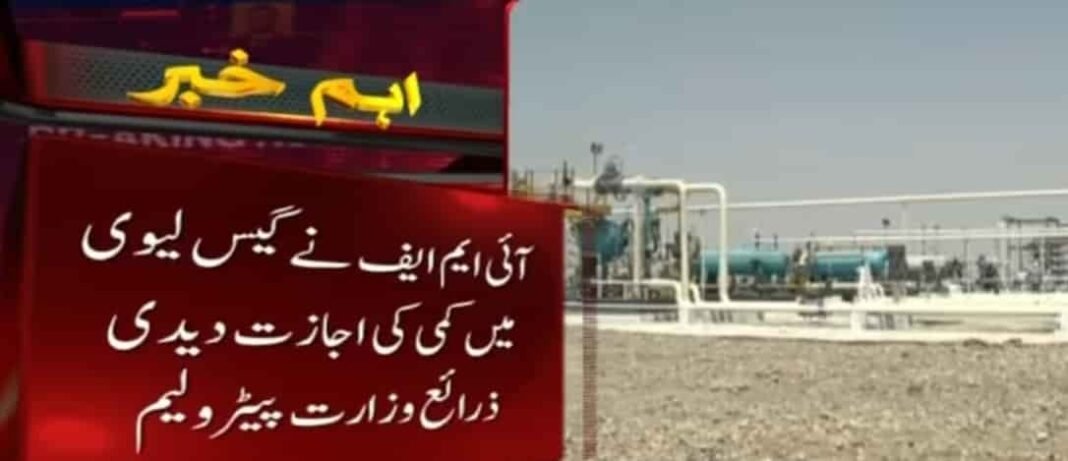
The government may reduce gas prices for industries after the International Monetary Fund allowed Pakistan to revise the gas levy on captive power plants. This move could bring relief to industrial consumers facing high energy costs.
Sources in the Ministry of Petroleum said authorities plan to cut the gas levy by 30% to 60%. As a result, industries that rely on captive power plants may see lower fuel costs in the coming weeks.
Earlier, officials linked the levy to peak hours. This policy increased financial pressure on industrial users. However, Federal Minister for Petroleum Ali Pervaiz Malik requested a revision. Now, the IMF has approved a new formula to calculate the levy.
Currently, industries pay Rs1,343 per MMBTU as a gas levy. With the expected reduction, companies could reduce operational expenses. This step may also improve industrial output and competitiveness.
At the same time, the IMF has set a strict condition. Authorities must ensure that electricity demand from the national grid does not fall. If industries shift away from the grid and demand drops, the government may increase the levy again.
This condition remains important. The government introduced the gas levy to push industries toward the national electricity grid. Officials want to reduce reliance on captive power generation and improve energy distribution.
Meanwhile, industries continue to struggle with high electricity prices. Many manufacturers have raised concerns about rising production costs. Therefore, the expected reduction in gas prices may provide temporary relief.
The government also aims to collect Rs105 billion from the gas levy during the current fiscal year. Officials must balance this revenue target with the need to support industries.
Previously, authorities set the gas levy at Rs690 per MMBTU in August 2025. Before that, rates stood at Rs570 in April, Rs550 in May, and Rs402 in June. However, the current levy remains significantly higher.
Under the revised mechanism, officials will calculate the tariff on an average basis. This change may create more stability in pricing for industrial users.