


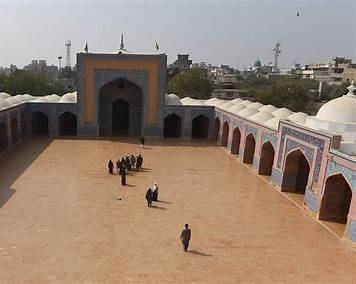
Karachi: The historic Shah Jahan Mosque in Thatta continues to fascinate visitors with its extraordinary architecture and unusual design. However, a mystery about the number of domes has added another fascinating layer to this centuries-old landmark.
Located in the historic city of Thatta in Sindh, the mosque represents an exceptional example of Mughal architecture. Mughal Emperor Shah Jahan commissioned the magnificent structure during the 17th century as a gift to the people of Sindh.
According to historical accounts, artisans constructed the mosque between 1644 and 1647. As a result, the building has stood for nearly four centuries while preserving much of its architectural character.
Unlike many famous Mughal mosques, Shah Jahan Mosque does not rely on towering traditional minarets for its visual identity. Instead, its remarkable network of domes creates one of its most recognizable architectural features.
Interestingly, many historical descriptions associate the mosque with 99 domes. However, visitors often encounter the unusual mosque dome mystery when they attempt to count them personally.
From one position, visitors may count 99 domes across the historic complex. Yet, from another direction, the same exercise can reportedly produce a total of 100.
Consequently, the unusual difference has puzzled tourists and generated several local stories about the building. Residents often link the phenomenon to the extraordinary planning skills of the artisans who built the mosque.
Moreover, the complex arrangement of roofs, chambers and domes can change how visitors perceive individual architectural elements. As a result, different viewing positions can make the counting process surprisingly difficult.
The mosque dome mystery has also become an attraction for visitors to Thatta. Many tourists try to count the domes themselves and discover why different positions can apparently produce different answers.
However, the number of domes represents only one fascinating aspect of the landmark. The Shah Jahan Mosque also attracts attention for its remarkable natural acoustic system.
For example, a person can reportedly speak softly near the mihrab and allow someone standing much farther away to hear the voice. The building achieves this effect through its carefully planned architectural structure.
Furthermore, the domes help reflect and carry sound across different parts of the mosque. Architects achieved this impressive acoustic effect centuries before microphones, loudspeakers, and electronic amplification became available.
As a result, worshippers could hear religious recitations and voices across large sections of the mosque. This natural sound distribution demonstrates the advanced architectural understanding artisans applied during the Mughal period.
Meanwhile, the mosque’s decorative style provides another reason for its architectural importance. Unlike many Mughal landmarks that prominently feature red sandstone or white marble, the Thatta mosque features extensive blue-and-white tilework.
The colorful geometric patterns create a distinctive appearance across walls, arches, and domes. Moreover, experts connect this decorative tradition with influences from Persian craftsmanship and the famous ceramic traditions of Hala in Sindh.
These artistic influences created a remarkable combination of Mughal, Persian and regional Sindhi styles. As a result, the Shah Jahan Mosque developed an architectural identity that distinguishes it from many other Mughal-era buildings.
The mosque dome mystery, colorful tilework, and unusual acoustic design together make the landmark particularly attractive to heritage tourists. Visitors can explore both its historical significance and the engineering techniques hidden within its structure.
Additionally, the mosque has undergone conservation and maintenance efforts during different periods. Authorities and conservationists have worked over the years to protect its historic character from environmental damage and natural deterioration.
Local accounts also link restoration efforts with the period of former Prime Minister Zulfikar Ali Bhutto. During that era, officials reportedly paid more attention to preserving the historic structure and improving its condition.
Beyond its architectural beauty, Shah Jahan Mosque also provides ample space for worshippers. Some accounts suggest that tens of thousands of people can gather within the wider mosque complex for Friday prayers.
As a result, the landmark continues to serve both religious and cultural purposes. Worshippers use the historic mosque while tourists visit it to experience one of Sindh’s most distinctive architectural treasures.
Moreover, Thatta itself carries enormous historical significance and contains several important heritage sites. The Shah Jahan Mosque adds another major attraction to the city’s rich cultural landscape.
For visitors, however, the question surrounding the domes often remains one of the most memorable parts of the experience. The mosque dome mystery encourages tourists to observe the building rather than view it from a distance.
Some visitors may finish their count at 99, while others may believe they can identify 100. Either way, the unusual experience demonstrates how the mosque’s complex architectural arrangement can challenge the human eye.
Nearly four centuries after its construction, Shah Jahan Mosque continues to impress visitors through engineering, craftsmanship and artistic beauty. Its domes, acoustics and colorful tilework preserve the remarkable skills of the artisans who created the landmark.
Ultimately, the continuing mosque dome mystery adds another layer of intrigue to an already extraordinary monument. Whether visitors count 99 or 100, Shah Jahan Mosque remains one of Pakistan’s most fascinating examples of Mughal-era architecture.