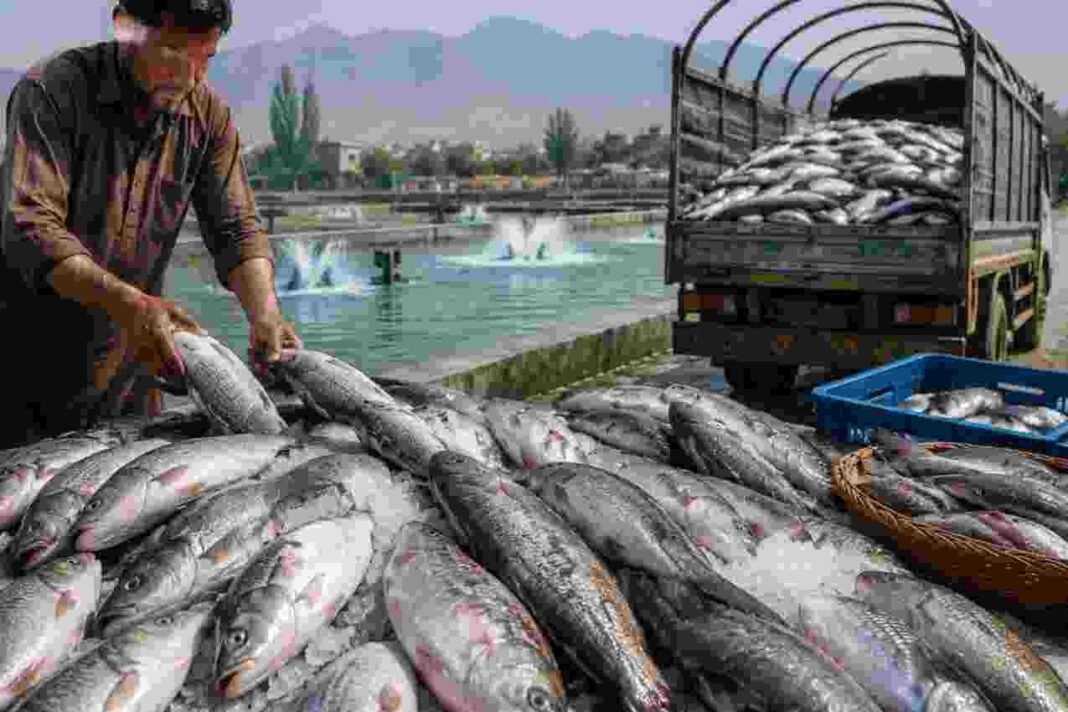
Khyber Pakhtunkhwa faces a growing fish shortage as local production remains far below rising demand. A recent report has highlighted a major difference between the amount of fish required and the quantity produced within the province.
The latest figures show that the annual fish demand in Khyber Pakhtunkhwa stands at around 81,600 metric tons. However, local fish farms and production sources provide only 5,022 metric tons every year.
This huge gap has created a serious KP Fish Crisis, as the province depends heavily on supplies from other regions. According to the Fisheries Department report, around 94% of the total fish requirement comes from other provinces.
The report revealed that the supply shortage between demand and local production reaches nearly 76,578 metric tons. This shortage shows the need for stronger planning and investment in the fisheries sector.
Meanwhile, this shortage also has a significant financial impact. The annual value of fish demand in Khyber Pakhtunkhwa is estimated at Rs40.8 billion.
In contrast, locally produced fish contributes only around Rs3.2 billion to the market. The gap between demand and local production has reached about Rs37.6 billion.
The Fisheries Department stated that fish production has improved over the years. In 2018, the province produced only 1,132 metric tons of fish annually.
However, production increased to 5,022 metric tons after several years of development efforts. Despite this growth, local production still cannot meet rising consumer demand.
A growing population and rising interest in fish consumption have further widened the supply gap. As a result, the KP Fish Crisis continues to create challenges for local markets and consumers.
Fisheries authorities believe aquaculture development can reduce dependence on other provinces. They have identified several areas where fish farming projects can expand.
According to officials, Khyber Pakhtunkhwa has strong potential for aquaculture investment. Suitable land, water resources, and available opportunities can support large-scale fish farming.
The department has also marked different aquaculture zones to encourage investors and farmers. These zones can help increase local production and create new employment opportunities.
Furthermore, authorities have prepared a long-term strategy for improving the fisheries sector. The report includes a 10-year roadmap focused on expanding aquaculture activities.
The proposed plan aims to improve fish farming techniques and increase production capacity. It also focuses on attracting private investment to strengthen the local fish industry.
Experts believe that better facilities, modern farming methods, and government support can reduce the supply gap. These steps may help overcome the KP Fish Crisis in the coming years.
The fisheries sector can also boost the province’s economy by creating jobs and expanding local business opportunities. Farmers can benefit from training programs and improved resources.
The government’s focus on aquaculture growth may bring positive changes to fish production. However, consistent efforts and effective implementation will remain important.
With proper investment and planning, Khyber Pakhtunkhwa can reduce its dependence on imported fish supplies. Developing local fish farming could become a key solution to address the ongoing shortage.