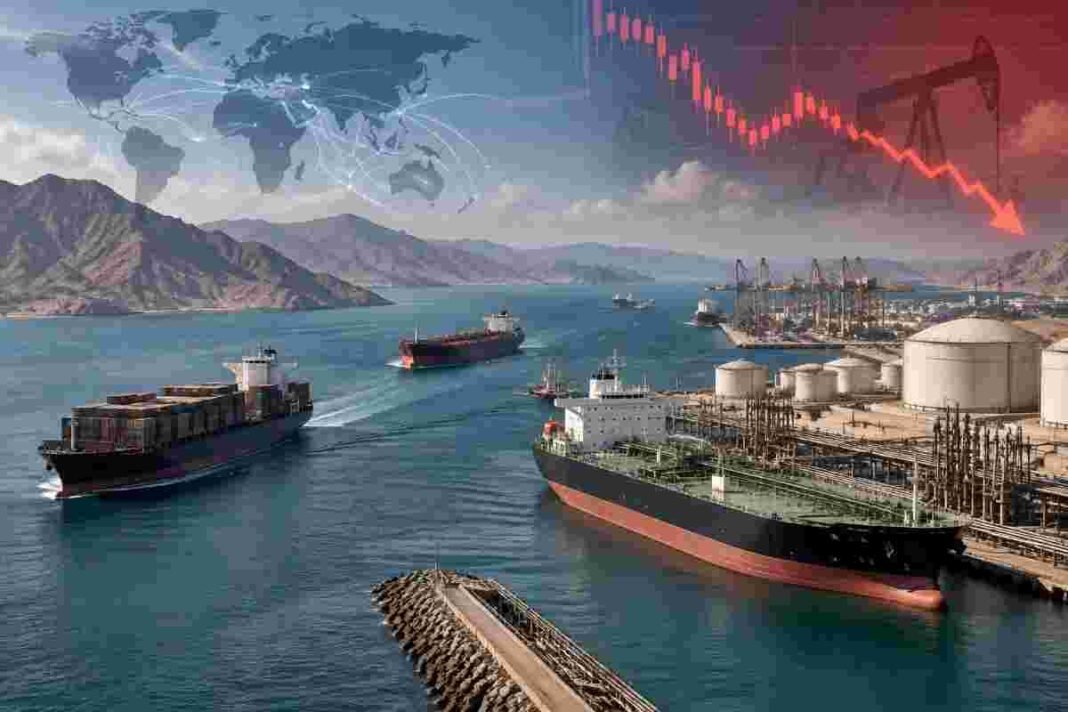
Cairo: Arab economies faced a major financial challenge after the first month of the Iran-related conflict. Economic losses from the Iran war reached nearly $150 billion, according to a recent assessment.
The financial damage equals around 4% of the combined gross domestic product (GDP) of Arab economies. The figure has raised concerns among regional governments, businesses, and investors.
The ongoing crisis has created pressure on trade activities across the Middle East. It has also increased concerns about energy supplies, shipping operations, and economic stability.
According to Iran International, Dr. Rania Al-Mashat, Executive Secretary of the United Nations Economic and Social Commission for Western Asia (ESCWA), shared details about the economic situation.
She explained that important maritime routes face serious challenges because of the conflict. These routes connect major markets and support international trade.
The Strait of Hormuz remains one of the world’s most important waterways. It carries a large portion of global energy shipments and connects Gulf countries with international markets.
Similarly, Bab al-Mandab plays a key role in global shipping. The route links the Red Sea with the Gulf of Aden, allowing ships to move between Asia, Europe, and Africa.
Any disruption in these areas can disrupt supply chains. It can increase transportation costs and affect businesses that depend on international trade.
The Iran war’s economic losses show how regional conflicts can create financial pressure beyond the battlefield. Businesses across different sectors continue to monitor the situation closely.
Dr. Rania Al-Mashat said the Gulf region, the Strait of Hormuz, the Red Sea, and Bab al-Mandab form a connected trade network.
This network supports the movement of energy resources, food products, and industrial goods. Countries worldwide depend on these routes for stable supplies.
Shipping delays can disrupt markets and create uncertainty for companies. Also industries linked with transportation, manufacturing, and energy may face additional difficulties.
The crisis has also created concerns among investors. Many investors consider regional security before deciding on new projects and financial commitments.
As uncertainty grows, some businesses may delay expansion plans. Others may look for alternative routes to protect their operations.
The Iran war’s economic losses have also raised concerns about employment in sectors linked to trade and tourism. Many companies depend on stable regional conditions to maintain business activities.
Energy markets remain highly sensitive because Gulf countries play an important role in global oil and gas supplies. Any challenge to shipping routes can influence energy prices and market conditions.
A United Nations official warned that the crisis’s impact goes beyond Arab economies. She said global supply chains could also face difficulties because of transportation challenges.
Modern economies depend on interconnected trade systems. A disruption in one major region can affect businesses and consumers worldwide.
The conflict has increased the need for cooperation between regional and international organizations. Officials continue to discuss ways to protect trade routes and maintain economic stability.
Dr. Rania Al-Mashat called for immediate cooperation to reduce the crisis’s effects. She highlighted the importance of safe maritime movement and uninterrupted trade activities.
Regional governments are now studying possible measures to reduce economic risks. They are focusing on protecting key industries and supporting market confidence.
The current situation highlights the connection between peace, security, and economic growth. A stable environment helps businesses grow and supports international cooperation.
The economic losses from the Iran war have become a major concern for Arab economies in the first month of the conflict. However, the final economic impact will depend on future developments and efforts to restore stability.
International organizations and governments continue to watch the situation. They aim to prevent further disruption and protect important global trade networks.