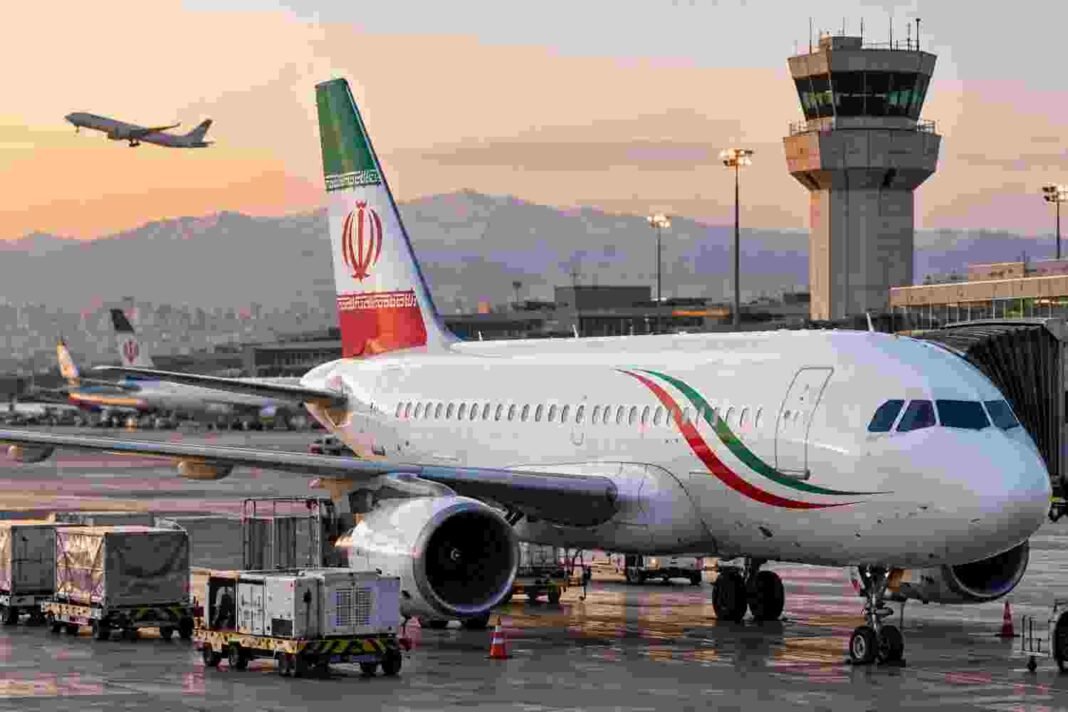
WASHINGTON: U.S. Treasury Secretary Scott Bessent says Iranian airlines could face major international operating restrictions from September 23 as Washington expands sanctions pressure on Iran’s aviation sector.
The Iranian Airlines Ban would rely on secondary sanctions against companies that continue providing services to Iranian carriers. These services could include landing support, fuel, ticket sales and other aviation assistance.
Bessent said foreign companies could face serious financial consequences if they continue supporting sanctioned Iranian airlines. He also warned that such firms could lose access to the U.S. dollar-based financial system.
The move follows a major U.S. Treasury action earlier this month. On September 8, the Treasury Department sanctioned 27 Iranian airlines as part of a wider aviation crackdown.
The Treasury said the action targeted all remaining Iranian airlines under its latest sanctions framework. It also sanctioned companies and intermediaries that Washington says help Iran obtain aircraft, aviation technology and other services.
The Iranian Airlines Ban could therefore affect more than the airlines themselves. Ticketing agents, airport service providers, refueling companies and other businesses could also face pressure if they continue dealing with sanctioned carriers.
According to the Treasury Department, the sanctions form part of what it calls “Operation Economic Outcast.” The campaign aims to increase economic pressure on Iran and entities that continue supporting sanctioned sectors. (U.S. Department of the Treasury)
Bessent said Washington wants to reduce Iranian airlines’ ability to operate internationally. His latest comments suggest that the United States expects foreign companies to comply rather than risk secondary sanctions. (Gulf News)
The Iranian Airlines Ban could also make international travel more difficult for passengers who rely on Iranian carriers. Airlines need airport handling, fuel, landing rights and payment services to maintain regular international routes.
Some Iranian carriers have already faced disruption before the September 23 date. Mahan Air, for example, recently reduced international services as sanctions pressure increased on companies that support its operations. (Financial Times)
The broader sanctions campaign has also targeted companies outside Iran. Earlier U.S. actions focused on businesses and intermediaries that Washington says provide sales, logistics and commercial services to Iranian airlines. (U.S. Department of the Treasury)
The Treasury Department argues that some Iranian aviation companies support military and sanctions-evasion networks. Iran has rejected many U.S. sanctions measures and has long described Washington’s economic restrictions as politically motivated.
The Iranian Airlines Ban does not mean the United States directly controls every airport in the world. Instead, Washington is using the threat of secondary sanctions to discourage foreign firms and service providers from working with Iranian airlines.
That distinction matters because each country still controls its own aviation and airport regulations. However, companies that depend on the U.S. financial system may avoid dealing with sanctioned Iranian carriers because of the possible financial risk.
Bessent has also said that ticket sales could become difficult if travel companies stop handling bookings for Iranian airlines. Payment providers may also limit transactions if they fear exposure to U.S. sanctions.
The Iranian Airlines Ban could therefore affect passengers before they even reach an airport. Travelers may face fewer routes, fewer booking options and more uncertainty if international partners stop serving Iranian carriers.
The September 8 sanctions list included airlines such as Iran Air Tour, Iran Aseman Airlines, Kish Airlines, Qeshm Air, Saha Airlines and several other carriers. The Treasury listed 27 Iranian airlines in total.
Washington also targeted aviation-related companies outside Iran that it says help sanctioned carriers continue operating. U.S. officials say they want to disrupt the wider support network rather than focus only on aircraft operators.
The Iranian Airlines Ban comes during a period of wider economic pressure on Tehran. The United States has introduced additional sanctions against financial institutions, digital-asset networks and companies that it says help Iran bypass existing restrictions.
These measures have increased the risks for foreign businesses that maintain financial or commercial links with sanctioned Iranian entities. As a result, many companies may choose to stop providing services even before regulators take direct action.
Aviation remains especially vulnerable because airlines depend on international cooperation. They need access to airports, maintenance services, fuel suppliers, booking systems and financial networks to operate efficiently outside their home country.
The Iranian Airlines Ban could therefore create broader operational problems if service providers withdraw support at the same time.
However, the full impact will depend on how foreign governments, airports and private companies respond after September 23. Some countries may interpret and enforce the U.S. sanctions differently.
For now, Bessent’s comments signal that Washington plans to increase pressure on Iran’s aviation sector sharply. U.S. officials are warning international businesses that continued support for sanctioned Iranian carriers could bring financial consequences.
The Iranian Airlines Ban is likely to remain a major issue for passengers, aviation companies and governments in the coming days. More clarity should emerge as airlines and airports announce how they will respond to the new sanctions pressure.