ISLAMABAD: Pakistan recorded a sharp increase in external borrowing during the first two months of the current fiscal year. Fresh government data shows that foreign financing rose by 23.60 percent compared with the same period last year.
The Economic Affairs Division released its latest monthly report on Pakistan’s foreign loans. According to the report, the country received around $1.70 billion in external financing during July and August.
In comparison, Pakistan received about $1.37 billion during the same two months of the previous fiscal year. Therefore, the latest figures show a noticeable increase in the government’s dependence on external financing.
In rupee terms, the country received foreign loans worth around Rs476 billion during July and August. Meanwhile, external borrowing during the same period last year stood at approximately Rs391 billion.
The government used different sources to secure the latest foreign loans. These sources included international financial institutions, foreign governments, commercial banks, and Naya Pakistan Certificates.
According to the report, Pakistan received around $484.5 million for different development projects. The government used this financing to support projects that require external funding.
At the same time, authorities secured around $1.21 billion under non-project financing. This category accounted for a large share of the overall external funds received during the first two months.
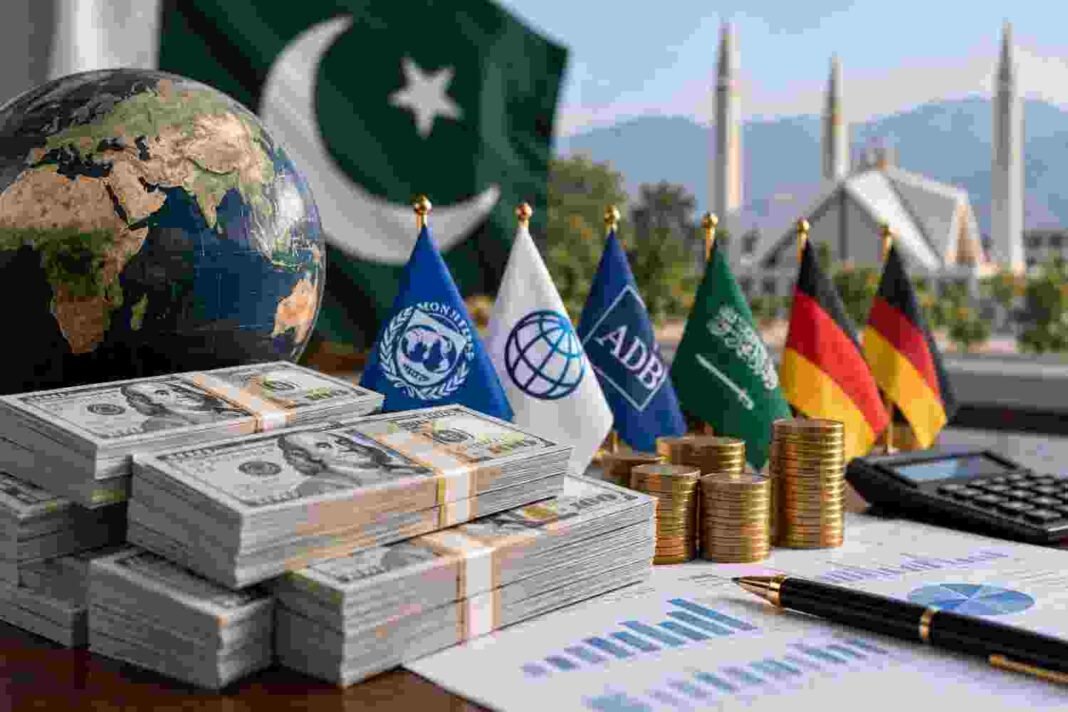
International financial institutions also remained major sources of Pakistan’s foreign loans. These institutions provided more than $590 million during July and August, according to official figures.
The World Bank provided the largest amount among the listed multilateral lenders. It extended around $238.4 million to Pakistan during the two months.
Meanwhile, the Islamic Development Bank provided approximately $191.2 million. The financing added another significant amount to the government’s overall external borrowing.
The Asian Development Bank also contributed to Pakistan’s financing needs. It provided nearly $95.7 million during the first two months of the current fiscal year.
In addition, Pakistan received financial support directly from different countries. The total amount from bilateral sources stood at around $35.2 million during the period.
Germany provided approximately $12.8 million to Pakistan. Meanwhile, Saudi Arabia extended around $8.9 million in financial assistance.
The breakdown of Pakistan’s foreign loans also highlights the growing role of other financing instruments. Pakistan raised about $629.7 million through Naya Pakistan Certificates during July and August.
These certificates allow overseas Pakistanis and other eligible investors to invest funds through designated channels. As a result, they have become another source of foreign currency financing for the country.
Pakistan also secured $300 million from foreign commercial banks. This financing contributed substantially to the overall external borrowing recorded during the first two months.
Borrowing rose as the government continued to meet development, budgetary, and external payment needs. Therefore, authorities continue to use a combination of multilateral, bilateral and commercial financing sources.
The latest Pakistan Foreign Loans figures also show how the country divides external financing between project and non-project requirements. Non-project financing accounted for a much larger share of borrowing in July and August.
At the same time, multilateral lenders such as the World Bank, Islamic Development Bank and Asian Development Bank continued to provide important financial support. Their combined lending represented a significant part of Pakistan’s external inflows.
Foreign governments contributed less than international institutions and commercial sources. However, bilateral financial assistance still added to the country’s overall foreign financing during the period.
The 23.60 percent increase also reflects a sizeable year-on-year change in external borrowing. Pakistan received around $330 million more in foreign financing than in the same period of the previous fiscal year.
Moreover, the rupee value of external loans increased by about Rs85 billion compared with last year. Exchange rates and the higher dollar amount both influence the overall value of foreign borrowing in local currency.
The latest Pakistan Foreign Loans report gives a detailed picture of the lenders supporting the country during the first two months of the fiscal year. It also shows the different channels the government continues to use for external financing.
Overall, Pakistan received $1.70 billion from international institutions, foreign countries, commercial banks, and other financing instruments during July and August. The figures show that external borrowing remained an important part of the country’s financing strategy.
Sehar Sarmad is a content writer with an MBA from Hailey College of Banking & Finance. She specializes in creating insightful and well-researched content on business, finance, technology, education, and current affairs. Through her writing, she aims to simplify complex topics, share valuable insights, and help readers stay informed about emerging trends and developments.