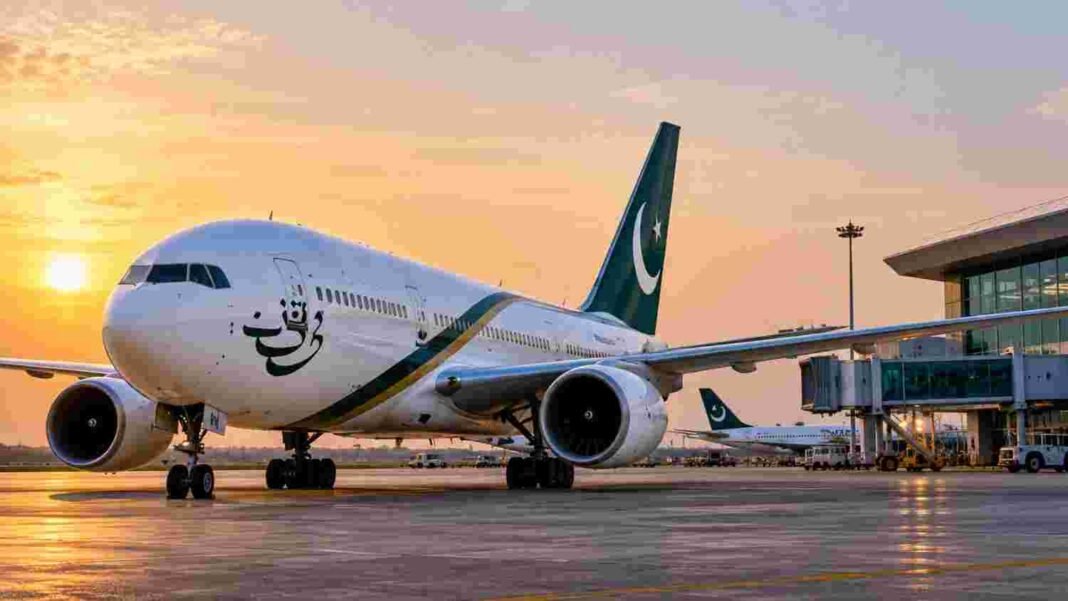
The government has clarified reports about a possible PIA Aircraft Purchase after questions emerged over talks with the US Export-Import Bank. Finance Minister’s Adviser Khurram Shehzad said the government does not plan to buy aircraft for Pakistan International Airlines after privatization.
Shehzad said the government has not announced any sovereign guarantee for new PIA aircraft. Moreover, he stressed that taxpayers will not finance loans for such purchases.
According to him, recent discussions about the US Export-Import Bank created confusion over the government’s role. Therefore, he explained how the American financial institution supports international buyers of US-made products.
The US Export-Import Bank promotes American exports and supports employment in the United States. Since Boeing produces aircraft in the US, the bank can provide financing options to overseas companies that want to buy them.
However, Shehzad said this financing does not automatically mean that Pakistan’s government will buy planes for PIA. Instead, commercial entities can explore financing arrangements under their own business structures.
The adviser explained that an aircraft can itself provide security for financing under an asset-based arrangement. Therefore, lenders may not always require a sovereign guarantee.
The clarification also addressed concerns about a possible PIA Aircraft Purchase using public money. Shehzad said authorities have not announced any taxpayer-funded loan, hidden subsidy, or state financial backing for such a deal.
Instead, he said the government wants to help businesses connect with international lenders and investors. At the same time, private companies will remain responsible for their investment and commercial decisions.
Shehzad also clarified that discussions with the US Export-Import Bank did not focus only on PIA. Both sides explored several possible areas where international financing could support major commercial projects.
For example, they discussed opportunities in the aviation sector, oil refineries, and the Reko Diq mining project. The talks also focused on opening financing opportunities rather than creating new government liabilities.
The government continues to advance its privatization policy. Therefore, officials want private investors to play a larger role in running commercial enterprises and making future investment decisions.
According to Shehzad, private-sector-led growth does not mean that the government should operate businesses itself. Instead, authorities should create an environment where private companies can invest and expand.
The PIA Aircraft Purchase issue has attracted attention because of the airline’s privatization process. However, Shehzad stressed that privatization changes ownership and commercial management, not access to international financing.
He explained that a privatized business can still work with international financial institutions. Similarly, the government can help connect businesses with investors, lenders, and foreign partners.
However, private companies must make their own commercial decisions. They must also accept financing according to the terms and financial structures agreed with lenders.
Shehzad repeated that the government has announced neither a loan nor a sovereign guarantee for PIA. Furthermore, he rejected the impression that the state would use public funds to finance new aircraft.
The government’s role, according to the adviser, focuses on creating opportunities and improving access to global markets. Meanwhile, companies must decide whether those opportunities match their business plans.
This approach also fits the government’s wider privatization strategy. Authorities want to reduce direct state involvement in commercial operations while encouraging private investment.
At the same time, international financing can help businesses expand without depending directly on government funding. For example, asset-backed financing can let companies buy expensive equipment while using that equipment as security.
In aviation, an airline can use an aircraft as part of the financing arrangement. Therefore, a PIA Aircraft Purchase could involve commercial financing without requiring the government to become the buyer.
Still, any future financing deal would depend on negotiations between the relevant company and financial institution. The commercial terms, repayment structure, security arrangements, and other conditions would determine how the transaction works.
Shehzad also stressed that discussions with international financial institutions remain part of the government’s broader effort to attract investment. Moreover, officials want to connect Pakistani businesses with financing opportunities available in global markets.
The clarification aims to separate government facilitation from government ownership or direct spending. In simple terms, the government can help businesses find financing opportunities without purchasing assets for them.
Similarly, privatization does not prevent a company from seeking support from international lenders. Instead, private owners can negotiate financing according to their commercial needs and financial position.
The adviser maintained that authorities have not announced any public debt arrangement for PIA. Likewise, he said the government has not introduced any hidden subsidy or financial guarantee linked to new aircraft.
Therefore, reports suggesting a direct government-funded PIA Aircraft Purchase do not match the position outlined by the finance adviser. He said the government plans to facilitate investment while allowing businesses to manage their own operations.
Overall, the clarification indicates that the government wants to support access to international financing without directly funding PIA’s future aircraft purchases. Under this model, private businesses would make investment decisions while the government would focus on creating a supportive environment for investment and economic growth.