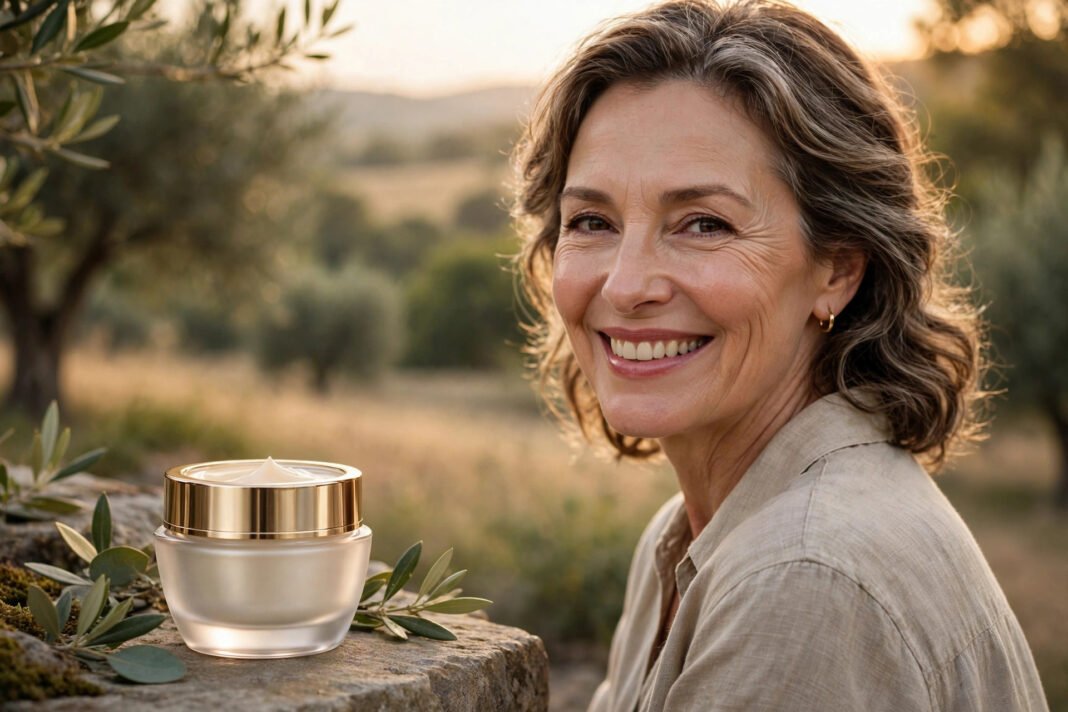
Wrinkles are normal. They are also, to a meaningful degree, modifiable — not erased, not frozen in time, but softened and slowed by habits and ingredients with genuine evidence behind them. The anti-aging industry thrives on implying otherwise, selling the idea that the right cream turns back the clock. This guide takes the opposite approach: what actually influences how skin ages, what you can do at home with realistic expectations, and where the line sits between skincare and medical procedures.
What Causes Wrinkles in the First Place
Skin wrinkles through two overlapping processes. Intrinsic aging is the slow internal clock: from your mid-20s, collagen production declines roughly 1% per year, elastin fibers weaken, and the skin thins. This is genetic and gradual. Extrinsic aging is damage from outside — and it is responsible for the majority of visible aging. The dominant extrinsic factor, by a wide margin, is ultraviolet radiation. Dermatologists estimate that up to 80% of visible facial aging is photoaging: UV breaks down collagen, creates abnormal elastin, and drives pigmentation changes. Smoking, air pollution, chronic stress, poor sleep, and repeated facial movements (expression lines) contribute the rest.
The practical takeaway: the most powerful anti-wrinkle intervention is not a cream. It is sun protection, started as early as possible and maintained daily.
The Foundation: What Matters More Than Any Serum
Daily sunscreen
Broad-spectrum SPF 30 or higher, applied generously every morning and reapplied during extended outdoor time. Studies tracking sunscreen users over years show measurably less skin aging compared with non-users. If you adopt one habit from this article, make it this one.
Not smoking — and limiting alcohol
Smoking constricts blood vessels, depletes vitamin C, and directly damages collagen and elastin; smokers develop deeper wrinkles measurably earlier. Heavy alcohol use dehydrates and promotes inflammation. No topical product compensates for either habit.
Sleep and stress
Chronic sleep deprivation impairs barrier recovery and is associated with more pronounced aging signs. Sleeping on your back reduces “sleep wrinkles” — the compression lines that, over decades, can etch into skin. Chronic stress elevates cortisol, which is linked to collagen breakdown. These are unglamorous levers, but they are real ones.
Ingredients With the Strongest Evidence
Retinoids: the gold standard
Retinoids (tretinoin by prescription; adapalene and retinol over the counter) have the deepest evidence base of any topical anti-aging ingredient. They increase collagen production, accelerate cell turnover, fade pigmentation, and — in long-term studies — measurably reduce fine wrinkles. They are also the ingredient most often misused.
How to start: begin with a low concentration two to three nights per week on dry skin, after cleansing. Expect mild flaking and sensitivity for the first weeks — this is the adjustment period, not damage. Increase frequency gradually over months. Always pair retinoid use with strict morning sunscreen, because retinoids increase sun sensitivity. Avoid during pregnancy and when trying to conceive.
Vitamin C (L-ascorbic acid, 10–20%)
An antioxidant that supports collagen synthesis and defends against the free-radical damage UV generates. Used in the morning under sunscreen, it complements sun protection rather than replacing it. As with all vitamin C, protect the bottle from light and heat.
Niacinamide (4–5%)
Improves elasticity, strengthens the barrier, evens tone, and reduces the appearance of fine lines with excellent tolerability. A strong supporting ingredient for long-term use.
Peptides (e.g., Matrixyl-type signal peptides)
Short chains of amino acids that signal skin to produce more collagen. Evidence is promising but less deep than for retinoids; they are a reasonable addition, not a replacement.
AHAs (glycolic, lactic acid)
Chemical exfoliants that smooth surface texture and, with consistent use, modestly improve fine lines. Once or twice weekly is enough; daily strong exfoliation thins the barrier it is meant to improve.
Hyaluronic acid and moisturizers
These do not remove wrinkles, but dehydrated skin makes every line look deeper. Keeping skin well hydrated visibly plumps fine lines — a real cosmetic effect, even if it is not structural anti-aging.
A Simple Anti-Aging Routine
Morning: gentle cleanser → vitamin C serum → moisturizer → broad-spectrum SPF 30+ sunscreen.
Evening: cleanser → retinoid (2–3 nights per week to start, building toward nightly) → moisturizer. On non-retinoid nights, a peptide or niacinamide serum can go under the moisturizer.
This routine contains every evidence-backed element and nothing it does not need. Complexity is the enemy of consistency, and consistency over months is what produces results.
What About the Popular Extras?
- Facial massage, gua sha, and face yoga. Pleasant, and lymphatic drainage can temporarily reduce puffiness. There is no good evidence they rebuild collagen or erase wrinkles. Enjoy them as ritual, not treatment.
- Collagen creams. Collagen molecules are too large to penetrate skin meaningfully. They moisturize the surface — fine — but they do not replace lost dermal collagen.
- Collagen supplements. Early research shows modest improvements in skin elasticity for some formulations, but evidence is preliminary and product quality varies widely. Not a substitute for retinoids and sunscreen.
- LED/red-light masks. In-office devices have some evidence for collagen stimulation; at-home masks are far weaker and the evidence base is thin. Manage expectations accordingly.
- “Instant wrinkle” creams. Products with silicates or film-formers can temporarily tighten the appearance of skin for hours. The effect washes off. Useful before an event, not a treatment.
Expression Lines vs. Sun Damage: Different Problems
It helps to know which kind of line you are looking at. Dynamic wrinkles (forehead lines, crow’s feet, frown lines) come from repeated muscle movement and deepen with age as skin thins. Skincare softens them modestly; only neuromodulators (like Botox) relax the underlying muscle, which is why they are the medical answer for expression lines. Static wrinkles (etched-in lines visible at rest) and textural roughness come mostly from photoaging and respond best to sun protection, retinoids, and resurfacing procedures.
When Home Care Reaches Its Limit
Topical skincare improves fine lines and slows future damage, but it cannot lift sagging skin or erase deep folds. Procedures that can — neuromodulators for expression lines, dermal fillers for volume loss, laser resurfacing and chemical peels for texture, microneedling for collagen induction — are medical treatments with real risks, costs, and downtime. They belong with qualified dermatologists or plastic surgeons, not with bargain clinics or at-home devices. A trustworthy practitioner discusses risks and shows realistic before-and-after photos of their own patients.
Mistakes That Age Skin Faster
- Tanning — including “base tans.” There is no safe tan from UV. A base tan provides negligible protection while adding damage.
- Skipping sunscreen because you work indoors. UVA penetrates window glass; cumulative near-window exposure is real.
- Over-exfoliating in pursuit of glow. A compromised barrier ages worse, not better.
- Starting five actives at once. Irritation causes inflammation, and chronic inflammation degrades collagen — the opposite of the goal.
- Expecting a cream to do a procedure’s job. Deep nasolabial folds and significant laxity do not respond to topicals. Honest expectations prevent wasted money and disappointment.
The Forgotten Areas: Neck, Hands, Eyes, and Lips
Most anti-aging routines stop at the jawline, and it shows. The neck has thinner skin with fewer oil glands, so it ages visibly — extend your sunscreen, retinoid (buffered with moisturizer, since neck skin irritates easily), and moisturizer down to the collarbone. The hands betray age through sun spots and thinning skin; they get constant UV through car windows and are washed frequently. Apply sunscreen to the backs of your hands every morning and reapply hand cream through the day. The eye area has the thinnest skin on the face — crow’s feet appear early. A dedicated eye cream is optional, but your retinoid should be kept at a careful distance from the eyes (it migrates), and sunglasses do more for crow’s feet than any cream by preventing squinting. Lips lose volume and develop vertical lines with age and sun; an SPF lip balm used daily prevents much of it.
What Age Should You Start?
There is no single right answer, but the evidence supports a staged approach rather than waiting for visible aging:
- Teens to 20s: sunscreen daily. That is the entire anti-aging program, and it is the highest-value step of all.
- Mid to late 20s: add an antioxidant serum (vitamin C) in the morning. Consider a low-strength retinoid if you also deal with acne or early texture concerns — many people start retinoids for acne and get the anti-aging benefits as a bonus.
- 30s: introduce a dedicated retinoid routine if you have not already, plus niacinamide or peptides for elasticity support. This is when collagen decline becomes cosmetically visible and intervention has the most preventive value.
- 40s and beyond: maintain the core routine; richer moisturizers compensate for decreasing oil production. This is also when professional options (lasers, fillers, neuromodulators) become relevant conversations — with qualified practitioners, not as replacements for the daily routine.
Starting retinoids “too early” is less of a risk than starting them aggressively at any age. Slow introduction beats early introduction.
How Long Before You See Results?
Honest timelines prevent the disappointment that makes people quit. Sunscreen: prevention is invisible — its results are the aging that does not happen over years. Hydration: plumping of fine lines within days. Vitamin C and niacinamide: tone and brightness improvements in 4 to 8 weeks. Retinoids: texture improvement in 8 to 12 weeks; measurable wrinkle reduction in 6 to 12 months of consistent use. Anyone whose routine “did nothing in two weeks” simply has not reached the first checkpoint yet. Photograph your skin monthly in consistent lighting — gradual improvement is invisible day to day.
Protecting Your Investment: Maintenance for Life
Anti-aging skincare is not a course with a graduation date — it is maintenance, like exercise. Collagen keeps declining, UV keeps arriving, and stopping the routine lets the clock resume from where it would have been. That sounds discouraging until you reframe it: the routine itself is simple (cleanse, vitamin C, moisturize, sunscreen; retinoid at night), takes under five minutes twice a day, and its payoff compounds over decades. The people with the best skin at 60 are rarely the ones who bought the most expensive products at 50 — they are the ones who wore sunscreen at 25 and never stopped. Start where you are, build the habit, and let time do the compounding.
Quick Answers
At what age should I start anti-aging skincare? Sunscreen from childhood; vitamin C in the mid-to-late 20s; retinoids in the late 20s to 30s, introduced slowly. Prevention beats correction at every stage.
Can moisturizer remove wrinkles? No — but dehydrated skin makes wrinkles look deeper, so good hydration visibly softens fine lines within days. It is a real cosmetic improvement, just not structural anti-aging.
Are expensive anti-aging creams worth it? Price buys texture and packaging more than efficacy. The ingredients with the strongest evidence — retinoids, vitamin C, niacinamide, sunscreen — are available at every price point. Check the ingredient list, not the price tag.
The Bottom Line
Protect from the sun every day, use a retinoid consistently, support with vitamin C and niacinamide, do not smoke, sleep properly — and give it months, not days. That is the entire evidence-based anti-aging program. Everything else is either a pleasant extra or marketing.