Freedom of Expression Conference Seeks Journalist Safety
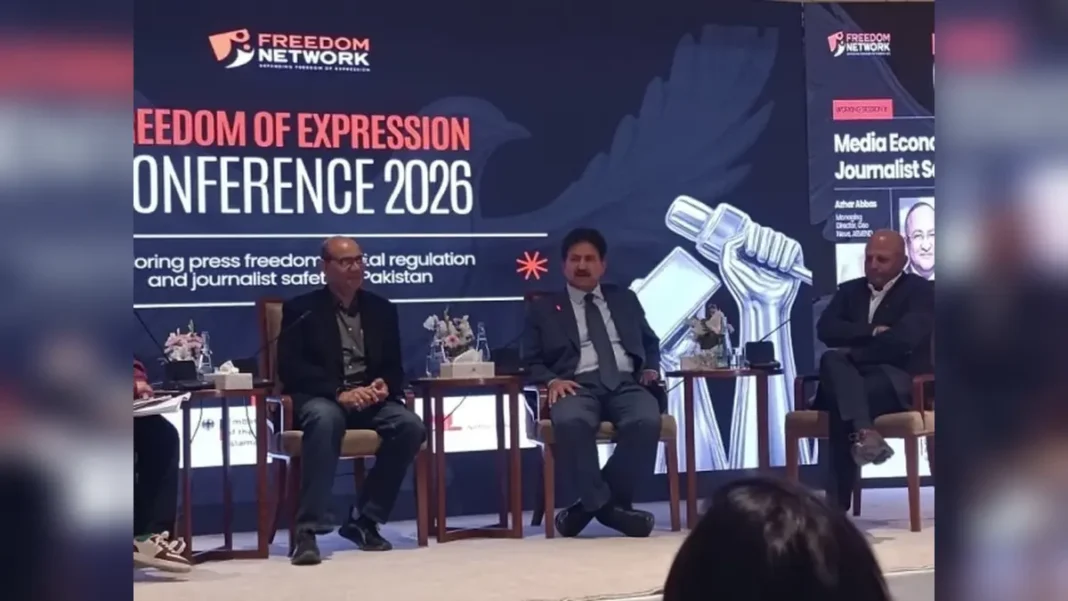
A freedom of expression conference in Islamabad on Wednesday called for stronger safeguards for free speech and journalist safety, warning the space for independent media keeps shrinking despite protective laws.
The conference, “The Future of Freedom of Expression: Technology, Safety and Accountability”, brought together ambassadors, parliamentarians, journalists, civil society, academics and students. It urged policymakers, institutions and media houses to protect the public’s right to information and shield journalists from harassment.
Freedom Network organised the event. Its executive director Iqbal Khattak said free speech must be judged by how a society treats dissent. “A society should not be judged only by how freely it allows people to speak when they agree with those in power, but by how well it protects their right to speak when they disagree,” he said.
What the freedom of expression conference demanded
The participants put forward a set of practical recommendations for newsrooms, the state and the media industry. They called for journalist safety training to become regular newsroom practice, so reporters understand legal risks and can work safely online.
They also linked editorial independence to money, recommending that media houses diversify income through subscriptions and rely less on government advertising, which can pressure coverage.
On AI and misinformation, participants called for several layers of human oversight, careful editorial checks and greater scepticism towards claims on social media. AI-driven fakery is already a live problem in Pakistan: broadcaster Yalda Hakim recently called a viral video of her an AI deepfake.
On gender and safety, participants called for support networks among women journalists, a single referral system for harassment complaints, and real independence for the federal and Sindh journalist protection commissions, so they can carry out their mandates and fight impunity.
Three panels and two working sessions covered free expression in the digital age, gender and safety, and tackling impunity.
EU envoys back independent media in Pakistan
Ambassadors from three European Union states addressed the conference and restated support for independent media and journalist safety.
German Ambassador Ina Lepel called freedom of expression a fundamental human right and a foundation of democratic societies, adding press freedom cannot exist while half the population faces extra barriers. “There can be no genuine freedom of expression without women’s freedom to express themselves, safely, independently, and without fear,” she said.
Lepel spoke on the International Day for the Elimination of Violence against Women. Senator Sherry Rehman has separately called for an end to impunity for violence against women.
French Ambassador Jean-Noel Poirier said free expression and press freedom were not ideals but essentials for any resilient society. His three priorities: backing independent journalism, holding big platforms to account, and making sure AI serves journalism rather than undermining it. “You cannot fight disinformation with censorship; you fight it with reliable, verified facts,” he said.
Netherlands Ambassador Robert-Jan Siegert pointed to the culture of impunity for crimes against journalists. “Journalists play a vital role in holding those in power accountable. Yet worldwide, almost nine out of ten killings of journalists remain unresolved. This culture of impunity is unacceptable,” he said.
PECA and the shrinking space for free speech
Much of the debate turned on the Prevention of Electronic Crimes Act (PECA) and its 2025 changes. The Senate passed the amendment on January 28, 2025, widening the government’s powers to regulate online content and punish digital offences. Journalists, media groups and rights activists criticised the law as a blow to free expression.
The Tribune reported that censorship under PECA has become entrenched, while journalists face growing safety and economic pressure. The debate follows an earlier Islamabad seminar on social media accountability.
Freedom Network’s annual report of May 2, 2026 recorded a sharp contraction in free expression over the previous year, driven by legal, regulatory and economic pressure. The report called the amended PECA the most consequential instrument used to restrict journalists and free speech practitioners.
The report documented at least 129 verified incidents of violations against journalists and media workers between April 2025 and March 2026. Legal threats and physical violence accounted for nearly two-thirds of the cases. The figures give the demands a hard edge: the problem is not only the law on paper, but reporters facing threats and attacks in practice.
What happens next
The conference closed with a call for sustained cooperation to build a safer, more accountable and sustainable media environment. No new law or policy was announced, and the recommendations now rest with the government, regulators and media owners.
Journalists in Balochistan recently won lawmakers’ backing for a resolution on their protection. The Human Rights Commission of Pakistan has also warned of democratic erosion in the country. When reporters face threats or self-censor, the public hears less about corruption, public spending and abuse of power.
Frequently asked questions
What did the Islamabad conference call for?
The conference called for stronger safeguards for freedom of expression, journalist safety and accountability. Its recommendations included safety training in newsrooms, diverse revenue for media houses, human oversight of AI-driven content, support networks for women journalists and stronger, independent commissions to protect journalists.
What is PECA and why do journalists oppose the 2025 changes?
PECA is the Prevention of Electronic Crimes Act, first enacted in 2016 to combat cybercrime. Amendments passed by the Senate in January 2025 widened the government’s powers to regulate online content and punish digital offences. Journalists and rights groups say the changes have been used to criminalise lawful expression and target dissent.
How many attacks on journalists did Freedom Network record?
Freedom Network’s annual report for 2026 documented at least 129 verified incidents of violations against journalists and media workers between April 2025 and March 2026. Legal threats and physical violence accounted for nearly two-thirds of those cases.
What did the European ambassadors say at the conference?
The German, French and Netherlands ambassadors all backed independent media and journalist safety. Germany’s Ina Lepel stressed women’s freedom to speak safely, France’s Jean-Noel Poirier said disinformation must be fought with verified facts rather than censorship, and the Netherlands’ Robert-Jan Siegert warned that almost nine in ten journalist killings worldwide remain unresolved.
What protections were proposed for women journalists?
Participants called for solidarity and support networks among women journalists, a single referral mechanism to report harassment and seek redress, and special measures to protect women journalists from online and offline harassment.