Pakistan to end machine-readable passports within a month in full e-passport shift
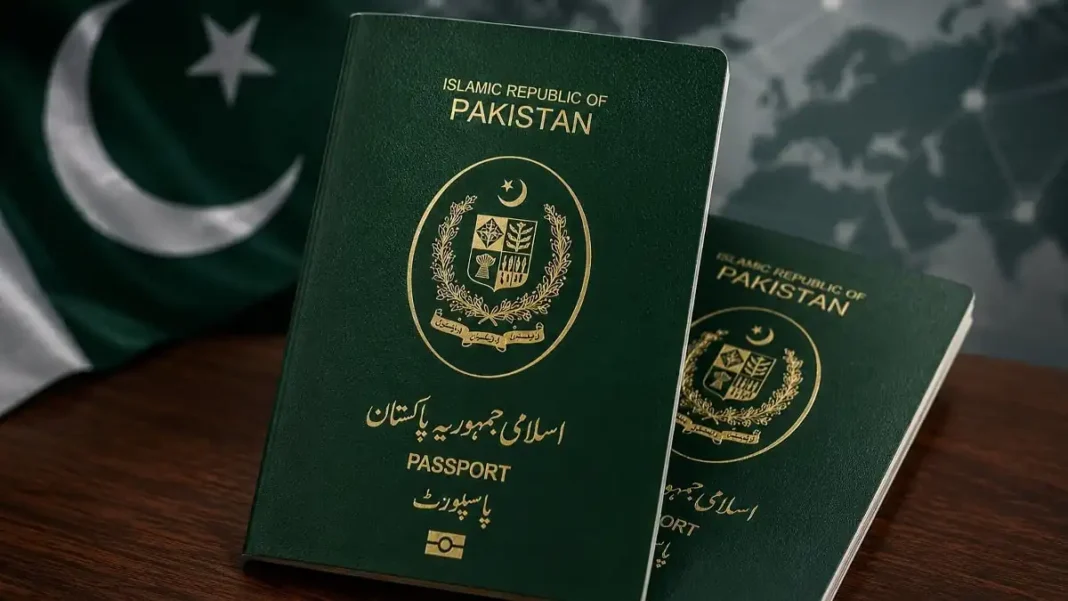
ISLAMABAD: The federal government has decided to discontinue the issuance of machine-readable passports (MRPs) within a month and shift fully to electronic passports, setting a clear Pakistan e-passport timeline for the first time.
The Ministry of Interior informed the National Assembly that once the transition is complete, only e-passports will be issued at passport offices across Pakistan and at Pakistani missions abroad.
What the Pakistan e-passport timeline means
The decision came in response to a question raised by MNA Malik Shakir Bashir Awan during the National Assembly’s Question Hour. Responding to supplementaries, Minister for Parliamentary Affairs Dr Tariq Fazal Chaudhry said the government was working to introduce the new system within approximately a month.
The minister said Pakistan was adopting e-passports to keep pace with technological advances and changing immigration requirements around the world. The electronic chip embedded in e-passports, he said, would make forgery impossible and significantly improve document security.
He acknowledged, however, that Pakistan’s large population and operational challenges at passport offices could delay the rollout. He assured lawmakers that the government was making every effort to complete the transition as soon as possible.
Responding to another question by Syed Tariq Hussain, Chaudhry agreed that the existing passport system needed upgrading to meet changing global immigration standards. E-passport technology is already in use worldwide, he noted, and Pakistan is moving toward the same system.
Existing passports stay valid
An important reassurance for travellers: existing machine-readable passports will remain valid until their respective expiry dates. Nobody holding a current MRP needs to rush for a replacement before it expires.
The phase-out applies to new issuance. Once the transition completes, passport offices and missions will only print the chip-embedded version.
Why the chip matters
An e-passport carries a contactless chip that stores the holder’s biometric data, including facial image and fingerprints, alongside the printed personal details. Border systems can read the chip and match it against the traveller in seconds, which is why immigration authorities worldwide are moving toward the standard.
For Pakistani travellers, the shift should mean faster processing at airports with e-gates and fewer questions about document authenticity. For the state, the chip closes off the forgery routes that have plagued paper-based travel documents.
The cost side of the switch
Readers planning to apply should also know what the new documents cost. Pakistan announced the e-passport fee structure earlier this month, and applicants can check the applicable fee for their chosen validity period before visiting a passport office.
The transition also touches the broader citizen-services network. NADRA has set up 43 facilitation centres across 11 K-P districts with World Bank support, expanding the footprint of document services beyond the big cities.
The original reporting on this development was published by ProPakistani. For travel-document news, see also Oman agrees to visa-free entry for specific Pakistani passport holders.
FAQ
When will Pakistan stop issuing machine-readable passports?
The federal government says MRP issuance will end within approximately a month, after which only e-passports will be issued at passport offices in Pakistan and missions abroad.
Will my existing passport remain valid?
Yes. Existing machine-readable passports remain valid until their printed expiry dates. The phase-out covers new issuance only.
What makes an e-passport different?
An e-passport contains an embedded electronic chip storing the holder’s biometric data. The government says the chip makes forgery impossible and speeds up immigration checks.
Could the rollout be delayed?
The parliamentary affairs minister acknowledged that Pakistan’s large population and operational pressures at passport offices could slow the transition, while assuring lawmakers the government is working to finish it quickly.