

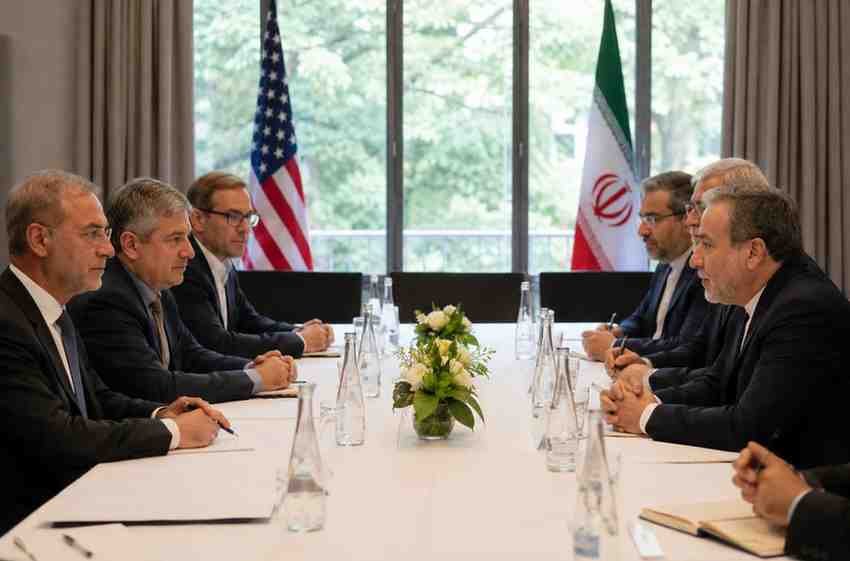
Bern: Pakistan has described the first round of US-Iran negotiations in Switzerland as a major success after both sides agreed to continue talks under a 60-day roadmap for a final agreement.
Field Marshal Syed Asim Munir shared Pakistan’s response during a conversation with ARY News senior anchorperson Wasim Badami at Bürgenstock. He thanked Allah for the progress and said Pakistan had achieved a major success through its diplomatic role in the talks.
Pakistan played a central role in bringing the United States and Iran to the negotiating table. Qatar also supported the mediation process. Therefore, the first round of discussions marked an important step toward reducing tensions between the two countries.
Asim Munir said the agreement on a roadmap showed that Pakistan’s efforts had produced meaningful results. He said the country worked with sincerity and commitment to help both sides move toward a peaceful solution.
“Alhamdulillah, Pakistan has achieved a major success,” he said. “Allah Almighty granted this success through His mercy and blessings.”
The discussions took place at the mountain resort of Bürgenstock in Switzerland. US and Iranian delegations completed the initial phase of the talks and prepared to leave after the meetings.
Meanwhile, Prime Minister Shehbaz Sharif also participated in Pakistan’s diplomatic engagement during the negotiations. He plans to depart Switzerland for Pakistan at 11:30 am local time.
Pakistan and Qatar later issued a joint statement on the outcome of the talks. The statement said that Iran and the United States had agreed to work toward a final agreement within 60 days.
The two countries also agreed to begin technical-level negotiations immediately. These talks will focus on key issues that have created tension between Washington and Tehran for years.
Pakistan and Qatar will establish a high-level committee to supervise the dialogue process. The committee will help both sides maintain communication and address concerns during the next phase of negotiations.
Moreover, the countries will create separate working groups for the Iranian nuclear program, sanctions, and dispute resolution. These groups will study the issues in detail and prepare practical recommendations for the next rounds.
The joint statement also referred to the situation in Lebanon. Pakistan, Qatar, Iran, and the United States plan to create a special coordination cell to support efforts aimed at ending military operations there.
In addition, the participants agreed to establish a coordination system for commercial ships transiting the Strait of Hormuz. This mechanism will help protect trade routes and support the safe movement of vessels in one of the world’s most important waterways.
Iranian Foreign Minister Abbas Araghchi also welcomed the progress made during the talks. Moreover, he said Pakistan and Qatar had made determined efforts to bring the two sides closer.
He said the negotiations had been a major success for diplomacy because they addressed several urgent regional concerns simultaneously. He claimed that restrictions on Iranian oil and petrochemical exports had ended.
Furthermore, Araghchi said authorities had released part of Iran’s frozen assets. He added that Iran would begin a large reconstruction and development program as part of the wider understanding reached during the talks.
However, he noted that future negotiations would decide the full details of the agreement. He said all parties would need to continue their work carefully and responsibly.
Araghchi also described the proposed Lebanon de-confliction cell as the first serious test of the new understanding. The cell will monitor developments and help prevent further escalation.
Pakistan sees the talks in Switzerland as a major success because they have opened a direct path for continued dialogue between Iran and the United States. The talks have also placed Pakistan in a strong diplomatic position on the global stage.
Therefore, the coming 60 days will remain important for all sides. Pakistan and Qatar will continue to support the process as Iran and the United States work toward a final agreement.
The outcome of the first round has given regional diplomacy fresh momentum. Pakistan now hopes that this major success will lead to lasting peace, stable trade routes, and reduced conflict across the region.