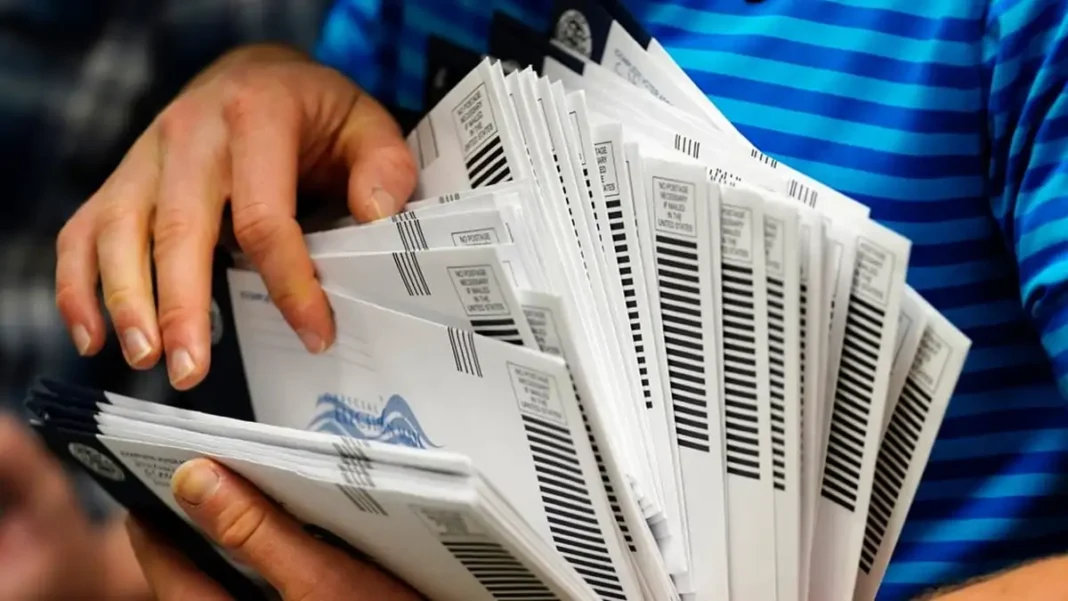
WASHINGTON: The Trump administration has intensified scrutiny of voter-registration records. The November 3 midterm elections are approaching. Specifically, officials are using immigration databases and federal investigators. In addition, they are using large-scale data analysis. The goal is to flag suspected non-citizens on voter rolls. The US election immigration crackdown has now reached the courts. In fact, the Justice Department is suing California over thousands of registered voters.
The campaign has brought Washington into conflict with 17 states. The latest is California. For example, the department has sued over 20,000 people there. It calls them likely non-citizens registered to vote. In addition, it wants their mail-in ballots set aside. This would last until citizenship is verified.
The lawsuit against California
The dispute escalated on October 15. That day, the Justice Department filed suit in a US District Court in California. It asked the court to bar the state from counting mail-in ballots. This concerns the ballots of those voters in the midterm elections on November 3. Specifically, the bar would last until each voter’s status is confirmed.
Before filing, the department gave California 48 hours. Specifically, the state was to review a password-protected thumb drive holding the names. The drive went to Los Angeles County Registrar Dean Logan. It came with a handwritten note carrying the password. Logan is also a defendant. According to Logan, his office did not consider the drive secure.
California Secretary of State Shirley Weber pushed back in a three-page letter. She wrote that the department was demanding “unprecedented measures that threaten thousands of Californians’ right to vote, based on unverifiable information or methodology that you still fail to explain or provide.”
The case has revived debate over federal and state authority in elections. Federal law governs who may vote in federal elections. States, meanwhile, administer elections and maintain voter-registration systems. California argues it needs reliable proof. Specifically, it wants proof before acting against voters whose eligibility remains unresolved.
How the US election immigration crackdown works
Internal documents show the scale of the operation. In fact, the advocacy organisation Democracy Forward obtained them under the Freedom of Information Act. The 166 pages of records reveal a key fact. Homeland Security Investigations obtained 48.4 million records. It is the investigative arm of Immigration and Customs Enforcement. According to the records, the sources were described as independent of the government.
Investigators also scrutinised voter-registration organisations. They weighed deploying undercover agents. Specifically, the targets were groups suspected of helping non-citizens register. In addition, the Justice Department has warned state and local election officials. They could face criminal liability for knowingly counting ballots cast by ineligible voters.
Under the method described in the California lawsuit, federal officials match records. Specifically, they compare voter-registration records against immigration-related information. Then they use federal records to assess citizenship status. These include alien registration numbers. However, the process raises reliability questions. Immigrants flagged in old records may since have become naturalised US citizens. In one earlier episode, the federal government made a claim. It alleged that nearly 16,000 possible non-citizens sat on Nevada’s voter rolls. Subsequently, Nevada officials checked. They found all of them were US citizens.
Why immigrant voters matter in the midterms
Naturalised citizens form a substantial electorate in many congressional districts. Of 46 million immigrants in the United States, 24.5 million are naturalised citizens eligible to vote. This is according to the University of Virginia’s Weldon Cooper Center for Public Service. An American Immigration Council analysis gives more numbers. Specifically, it estimates 22.5 million eligible naturalised voters across 284 congressional districts. This includes about 16 million registered voters. In 126 districts, their numbers exceeded the 2024 margin of victory.
Latino voters are an important part of this electorate. An NBC News/Telemundo poll was published in October. Specifically, it found 59 per cent of Latino respondents favoured Democratic control of Congress. Only 35 per cent favoured Republican control. Moreover, about two-thirds said Trump’s deportation policies had gone too far.
Mail-in ballots sit at the centre of the fight. A Pew Research Center analysis of the 2024 election gives the breakdown. Specifically, it found 44 per cent of Democratic voters cast ballots by mail or absentee. This compares with 26 per cent of Republicans. In fact, about 30 per cent of all 2024 ballots went by mail. In September, the US Supreme Court rejected a Trump administration effort. Specifically, the effort aimed to restrict mail-in ballots for the November 3 elections.
The scrutiny forms part of a wider immigration enforcement drive. For example, it has already seen 250,000 visas revoked. Tighter rules now apply to H-1B visa holders. This comes as Trump’s approval ratings face the midterm test.
The story was first reported by Dawn. In addition, details came from Al Jazeera’s coverage of the California lawsuit.
Frequently asked questions
What is the US election immigration crackdown?
The Trump administration is mining immigration databases. Specifically, it is using federal investigators to flag suspected non-citizens on voter rolls. This is happening ahead of the November 3 midterm elections. The Justice Department has sued California. In fact, it identified 20,000 registered voters as likely non-citizens.
Why is California being sued?
The Justice Department alleges more than 20,000 likely non-citizens are registered to vote in California. In addition, it wants their mail-in ballots set aside until citizenship is verified. California disputes this. It says the federal data is unverified. It needs reliable proof before acting.