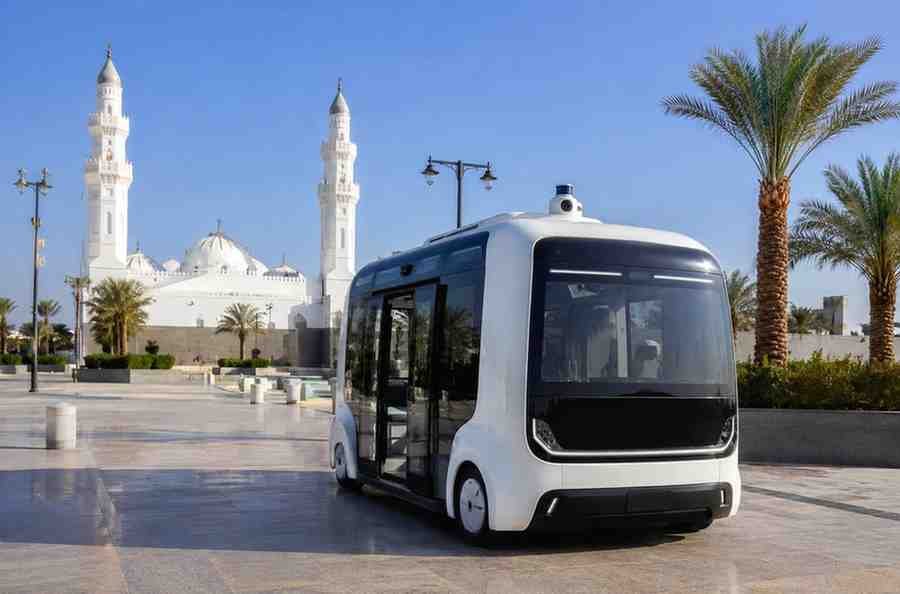
Saudi Arabia has introduced the robobus at the Quba Mosque as part of its growing push toward smart transportation and artificial intelligence. The new autonomous vehicle now operates within the courtyard of the Quba Mosque, offering a modern travel experience for visitors and worshippers.
According to Saudi media reports, the robobus at the Quba Mosque uses advanced artificial intelligence technology. The system relies on smart sensors and high-resolution cameras to move safely through the designated area. In addition, the vehicle does not require a human driver during operation.
Officials said the service allows worshippers to travel nearly 700 meters inside the mosque’s inner courtyard. As a result, elderly visitors and people with mobility difficulties may find the service more convenient during busy prayer hours.
Saudi authorities launched the robobus at the Quba Mosque under a trial phase that will continue for 60 days. During this period, technical teams will monitor the vehicle’s performance and passenger experience. Furthermore, officials aim to evaluate safety standards and operational efficiency before any long-term expansion.
The launch reflects Saudi Arabia’s wider focus on digital transformation and smart city projects. In recent years, the Kingdom has introduced several technology-driven services in religious and public areas. Therefore, the introduction of the robobus at Quba Mosque highlights how modern technology continues to support pilgrims and visitors.
Meanwhile, Saudi authorities have also increased preparations for the upcoming Hajj season. The General Directorate of Civil Defense activated temporary service centers in Mecca and Medina to improve safety arrangements for pilgrims.
Reports said different government departments have established special facilities along routes connecting the two holy cities. In addition, highly trained teams now work around the clock to assist pilgrims and manage emergencies.
Officials confirmed that 27 seasonal centers are now operating in various locations during the Hajj season. These centers provide security support, emergency response services, and guidance for millions of visitors arriving in Saudi Arabia.
At the same time, Saudi authorities also arrested 18 foreign nationals for allegedly preparing fake Hajj permits. Officials said security teams continue strict monitoring to protect pilgrims and maintain order throughout the pilgrimage season.