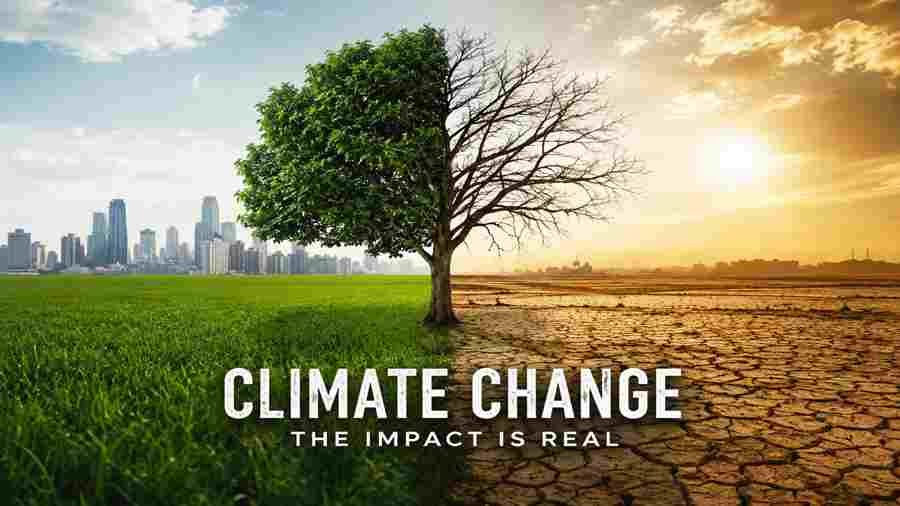
Lahore recently experienced extreme temperatures that made daily life uncomfortable and fearful. Roads looked emptier during the afternoon. Electricity demand surged across the city. Parents kept children indoors, while hospitals issued repeated heat-related warnings.
Yet despite these visible changes, many people still continue the same old debate about climate change.
Some call it a natural cycle. Others believe global institutions exaggerate the issue for political or financial reasons. However, the climate change impact visible across Pakistan and the rest of the world today is becoming too serious to dismiss as just another opinion.
The conversation is changing because reality itself is changing.
Climate change no longer feels like a distant environmental issue discussed only at international conferences. It is now affecting ordinary people directly through rising temperatures, floods, water shortages, food prices, electricity pressure, and public health concerns.
Pakistan is already experiencing this transformation in real time.
Climate Change Is Reshaping Pakistan
In recent years, Pakistan has faced devastating floods, dangerous heatwaves, irregular rainfall, and worsening air quality. These events are no longer rare. They are becoming increasingly common.
According to the United Nations Development Programme (UNDP) Pakistan, Pakistan remains among the countries most vulnerable to climate change despite contributing less than 1% of global greenhouse gas emissions.
The 2022 floods alone affected more than 33 million people and caused economic losses exceeding $30 billion, according to the World Bank.
Similarly, the National Disaster Management Authority (NDMA) Pakistan continues to warn about increasing risks from floods, heatwaves, droughts, and extreme weather emergencies across the country. NDMA assessments repeatedly highlight how vulnerable communities, weak infrastructure, and rapid urbanization are increasing Pakistan’s exposure to climate-related disasters.
The Pakistan Meteorological Department (PMD) has also issued frequent heatwave alerts in recent years as temperatures continue reaching dangerous levels across several cities, including Lahore, Karachi, and Jacobabad.
Many cities now experience longer summers and shorter winters. Farmers struggle with unpredictable weather patterns that damage crops and reduce productivity. Urban areas face electricity breakdowns during periods of intense heat, while water scarcity continues growing in several regions.
The climate change impact is no longer limited to scientific reports or global headlines. It is now affecting daily routines, businesses, education systems, and even mental well-being.
For low-income communities, the burden becomes even heavier.
People who work outdoors often spend hours in dangerous temperatures without proper protection. Small businesses suffer during prolonged power outages. Elderly citizens and children face higher health risks during extreme weather conditions.
This is why climate change can no longer be treated as a future problem. It has already become part of everyday life.
Why the “Natural Cycle” Argument Feels Incomplete
Many people argue that climate change has existed throughout Earth’s history. That part is scientifically true.
However, climate experts continue to highlight one major difference: the speed of change today.
According to NASA Climate Change, Earth’s average surface temperature has risen by approximately 1.1°C since the late 19th century, largely driven by increased carbon dioxide emissions caused by human activity.
Natural climate shifts historically occurred over thousands of years. What concerns scientists now is how rapidly temperatures are rising within just a few decades.
The frequency of extreme weather events is increasing globally. Countries across Asia, Europe, and North America are reporting stronger heatwaves, floods, wildfires, and storms year after year.
The World Meteorological Organization (WMO) reported that recent years have been among the warmest ever recorded globally.
Pakistan remains one of the countries most vulnerable to these environmental shifts despite contributing only a small percentage of global emissions.
That reality raises an important question.
If climate change were simply a harmless natural cycle, why are extreme weather events becoming more destructive and economically damaging so quickly?
The Economic Side of Climate Change
The climate change impact is not only environmental. It is also deeply economic.
Governments and corporations around the world are investing billions into renewable energy, sustainable infrastructure, and climate adaptation projects. Insurance companies are reassessing risk zones, while investors increasingly favor industries prepared for environmental challenges.
According to the International Energy Agency (IEA), global investment in clean energy technologies is expected to exceed trillions of dollars as countries move toward low-carbon economies.
These decisions are not based on emotion alone.
Businesses respond to long-term financial risk. When extreme weather disrupts agriculture, transportation, electricity systems, and healthcare services, entire economies suffer.
Pakistan is already facing economic pressure from climate-related disasters. Flood recovery costs continue rising. Agricultural losses affect food prices and inflation. Heatwaves place additional stress on energy systems that already struggle to meet public demand.
The longer countries delay preparation, the greater the future cost becomes.
Climate Change Is Also a Public Health Crisis
One of the most overlooked aspects of climate change is its direct impact on human health.
Extreme heat can lead to dehydration, exhaustion, breathing difficulties, and heatstroke. Poor air quality worsens respiratory diseases, while floods increase the spread of waterborne infections.
According to the World Health Organization (WHO), climate change is expected to cause approximately 250,000 additional deaths per year globally between 2030 and 2050 due to malnutrition, malaria, heat stress, and other environmental health risks.
Mental health also suffers during environmental disasters.
People who lose homes, livelihoods, or financial stability often continue facing anxiety and emotional stress long after the disaster itself ends.
Children growing up in climate-sensitive environments may face a future shaped by uncertainty unless governments begin taking stronger long-term action today.
This makes climate change more than an environmental concern. It is now closely connected to healthcare, urban planning, economic stability, and education policy.
Pakistan Needs Action More Than Arguments
People still spend hours arguing online about whether climate change is real, exaggerated, or politically motivated. Meanwhile, temperatures continue rising, floods continue destroying communities, and cities continue struggling under environmental pressure.
The real danger today is not climate debate itself. The real danger is how much time societies waste while the crisis keeps accelerating.
Pakistan does not need more social media arguments about climate change. It needs stronger infrastructure, better urban planning, reliable disaster management systems, and long-term environmental policies.
The important questions are no longer theoretical.
Can our cities survive future heatwaves?
Can hospitals handle large-scale climate emergencies?
How will farmers manage worsening water shortages and unpredictable weather patterns?
Is Pakistan truly prepared for the economic and human cost of future climate disasters?
These are the questions that now matter most.
Because climate change is moving faster than our preparedness, while people continue debating the problem, the consequences are becoming increasingly visible with each passing year.
Climate Change Is No Longer a Distant Threat
Pakistan cannot control global climate patterns alone, but it can still reduce the damage through smarter planning, responsible resource management, and public awareness.
The need of the moment is not panic. It is adaptation.
Cities must invest in climate-resilient infrastructure, better drainage systems, urban tree plantations, and sustainable public transport. Water conservation can no longer remain optional in a country already facing growing shortages. Simple habits like reducing electricity waste, conserving water, limiting pollution, and supporting cleaner energy solutions can collectively create a meaningful impact over time.
At the institutional level, stronger disaster preparedness, climate-focused education, and long-term environmental policies are becoming essential for national stability. Schools, businesses, media platforms, and local communities all have a role to play in building awareness and encouraging sustainable practices.
Most importantly, Pakistan must begin treating climate change as a long-term governance challenge rather than a temporary seasonal issue.
The climate crisis may be global, but preparedness starts locally.
The choices made today about energy use, urban planning, water management, and environmental responsibility will directly shape how future generations live, work, and survive in the years ahead.