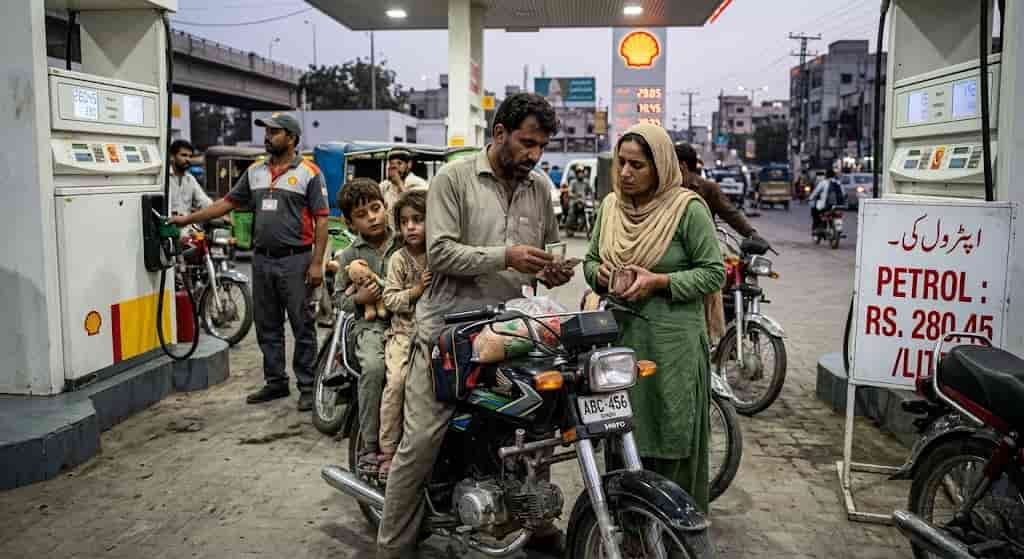
The latest increase in the petrol price in Pakistan has created another wave of concern among ordinary citizens who are already struggling with rising household expenses.
The government has increased petrol prices by Rs12.90 per litre, taking the new rate to Rs358.77 per litre from September 8, 2026.
For policymakers, it may look like a necessary adjustment based on international oil markets and economic conditions.
For millions of families, however, it represents another difficult challenge.
A few rupees increase at a fuel station may appear small on paper.
But for a daily wage worker, a small shopkeeper, a delivery rider, a teacher travelling to work or a family depending on a motorcycle for daily transport, every increase affects the monthly budget.
The real question is not only how much petrol costs today.
The bigger question is how ordinary Pakistanis will continue managing food, transport, education, healthcare and electricity expenses when fuel prices keep increasing.
Why Petrol Price Increases Hurt Common Families More
Petrol is not only used by car owners.
This is one of the biggest misunderstandings about fuel prices.
Many people think a petrol increase mainly affects those who own cars.
In reality, fuel prices influence almost every person in the country.
A farmer may not directly buy petrol every day, but transportation costs affect the price of agricultural products.
A student may not own a vehicle, but increased public transport fares affect their daily expenses.
A family may not drive a car, but higher delivery costs increase the prices of groceries and household items.
Fuel works like the engine of the economy.
When its cost increases, the impact travels through supply chains.
Transporters pay more.
Businesses pay more.
Consumers eventually pay more.
That is why petrol price increases often create pressure beyond fuel stations.
Poor Families Face the Biggest Burden
Inflation does not affect everyone equally.
A wealthy family may adjust its budget after a fuel increase.
A low-income family often has no room for adjustment.
For a household already spending most of its income on food, rent and bills, another increase can force difficult decisions.
Should they reduce food expenses?
Should children use cheaper transport?
Should medical appointments be delayed?
Should electricity consumption be reduced even further?
These are real choices many families face.
The problem becomes more serious because low-income households usually spend a larger share of their earnings on basic necessities.
Economists call this a regressive impact.
A fuel increase takes a smaller percentage of income from wealthy households but a much larger percentage from poor households.
Therefore, governments must consider the social impact of fuel pricing decisions.
Petrol Price Increase Directly Pushes Inflation
The relationship between fuel and inflation is extremely strong.
When petrol and diesel become expensive, transportation costs rise.
Pakistan depends heavily on road transport for moving goods across cities and provinces.
From vegetables and fruits to medicine and industrial products, most items travel through fuel-powered vehicles.
When transportation becomes expensive, businesses usually pass those additional costs to consumers.
The result is higher prices in markets.
A vegetable seller may pay more to bring products from wholesale markets.
A factory may spend more on transporting raw materials.
A retailer may face higher delivery charges.
Eventually, consumers pay the difference.
This is why petrol price in Pakistan is not just an energy issue.
It is also a food price issue, a business issue and a household budget issue.
Transport Fares Are Likely to Come Under Pressure
Millions of Pakistanis depend on public transport every day.
Students, workers and employees use buses, vans, rickshaws and motorcycles to reach their destinations.
When fuel prices increase, transport operators face higher operating costs.
Many eventually increase fares to survive.
For a person travelling twice daily, even a small increase can become a significant monthly expense.
Imagine a worker spending extra money every day on transportation.
Over a month, that amount can reduce the money available for food, school expenses or healthcare.
This is especially difficult for people who earn fixed salaries.
Their income does not automatically increase when fuel prices rise.
Small Businesses Also Feel the Pressure
Small businesses are among the groups most affected by fuel increases.
A small retailer may depend on transportation for stock delivery.
A food business may require daily supply movement.
A home-based entrepreneur may rely on delivery services.
When fuel becomes expensive, their costs increase.
However, raising prices is not always easy.
Customers are already struggling with inflation.
If businesses increase prices too much, they risk losing customers.
If they do not increase prices, their profit margins shrink.
This creates pressure across the entire small business sector.
Pakistan’s economy depends heavily on small businesses.
Therefore, fuel policies must consider their impact on entrepreneurship and employment.
Why Does the Government Increase Petrol Prices?
Governments usually explain fuel price increases through several factors.
These include international oil prices, exchange rates, import costs and taxation.
Pakistan imports a significant portion of its petroleum requirements.
Therefore, global energy markets and currency movements influence domestic prices.
When international costs rise or the rupee faces pressure, importing fuel becomes more expensive.
The government also collects taxes and levies through petroleum products.
Previous fuel price structures have included significant tax components on petrol and diesel.
These revenues contribute to government finances.
However, higher taxes on fuel also increase pressure on consumers.
This creates a difficult balance.
The government needs revenue.
Citizens need affordability.
A sustainable policy must consider both sides.
The Government Needs a Long-Term Fuel Strategy
Increasing petrol prices may provide short-term financial relief for government finances.
However, Pakistan needs a long-term energy strategy.
Repeated price increases cannot be the only solution.
The country needs to reduce dependence on imported fuel.
Investment in renewable energy, public transport and fuel efficiency can help reduce pressure over time.
Cities also need better transportation systems.
When reliable public transport exists, people become less dependent on personal vehicles.
This reduces fuel demand and helps families control expenses.
A country cannot permanently solve energy problems by increasing prices.
It needs structural reforms.
Public Transport Can Reduce the Pressure
One important solution is improving public transportation.
Many developed countries reduce fuel pressure by providing affordable and reliable transport systems.
When citizens have good alternatives, they do not need to depend heavily on motorcycles and cars.
Pakistan’s major cities have grown rapidly.
However, transport infrastructure has not always grown at the same speed.
Better buses, urban rail systems and affordable routes can reduce household transportation costs.
This would especially help students, workers and low-income families.
Public transport is not only a mobility issue.
It is also an inflation-control strategy.
The Government Should Protect Vulnerable Groups
A uniform fuel policy affects everyone differently.
A wealthy vehicle owner and a daily wage worker do not experience the same burden.
Therefore, governments should consider targeted relief measures.
Possible solutions could include support for public transport users, targeted subsidies for vulnerable groups or better social protection programmes.
However, such measures must be transparent.
Poorly designed subsidies can create financial problems without reaching the people who need help.
The goal should be targeted support rather than expensive policies that benefit everyone equally regardless of need.
Why Fuel Prices Create Public Frustration
Public anger after fuel price increases is not only about petrol.
It is about accumulated pressure.
Families are already managing expensive groceries, electricity bills, school fees, healthcare costs and housing expenses.
When another expense increases, people feel they are losing control over their budgets.
A government may explain the economic reasons behind a decision.
However, citizens judge policies through their daily experiences.
If people see prices increasing while incomes remain stagnant, frustration naturally grows.
Therefore, governments need better communication and stronger economic planning.
Pakistan Needs More Focus on Local Production
One long-term solution is reducing dependence on imported energy.
Pakistan can explore multiple strategies.
Renewable energy development can reduce pressure on imported fuels.
Better fuel efficiency standards can reduce consumption.
Local energy exploration can improve security.
Electric transportation can also play a role in reducing petrol dependence.
However, these changes require planning and investment.
They cannot happen overnight.
Still, delaying reforms only increases future challenges.
The Impact on Inflation Requires Serious Attention
Inflation is not only a statistical figure.
Behind every percentage point are families making difficult decisions.
A mother deciding which grocery item to remove.
A student choosing cheaper transport.
A worker reducing household spending.
A small business owner struggling to maintain prices.
These are the human consequences of inflation.
Therefore, fuel policy should always include an analysis of how decisions affect ordinary citizens.
Economic stability matters.
But social stability matters too.
A healthy economy should allow people to live with dignity.
What Can Ordinary Citizens Do?
Citizens have limited control over international oil markets.
However, some steps can reduce personal fuel pressure.
Planning trips carefully can reduce unnecessary fuel consumption.
Carpooling can lower transportation costs.
Maintaining vehicles properly can improve fuel efficiency.
Using public transport where available can also help.
However, individual efforts cannot replace government responsibility.
Structural problems require structural solutions.
Citizens can save fuel, but policymakers must create a system where affordable transportation is possible.
The Bigger Question: How Long Can Families Absorb These Increases?
The latest petrol price increase raises an important national question.
How much more pressure can ordinary families handle?
People understand that governments face economic challenges.
They understand that international markets influence local prices.
However, they also expect policies that protect their daily lives.
A country cannot achieve economic stability while ignoring the struggles of its citizens.
The government must balance financial requirements with public affordability.
That balance is the foundation of sustainable economic policy.
The increase in the petrol price in Pakistan to Rs358.77 per litre is more than a fuel adjustment.
It is a reminder of the wider economic pressure facing ordinary families.
Fuel affects transportation.
Transportation affects prices.
Prices affect household budgets.
That chain connects petrol stations directly with kitchens, schools, businesses and workplaces.
The government may have valid economic reasons for adjusting fuel prices.
However, it must also recognise the reality faced by millions of Pakistanis.
Poor families cannot continue absorbing repeated increases without consequences.
Pakistan needs a broader strategy that focuses on affordable transport, energy independence, targeted support and inflation control.
A strong economy is not only measured by financial indicators.
It is measured by whether ordinary citizens can afford a decent life.
The real challenge is not only managing petrol prices.
The real challenge is protecting people from the economic shock that follows.