

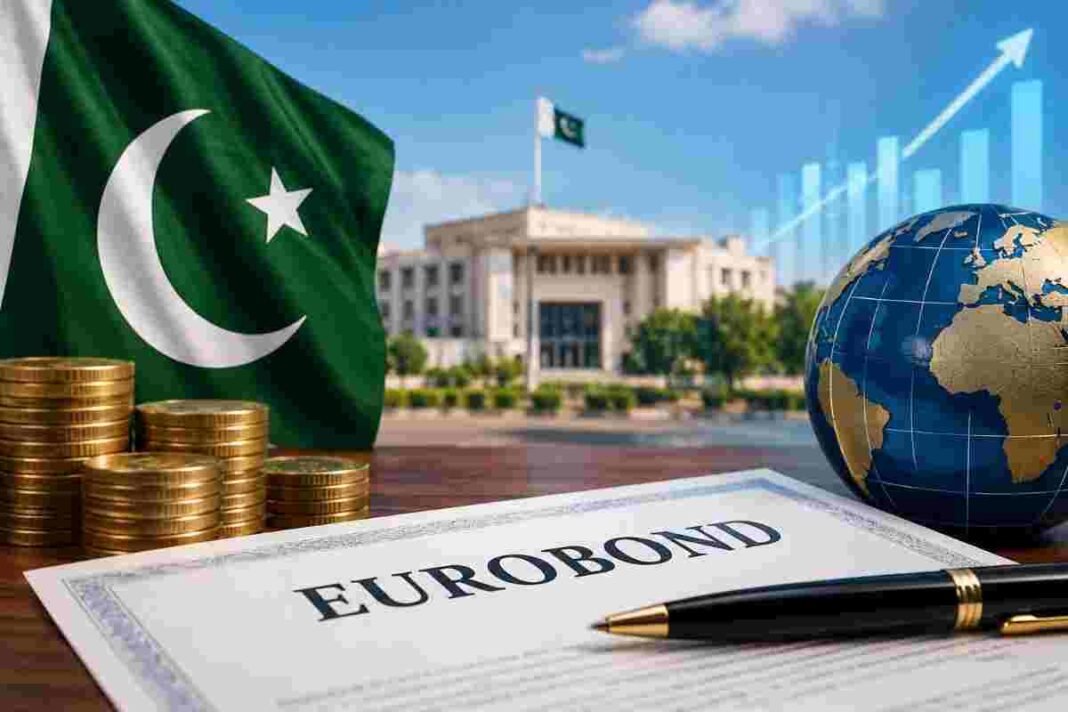
Pakistan has begun preparations to enter the international debt market with a new bond issuance this fiscal year. The government plans to raise around $1 billion through Pakistan Eurobonds as part of its external financing strategy.
Officials at the Ministry of Finance have started working on the proposed issuance. They expect the new bonds to help Pakistan meet financing requirements while maintaining access to international capital markets.
According to Finance Ministry sources, the government does not plan to raise the entire $1 billion in a single transaction. Instead, officials are considering two or three separate tranches to manage borrowing costs and market conditions more effectively.
Moreover, the phased approach could give policymakers greater flexibility when they approach global investors. The government can assess investor demand, international interest rates, and Pakistan’s economic outlook before launching each tranche of Pakistan Eurobonds.
At the same time, Islamabad also plans to expand its borrowing options beyond traditional international markets. The government intends to raise around $750 million through Panda Bonds in China’s domestic capital market during the current fiscal year.
Therefore, the Panda Bond plan could help Pakistan diversify its external financing sources. It could also allow the country to strengthen its presence among Chinese institutional investors while reducing dependence on a limited number of international funding channels.
Finance Ministry sources say policymakers are considering bond issuances worth up to $2 billion in total during the fiscal year. This broader strategy includes different debt instruments and forms part of the government’s external financing program.
Meanwhile, officials will closely watch global financial market conditions before moving ahead with each transaction. Interest rates, investor confidence, Pakistan’s credit profile and demand for emerging-market debt could influence the timing of future Pakistan Eurobonds.
The government also wants to keep borrowing costs under control. Officials hope to secure a yield below 7 percent, which could reduce the financial burden associated with raising funds from international investors.
However, international borrowing costs depend on several factors that Pakistan cannot control directly. Global interest rates, geopolitical developments, investor risk appetite, and movements in international debt markets can significantly affect the final pricing of sovereign bonds.
In addition, Pakistan’s domestic economic performance will play an important role in attracting investors. Stronger foreign exchange reserves, fiscal discipline and improved economic indicators can increase confidence among international lenders and fund managers.
Consequently, policymakers expect greater economic stability to support demand for Pakistan Eurobonds. A stronger credit profile could also help Pakistan negotiate more favorable terms when it approaches investors in major financial markets.
The Finance Ministry is also considering a longer-term borrowing framework. Under the Medium-Term Note Program, the government could issue additional Eurobonds over the next three years whenever financing needs and market conditions support another transaction.
This framework would allow Pakistan to approach international markets at different times, rather than relying on one large borrowing exercise. As a result, officials could adjust the size and timing of each issuance based on external financing needs.
Furthermore, the government will assess debt repayment obligations before approving additional borrowing. Policymakers will also consider foreign currency requirements and the overall cost of debt before launching more Pakistan Eurobonds or Panda Bonds.
Pakistan’s access to international capital markets remains important because the country needs foreign currency to meet several external obligations. International bond issuances can provide an additional source of financing alongside multilateral loans, bilateral support and other external inflows.
Nevertheless, investors usually examine a country’s economic fundamentals before purchasing sovereign debt. They closely monitor inflation, foreign exchange reserves, fiscal performance, political stability and the government’s ability to meet future repayment commitments.
Therefore, improvements in Pakistan’s economic indicators could strengthen the government’s position during negotiations with global investors. A better sovereign credit outlook may also help attract a wider pool of institutional investors.
Economic experts believe that stronger market confidence could improve the outcome of the planned bond program. They expect better credit conditions and continued economic stability to support Pakistan’s return to global capital markets.
At the same time, officials will need to balance immediate financing requirements against the long-term cost of borrowing. Excessively expensive debt could increase future repayment pressures, so authorities will likely focus closely on pricing and maturity periods.
The planned Panda Bonds could also complement the government’s international funding strategy. By entering China’s bond market, Pakistan could broaden its investor base and develop another channel for raising foreign financing.
Meanwhile, the proposed Pakistan Eurobonds will remain a major component of the government’s international borrowing plans. Their performance could also signal investors’ confidence in Pakistan’s economic direction.
The government expects that improved economic conditions and stronger credit indicators will support its fundraising efforts. However, officials will make final decisions after evaluating international market conditions and Pakistan’s actual financing requirements.
Ultimately, the bond program’s success will depend on investor demand, borrowing costs, and confidence in Pakistan’s economic outlook. If conditions remain favorable, the government could use international bond markets to strengthen its financing position while managing external obligations during the current fiscal year.