Scientists have reported a breakthrough in HIV treatment after a new therapy showed encouraging results during early human testing. The latest AIDS control drug research has created hope among doctors and patients because the treatment may help control HIV infection with a single therapy session.
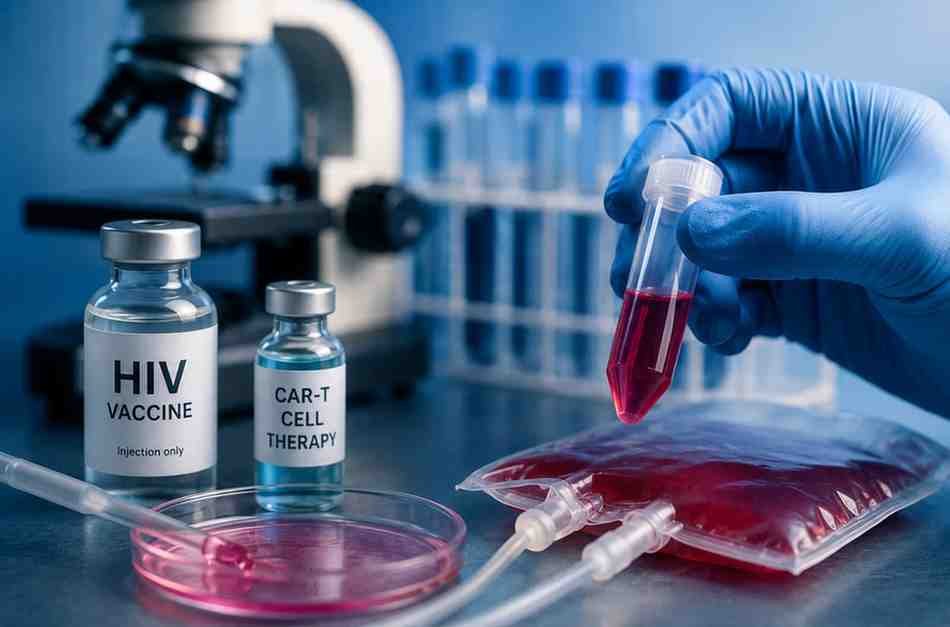
According to researchers, the new treatment uses CAR-T cell therapy to strengthen the body’s immune system. Scientists modified patients’ own immune cells in a laboratory and trained them to detect and destroy HIV-infected cells. As a result, the therapy successfully reduced virus levels in several patients.
The new AIDS control drug approach focuses on targeting HIV through special CD4 and CCR5 binding sites. Researchers believe this method could offer a long-term solution for controlling the infection without continuous daily medication.
In the Phase 1 clinical trial, doctors removed T-cells from patients and modified them in a laboratory. Afterward, they returned the upgraded cells to the patients’ bodies. Researchers then monitored how effectively the cells controlled the virus.
The study showed positive outcomes in several participants. Two out of three patients who received the standard treatment dose maintained extremely low or undetectable HIV levels even after stopping antiretroviral medicines. One patient remained stable for more than two years, while another showed improvement for nearly one year.
Meanwhile, a third patient initially experienced an increase in virus levels. However, the infection later dropped to a low but still detectable level. Researchers described the results as encouraging for future studies.
The AIDS control drug research also highlighted the importance of early diagnosis and immediate treatment. Scientists explained that patients who received fast medical care responded better to the therapy. Therefore, researchers now want to study why some patients achieved stronger results than others.
Experts said HIV attacks infection-fighting cells inside the body. Without treatment, the virus weakens the immune system and can eventually lead to AIDS. Currently, millions of people worldwide live with HIV and depend on lifelong antiretroviral therapy.
Researchers also noted that CAR-T therapy is already successfully treating several blood cancers. In addition, scientists continue to test the same technology for autoimmune diseases such as lupus and scleroderma. Therefore, many experts believe the treatment has strong future potential.
Furthermore, researchers reported that patients in the HIV trial did not experience severe side effects often seen in cancer patients receiving CAR-T therapy. This finding increased confidence in the treatment’s safety.
The latest findings on AIDS control drugs were presented ahead of the annual meeting of the American Society of Cell and Gene Therapy in Boston. Scientists now plan larger studies to confirm the results and improve the therapy for wider use.
Medical experts believe the new AIDS control drug research could become an important step toward long-term HIV control and future treatment advancements.