AJK Assembly Talks Offered to Banned JAAC With Terms
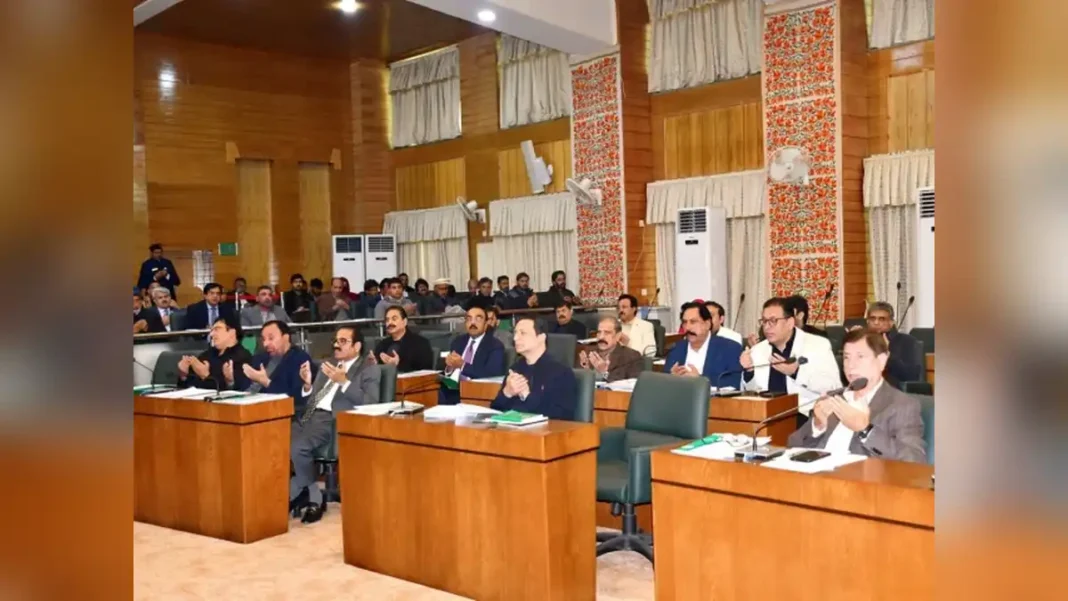
The AJK Assembly talks offer came on Wednesday, when the Azad Jammu and Kashmir Legislative Assembly voted unanimously to reopen dialogue with the banned Joint Awami Action Committee, but only if the committee disbands its armed groups and returns to constitutional politics.
Speaker Chaudhry Tariq Farooq chaired the session in Muzaffarabad. The resolution warns there will be no compromise on the rule of law, the supremacy of the Constitution or the writ of the state.
Under the resolution, the AJK Assembly talks can resume once the committee disbands armed groups, hands over people allegedly involved in serious offences, ends sit-ins and reopens blocked highways. It must also apologise in public for what the resolution calls an anti-state narrative aimed at state institutions, law enforcement and the Kashmir freedom movement.
The resolution also requires the committee to end the possession and use of illegal weapons and accept responsibility for the loss of life and damage to property.
The government said it remains ready for meaningful dialogue under the Interim Constitution of 1974. The resolution blamed the committee leadership for the failure of earlier talks, saying the government had accepted several demands and given assurances on others, yet the talks still broke down.
Dawn reported that the government had also offered high-level negotiations, a multi-party conference, participation in general elections, a Supreme Court reference and a referendum. The committee rejected all of them, according to the resolution.
AJK Assembly talks follow months of unrest
The resolution said 34 law enforcement personnel were martyred and 248 injured in the unrest that began in June. The House paid tribute to the fallen and expressed solidarity with their families.
The lawmakers condemned the armed groups, highway closures, attacks on government institutions and violence against law enforcement personnel, and authorised the government to take necessary legal action within constitutional limits to maintain law and order.
The resolution recognised peaceful protest and dissent as fundamental rights, but said they cannot justify violence, damage to public property or curbs on movement. It also warned against attempts to disrupt timely general elections and spread anarchy through armed groups and violent marches since June.
The session also paid tribute to the people of Poonch for their historic contribution to the freedom movement.
The House also offered Fateha for former Azad Jammu and Kashmir president Raja Zulqarnain Khan, who died on November 8 at the age of 93. Raja Zulqarnain Khan died at 93 earlier this month.
What the committee said in reply
The committee had already set out its own position a day earlier. Its advisory council issued a statement on November 24 that called for an end to security operations, the release of detainees and the restoration of communications. The Azadi Times reported the statement, which also sought equal representation in negotiations and written guarantees.
The gap remains wide. The Assembly wants disarmament and an apology first, while the committee wants operations to end and detainees freed first.
Feature Pakistan has followed the standoff since June, from the condemnation of force by the Tehreek Tahafuz Aain Pakistan, which condemned the use of force during the unrest, to the appeal for calm from Rawalakot, where Raja Haider appealed for peace. The committee’s delegation was blocked at Kahuta on its way to Rawalakot. The Assembly had already ordered all weapon licences registered within ten days, and the prime minister had met the AJK leadership in Muzaffarabad as the crisis deepened.
The resolution was jointly moved by Deputy Speaker Mohammad Ahmed Raza Qadri, Forests Minister Waqar Ahmed Noor, Health Minister Dr Mustafa Bashir Abbasi, Education Minister Umair Naeem, Energy and Water Resources Minister Saqib Majeed Raja and MLA Chaudhry Mohammad Ismail. Noor read it out in the House.
Whether the committee accepts the terms will decide the next step. If it refuses, the Assembly has already authorised legal action to restore the state’s writ.
Frequently asked questions
What did the AJK Assembly offer the JAAC?
The Assembly offered to resume talks with the banned Joint Awami Action Committee, on condition that it disbands armed groups, hands over people accused of serious offences, ends sit-ins and reopens highways.
What conditions did the Assembly set for talks?
Talks can resume under the Interim Constitution of 1974 once the committee disbands armed groups, ends unlawful protests, reopens blocked roads, ends the possession and use of illegal weapons, accepts responsibility for the loss of life and damage to property, and issues a public apology.
How many law enforcement personnel were killed or hurt in the unrest?
The Assembly heard that 34 personnel were martyred and 248 injured in the unrest that began in June 2026.
Who moved the resolution in the AJK Assembly?
Deputy Speaker Mohammad Ahmed Raza Qadri moved it with five ministers and MLAs, including Forests Minister Waqar Ahmed Noor, who read it out.
What did the JAAC say in response?
Its advisory council said on November 24 that talks needed an end to security operations, the release of detainees and equal representation in negotiations.