Bilawal Political Reset Call to Restore Trust
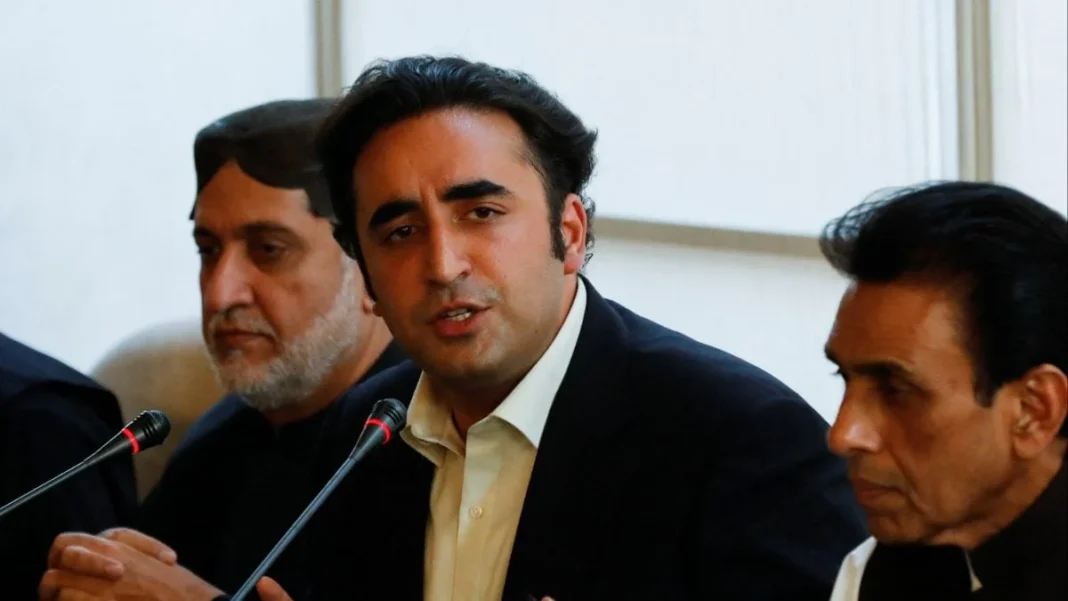
PPP Chairman Bilawal Bhutto-Zardari on Thursday renewed his call for a political reset in Pakistan, telling journalists in Multan that politicians must speak plainly about the country’s problems and rebuild trust in its institutions. The Bilawal political reset call puts Parliament at the centre of the debate over how the country should be run.
Bilawal spoke at the Multan Press Club during a visit to Punjab, Dawn reported. He has stopped in Multan, Dera Ghazi Khan and Muzaffargarh in recent days.
“In my opinion, if we truly want this system to serve the public, if we truly want our country, our Pakistan, to be capable of facing every problem, whether they are economic hardships or foreign difficulties, then we will have to take steps as soon as possible so we can establish unity, political stability, and restore trust in all institutions,” he said.
He said the reset should be democratic and political, not imposed from outside politics. “I believe this reset or reboot of our system, whatever words are used, should be in a democratic manner; it shouldn’t be non-political, it should be political,” he said.
What a Bilawal political reset would mean
Bilawal said a political reset would bring every political stakeholder into the same conversation, including the ruling party, its allies and the opposition. He repeated his call for the government to win back the opposition’s lost trust in the system through confidence-building measures, so institutions such as Parliament, the Election Commission, the courts and the accountability system could be trusted again. He added that the government also showed a lack of trust in the opposition.
“If we want to make the Parliament functional, then all decisions have to be made in the Parliament alone,” he said, adding that decisions taken outside Parliament would leave the system unable to meet its challenges.
The PPP chairman has pressed the same point in recent days, arguing that Parliament should decide questions such as the creation of new provinces through its own process. His remarks also follow a sharp exchange with Defence Minister Khawaja Asif.
People first, Bilawal says
Bilawal said debates in Parliament, the federal cabinet, seminars and television talk shows ignored the basic problems of ordinary people. “People are distressed about managing two square meals. They’re worried whether they should educate their children or arrange medicines for their elders,” he said.
Farmers were not getting fair prices for their crops, he said, while labourers and daily-wage workers were not rewarded for their work. “I believe that governments, political parties, political stakeholders across the world have a responsibility to draw attention to this crucial issue of how we can reduce economic burden on the people.”
He also spoke about restlessness among young people, who faced unemployment and spent much of their pay on travel to and from work. Fuel and food costs add to that pressure on households, with petrol now at Rs314 a litre.
Reset debate has run since July
The debate over a reset began in July, when Interior Minister Mohsin Naqvi called for new administrative units and said the governance system had collapsed and needed a reset. The proposal set off a debate over new provinces and a dialogue with political parties.
On November 17, Bilawal answered that the system had not collapsed but had been made to collapse. On Monday, he called for restoring the supremacy of Parliament and trust in the judiciary and the electoral system.
Bilawal has also spoken up for JUI-F chief Maulana Fazlur Rehman as the party’s Sargodha conference ran into restrictions. Fazl’s party leaders were detained in Sargodha this week, and Bilawal and Fazl have spoken by phone during the standoff.
Frequently asked questions
What did Bilawal mean by a political reset?
A democratic process that brings the ruling party, its allies and the opposition together to restore unity, political stability and trust in institutions, with decisions taken in Parliament.
Where did Bilawal make the remarks?
At the Multan Press Club on Thursday, November 26, during a visit to Punjab that has included Multan, Dera Ghazi Khan and Muzaffargarh.
What did he say about Parliament?
That Parliament must be functional and all decisions must be made there, since decisions taken outside it leave the system unable to meet challenges.
What did he say about ordinary people?
That people struggled to manage two meals, educate children and buy medicines, while farmers got poor crop prices and workers were not rewarded for their work.
How did the reset debate start?
In July, Interior Minister Mohsin Naqvi said the system had collapsed and needed a reset. Bilawal replied on November 17 that it had been made to collapse.