ECP Cannot Force Women on Winnable Seats
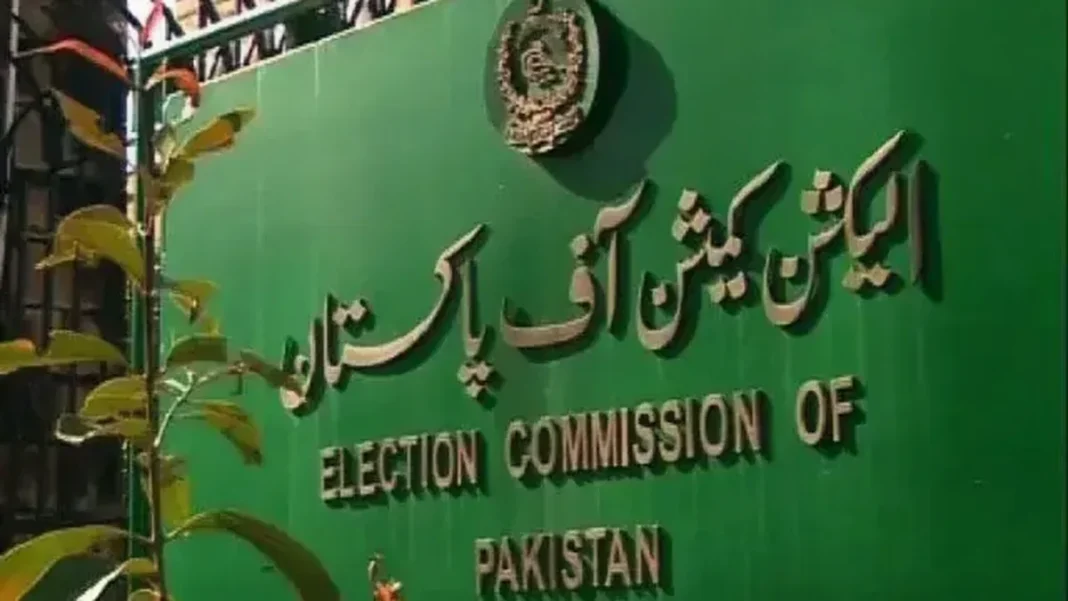
The Election Commission of Pakistan said on Friday it cannot force political parties to field women on winnable seats in general elections, a day after a parliamentary committee told it to make the five per cent women’s quota count.
The Commission said the award of party tickets was an internal matter for political parties, and it had no legal authority to intervene. It explained its position a day after the sub-committee of the National Assembly’s Special Committee on Gender Mainstreaming directed it to ensure women get tickets for winnable seats.
According to the Commission, it could neither interfere in ticket distribution nor decide on which seat a party should field a woman candidate. The distribution of seats, it said, was an internal affair of political parties.
The Commission added that if the committee wanted women to be given general seats where their victory was assured, legislation would be required, and the power to legislate rested with Parliament, not with the election watchdog. Dawn reported the Commission’s reply on Friday.
What Section 206 Requires of Parties
Section 206 of the Elections Act, 2017, requires every political party to award at least five per cent of its tickets on general seats to women candidates, to increase women’s representation and stop parties confining women candidates to reserved seats alone.
In practice, however, women candidates have often been fielded on seats considered difficult for their parties. That concern has been raised repeatedly in Parliament and by civil society organisations.
The National Assembly body has now urged the Commission to ensure the quota translates into meaningful representation, with women candidates fielded in constituencies they can actually win.
The Commission’s position is that the existing law only prescribes a minimum percentage of tickets for women and does not empower it to assess the winnability of a constituency or direct a party to change its candidate for a particular seat.
Legal experts say any such condition would require an amendment to the Elections Act by Parliament, spelling out the criteria for winnable seats and the mechanism for enforcement.
Vacant Seats and the Registration Gap
The committee also directed the Commission to make arrangements for filling 563 vacant seats in various local governments. The Commission said it had issued election schedules on several occasions to fill these seats.
No woman had filed nomination papers for these seats, the Commission said. Elections could not be held in the absence of candidates. The Commission said it remained ready to hold elections on vacant seats as soon as candidates came forward in line with the law.
At Thursday’s meeting, the committee also reviewed a briefing by Nadra, noting that female registrations in 2026 were 5.57 per cent higher than male registrations. Senator Rubina Qaim Khani, who chaired the meeting, raised concerns over women’s representation in the authority’s senior management, where only 15 women held positions of director or above.
Why Women on Winnable Seats Are Still Rare
The gap between the quota on paper and results at the ballot box is the heart of this dispute. A party can meet the five per cent rule while still placing its women candidates where defeat is almost certain. Reserved seats then remain the main route for women into the assemblies, and those seats are allocated to parties in proportion to the general seats they win.
A woman who wins a general seat carries a direct mandate from voters in her constituency, which is why the committee pressed for winnable seats rather than a larger quota. The Commission’s reply shows the limit of what it can do under the current law.
Feature Pakistan reported earlier this year that a pilot drive registered 174,845 women voters in Kasur and Qamber, a step aimed at closing the gender gap in the rolls. Registration is only the first half of the problem. The second half is whether parties give registered women voters a real choice of women candidates on seats that can be won.
What Happens Next
The committee has sought written responses from the Commission within 15 days, after which its members will decide whether to press Parliament for an amendment to the Elections Act that defines winnable seats and gives the Commission the power to enforce the rule.
Any amendment would face a long road through Parliament. Parties guard their right to choose candidates, and a law telling them where to field women would test that freedom. The debate is now squarely before the lawmakers.
The parliamentary committee told the ECP on Thursday to ensure women get tickets for winnable general seats. A pilot drive registered 174,845 women voters in Kasur and Qamber. More than 3,500 nominations were filed for the Islamabad local government polls. The ECP has been preparing for the Islamabad local government polls.
Frequently asked questions
What did the ECP say about winnable seats for women?
The ECP said it cannot force political parties to field women on winnable seats, because the award of tickets is an internal matter for parties and it has no legal authority to intervene.
What does Section 206 of the Elections Act require?
Section 206 requires every political party to award at least five per cent of its tickets on general seats to women candidates. It sets a minimum percentage but does not say which seats those tickets must be for.
What did the parliamentary committee direct the ECP to do?
The sub-committee of the National Assembly’s Special Committee on Gender Mainstreaming directed the ECP to ensure the quota translates into meaningful representation by requiring parties to field women in winnable constituencies.
Why can the ECP not act on its own?
The ECP says the existing law only prescribes a minimum percentage of tickets. It does not empower the Commission to assess whether a seat is winnable or to direct a party to change its candidate. Legislation by Parliament would be needed.
What is the position on the 563 vacant local government seats?
The ECP said it issued election schedules several times to fill the seats, but no woman filed nomination papers. It said it is ready to hold the elections as soon as candidates come forward under the law.