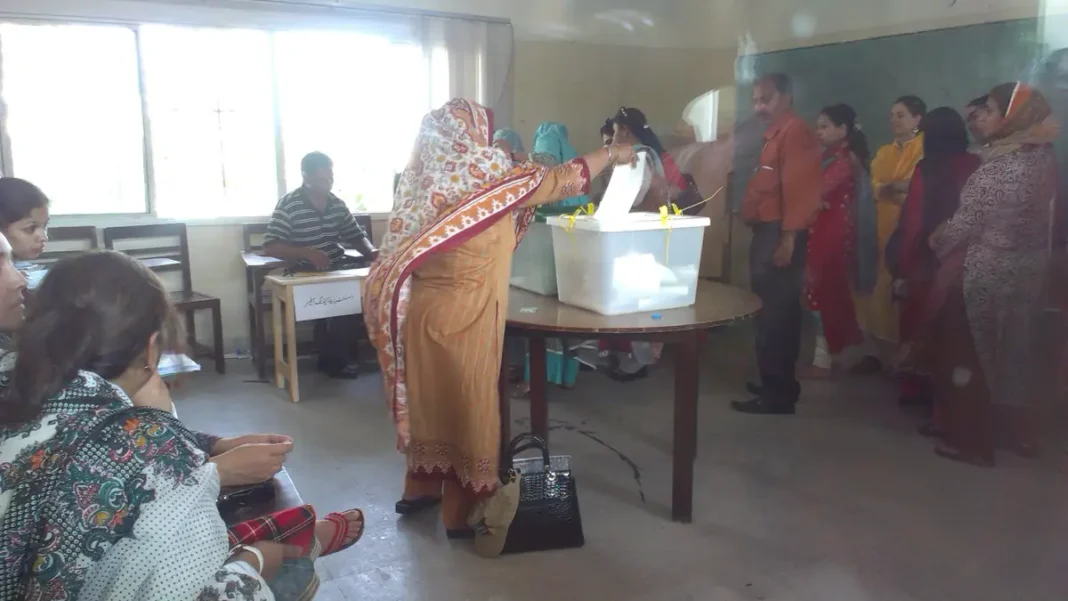
Islamabad LG Polls: 3,505 File Nominations for Dec 20
More than 3,505 candidates have filed nomination papers for the Islamabad LG polls, due on 20 December, after years of repeated postponements that failed to dampen public interest.
The 3,505 candidates include 110 women, the Election Commission of Pakistan (ECP) was told on Tuesday. Scrutiny of the papers begins on Wednesday, 11 November, officials told a special ECP meeting held at the Election Commission Secretariat to review arrangements.
The meeting was chaired by Chief Election Commissioner Sikandar Sultan Raja and attended by members of the commission, Interior Secretary Ahmed Raza Sarwar and other senior officers.
Islamabad LG polls: preparations nearly complete
The commission was briefed on the Islamabad local government system, the procedure for elections to various seats and the steps taken so far by the ECP. The process to procure election materials and arrange printing of ballot papers has been completed.
The meeting was told the commission was in contact with all relevant institutions and ready to hold the elections. The interior secretary assured the ECP that the Ministry of Interior would extend all possible cooperation for the peaceful conduct of the elections.
The chief commissioner Islamabad said instructions had been issued to all returning officers to perform their duties in line with the Constitution and law and the ECP’s election programme. Work was under way on the list of polling stations, transport and security plans. Once the list was published and the plans completed, copies would go to the ECP, and foolproof arrangements would be ensured.
The district returning officer said he was personally supervising all stages of the election, and the transport plan was being finalised to help polling staff and keep them safe.
15,000 personnel for security
Security will be heavy. The SSP operations told the meeting that 15,000 personnel would be deployed to maintain law and order, with extra force requisitioned from Punjab if needed.
The commission asked the Islamabad administration to submit the security and transport plans. The chief election commissioner directed that effective security arrangements be ensured, and told the district monitoring officer to enforce the code of conduct strictly, making clear that no negligence would be tolerated.
The stakes are high for the capital’s voters. Islamabad has gone without elected local government for years, leaving neighbourhood issues such as water, sanitation and street repairs to officials rather than elected representatives.
The cost of five postponements in five years
The road to this election has been long. Islamabad’s local government elections have been postponed six times in five years, and research by Pattan-Coalition38, a network of associations, community groups, labour unions and human rights activists, put the cost of the delays in stark terms.
In a report released in February this year, soon after the last postponement, the group said: “Repeated postponement of the local government elections in Islamabad [six times in five years] represents a direct assault on grassroots democracy and raises serious concerns about the subordination of the Election Commission of Pakistan (ECP) to the executive.”
The report said democratic participation in the federal capital had been systematically obstructed, at enormous financial and political cost. A total of 7,866 candidates in two aborted elections collectively paid Rs37.74 million in nomination fees. Beyond that, candidates spent heavily on legal representation and campaign mobilisation. Total estimated spending for the two cancelled elections stood at Rs544.30 million.
“This is not merely financial loss; it is the erosion of citizens’ constitutional right to representation too,” the report added.
More than one-third of respondents in its survey believed the elections were postponed out of fear of defeat by the ruling parties, and nearly 40 per cent blamed the bureaucracy, alleging resistance to working under elected representatives.
The demand for local government is not limited to the capital. The PPP in Punjab has demanded devolution to local governments, while the Centre has spent Rs5 trillion on devolved subjects, a figure that shows how much public money now sits with the provinces rather than local bodies.
What happens next
Scrutiny of nomination papers starts on Wednesday. If the 20 December date holds this time, Islamabad’s voters will finally elect the local representatives they have waited six years for. The capital’s administration is also pressing on with development work, with CDA Sector C-14 now 92 per cent complete. Bilawal Bhutto Zardari has already called for a political reset built on unity, and a clean local election in the capital would be a practical step in that direction.
Frequently asked questions
When are Islamabad’s local government elections?
The polls are scheduled for 20 December 2026, after repeated postponements over the past six years.
How many candidates filed nomination papers?
More than 3,505 candidates filed papers, including 110 women.
How much did cancelled Islamabad elections cost candidates?
Pattan-Coalition38 estimated total spending for two aborted elections at Rs544.30 million, including Rs37.74 million in nomination fees paid by 7,866 candidates.
How many security personnel will be deployed?
The SSP operations said 15,000 personnel would be deployed to maintain law and order, with extra force requisitioned from Punjab if required.