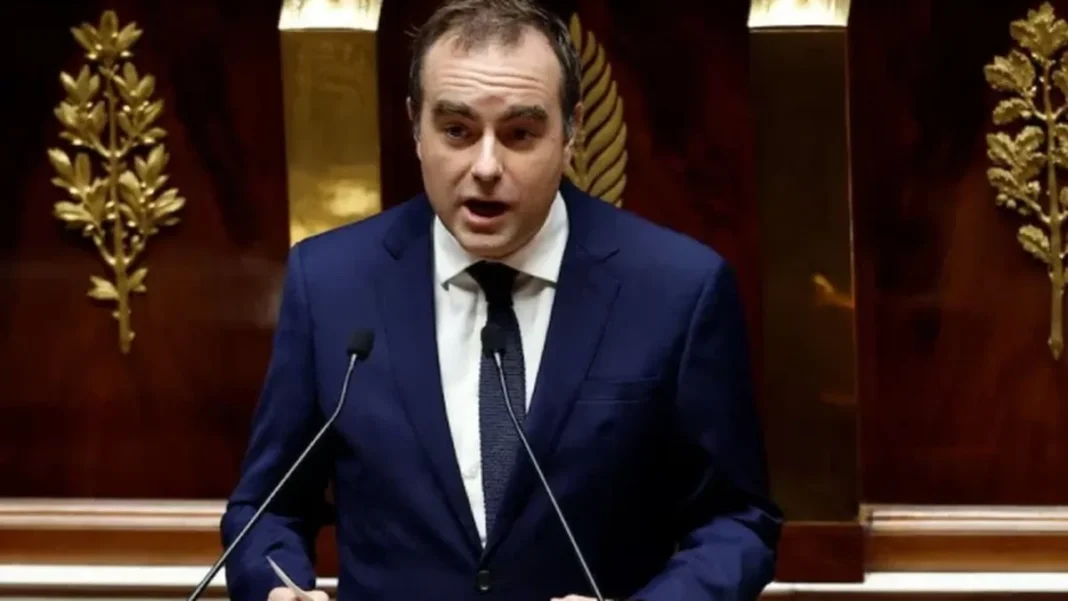
PARIS: French Prime Minister Sébastien Lecornu made an announcement on Monday. He asked regional authorities to impose partial curfews in some cities on Monday evening. The move comes as the country reels from two days of unrest. During the violence, town halls were burned down and hundreds of businesses were looted.
Interior Minister Laurent Nunez earlier admitted that police had “lost control” of the protests in several cities. Meanwhile, the Yellow Vest movement called for a new round of protests on Saturday.
The government’s response has faced criticism from several local leaders. Specifically, the mayors of Paris, Marseille and Limoges have spoken out.
Minister’s resignation offer rejected
French President Emmanuel Macron rejected the resignation of Interior Minister Nunez. The decision followed the widespread violence and looting during last weekend’s protests, according to broadcaster BFMTV.
Nunez submitted his resignation to Macron a day earlier. He acted amid mounting criticism over the authorities’ handling of the unrest. He was explaining his decision to resign. Subsequently, he told France Inter radio: “I am the minister of the interior, I am responsible for everything that happens on the ground.”
Nunez acknowledged a “loss of control” by police in some cities. In addition, he admitted there had been a “lack of anticipation” in deploying available security forces.
However, the president decided to keep him in office. A statement from the Elysee Palace explained the decision. According to it, Macron cited the need for continuity in the command of security forces during the current crisis. Macron also called for greater transparency over what he described as “failures in anticipation and intelligence”. In his view, these contributed to the scale of the violence.
Nunez is expected to visit Marseille, one of the cities hardest hit by the violence. There, authorities reported that up to 30,000 people were involved in looting on Saturday.
Scale of the unrest
The unrest erupted during demonstrations on Saturday. As a result, nearly 1,000 law enforcement officers were injured. Moreover, approximately 2,400 arrests were made, according to official figures.
The protests are the latest chapter in a long-running French upheaval. For example, police detained more than 500 people as student protests turned violent earlier in the season. In addition, officers fired teargas at French students and teachers in street clashes. Furthermore, around 400 French high schools shut as the school protest movement spread. The school protests explained in our earlier report show how the current wave grew out of the autumn student movement.
Students block access to the Louvre
Students blocked access to the Louvre Museum in Paris on Monday. They acted in support of ongoing high school protests. In addition, they wanted to denounce what they described as police repression, French media reported.
The blockade prevented the museum from opening at its usual time of 9am. This was confirmed by management and unions cited by the daily Le Parisien. Students from the Ecole du Louvre led the action. Meanwhile, the CFDT trade union said students from the National School of Fine Arts also participated.
Museum management said the protest had no direct connection to the Louvre itself. Instead, they described the museum as being used “as an echo chamber”. The CGT trade union supported the action without participating. According to the union, the museum would remain closed at least until noon.
Protesters placed the blockade within a broader struggle. Specifically, they are fighting for the right to study, work and live freely in decent conditions. The action follows a high school protest movement that began in mid-September. It also comes two days after nationwide demonstrations against the high cost of living. Those demonstrations were marred by unrest in several French cities.
The Ecole du Louvre is located within the museum grounds. It offers higher education courses in subjects including art history, archaeology, anthropology and museology.
FAQs
Why has France called for partial curfews?
Prime Minister Sébastien Lecornu asked regions to impose partial curfews. He acted after two days of unrest in which town halls were burned and hundreds of businesses looted.
Has the French interior minister resigned?
Laurent Nunez offered his resignation over the handling of the unrest. However, President Macron rejected it, citing the need for continuity in the security command.
How many people were arrested in the French protests?
Official figures put the toll at nearly 1,000 injured officers. In addition, approximately 2,400 arrests were made over two days of unrest.
Why did students block the Louvre?
Students from the Ecole du Louvre led a blockade of the museum on Monday. They acted in support of high school protests and to denounce what they called police repression.