


Why French Students Are Shutting Schools: The Protests Explained
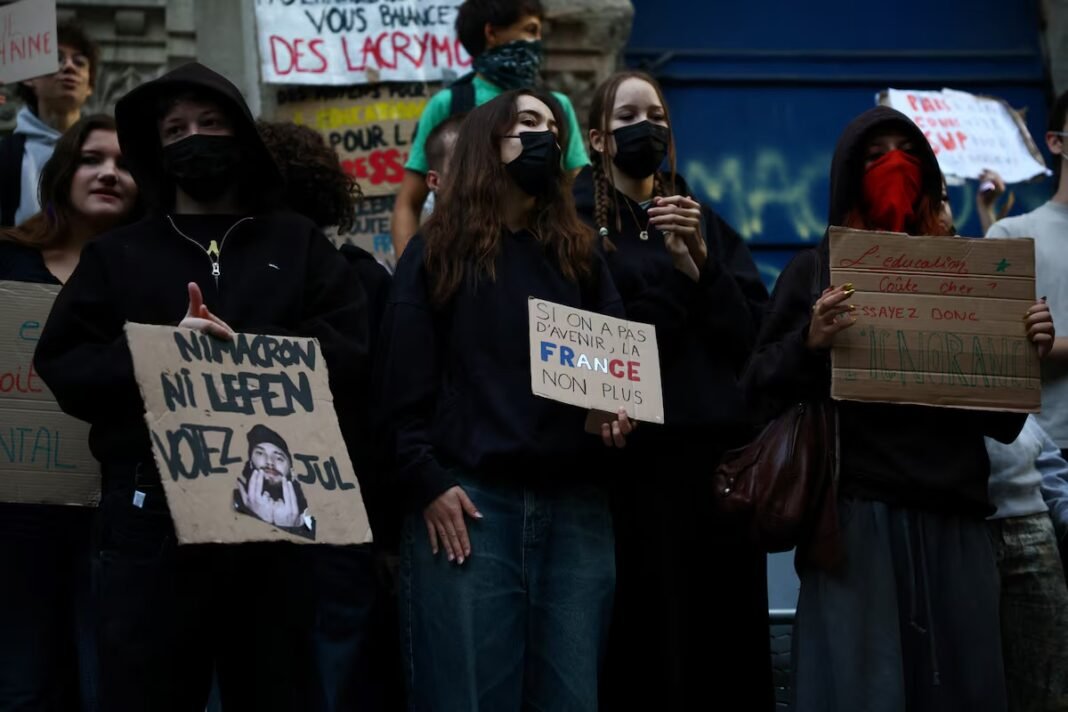
About 400 French schools stayed shut on Friday as the France school protests spilled from the classroom into the street. What began last month as student anger over teacher shortages, overcrowded classrooms and crumbling school buildings has spread across the country, and in several cities the demonstrations have turned violent.
Education Minister Édouard Geffray told France 2 on Thursday evening that “a little over 400 schools and other educational establishments” would remain closed on Friday.
What is fuelling the France school protests
The grievances are concrete: classes of 35 to 40 pupils, chronic teacher shortages and absences, dilapidated buildings, overloaded timetables, and classrooms with no cooling during this year’s heatwaves.
In Strasbourg, a 17-year-old student told AFP: “There are 35 of us per classroom. With 35C in summer, it’s unbearable. There aren’t enough toilets, and there are water leaks in some rooms.” He added: “The building is falling apart, the cafeteria is too small. There’s zero budget, zero resources, not enough supervisors.”
In Caen, 16-year-old Maelle said students were protesting “against this government that doesn’t invest in heating, air conditioning, or teachers’ salaries.”
Three teachers’ unions, SNES-FSU, SNUEP-FSU and SNEP-FSU, backed the students’ demands in a joint statement on October 1, citing overcrowded classes, unmanageable schedules and years of budget decisions that deepened the problems.
How the protests turned violent
The movement began with blockades of school entrances using bins and barricades, but parts of it tipped into vandalism and arson within days. Student protesters started fires in at least two high schools on Thursday, while teachers were inadvertently splashed with petrol at a third in Marseille, officials said. A car was torched in Strasbourg and riot police clashed with youths in Toulouse.
On October 1, a fire engine responding to a blaze near Saint-Exupéry high school in Marseille was surrounded and torched after the firefighters were forced to leave, police said. The same day, a fire broke out at Nelson Mandela high school in Nantes; the building was evacuated and no one was hurt, though the school is expected to stay closed for a month.
Police said about 900 demonstrations, blockades and related incidents were under way outside high schools across France, with more than 160 schools shut down.
Some 2,000 people have been arrested since the protests began, with about two-thirds placed in police custody, Justice Minister Gérald Darmanin told RTL radio on Friday. “There is an active and violent minority (participating in the protests) … We’re not entirely sure that they are even high-school students themselves,” he said. “We have gone from high-school student demonstrations to a public-order disturbance. When people target buses and set schools on fire, it is no longer simply a protest issue.”
Geffray said at least 65 staff members and about 170 students had been injured, and more than 100 high schools severely damaged.
The government’s response
Prime Minister Sébastien Lecornu called a crisis cabinet meeting on Thursday and asked ministers to cancel travel plans as the protests spread beyond the Paris region. His office said the “upsurge in violence makes it virtually impossible to maintain the continuity of public education and is exposing staff and students to danger.”
Geffray was due to meet pupil representatives on Friday. Some schools shifted classes online, and the government urged parents to discourage their children from joining street protests.
The political blame game
The unrest has taken on a political edge. A source close to Lecornu said intelligence agencies told the crisis meeting that hard-left politicians, including La France Insoumise (LFI) members, had initiated the movement.
LFI lawmaker Louis Boyard denied the claim. Party leader Jean-Luc Mélenchon, who is seeking his party’s presidential nomination, said his party “called for non-violent methods of struggle,” while LFI figure Manuel Bompard accused the government of “sinking into conspiratorial thinking.”
What happens next
Fresh demonstrations have been called for Tuesday, and the outcome of Geffray’s meeting with pupil representatives will be closely watched.
The unrest has also crossed borders. In Liège, Belgium, some high school students began protesting on Thursday, and local authorities announced all city schools would close on Friday.
Frequently asked questions
Why are French students protesting?
Students are protesting over teacher shortages, overcrowded classrooms of 35 to 40 pupils, dilapidated buildings, long hours and a lack of cooling during heatwaves. Three teachers’ unions backed their demands on October 1.
How many schools have closed?
Education Minister Édouard Geffray said “a little over 400 schools and other educational establishments” stayed shut on Friday, October 2. More than 100 high schools have suffered severe damage, and one school in Nantes is expected to remain closed for a month.
How many people have been arrested?
Justice Minister Gérald Darmanin said about 2,000 people had been arrested since the protests began, with around two-thirds placed in police custody.
Who is being blamed for the violence?
The government says intelligence agencies link the movement’s origins to hard-left politicians, including La France Insoumise members. LFI denies the claim and says it backs only non-violent protest.
Related stories
- Israeli bid to kill Hamas leader Ali al-Amoudi in Gaza appears to have failed
- Friedrich Merz lands in Kyiv with drone deal and €1.35 billion aid package
- US Marine Arrested in Okinawa Over Killing of Japanese Woman, Japan Lodges Strong Protest
- Araghchi Rules Out Military Solution, Says Only Diplomacy Can End Iran-US War