When the devastating earthquake struck northern Pakistan on 8 October 2005, the Pakistan Army’s aviation arm became the lifeline of the relief effort. Helicopters flew endless sorties into shattered valleys, carrying food, medicine and hope to survivors cut off from the world. It was in this noble mission — saving lives in the aftermath of catastrophe — that four officers made the ultimate sacrifice.
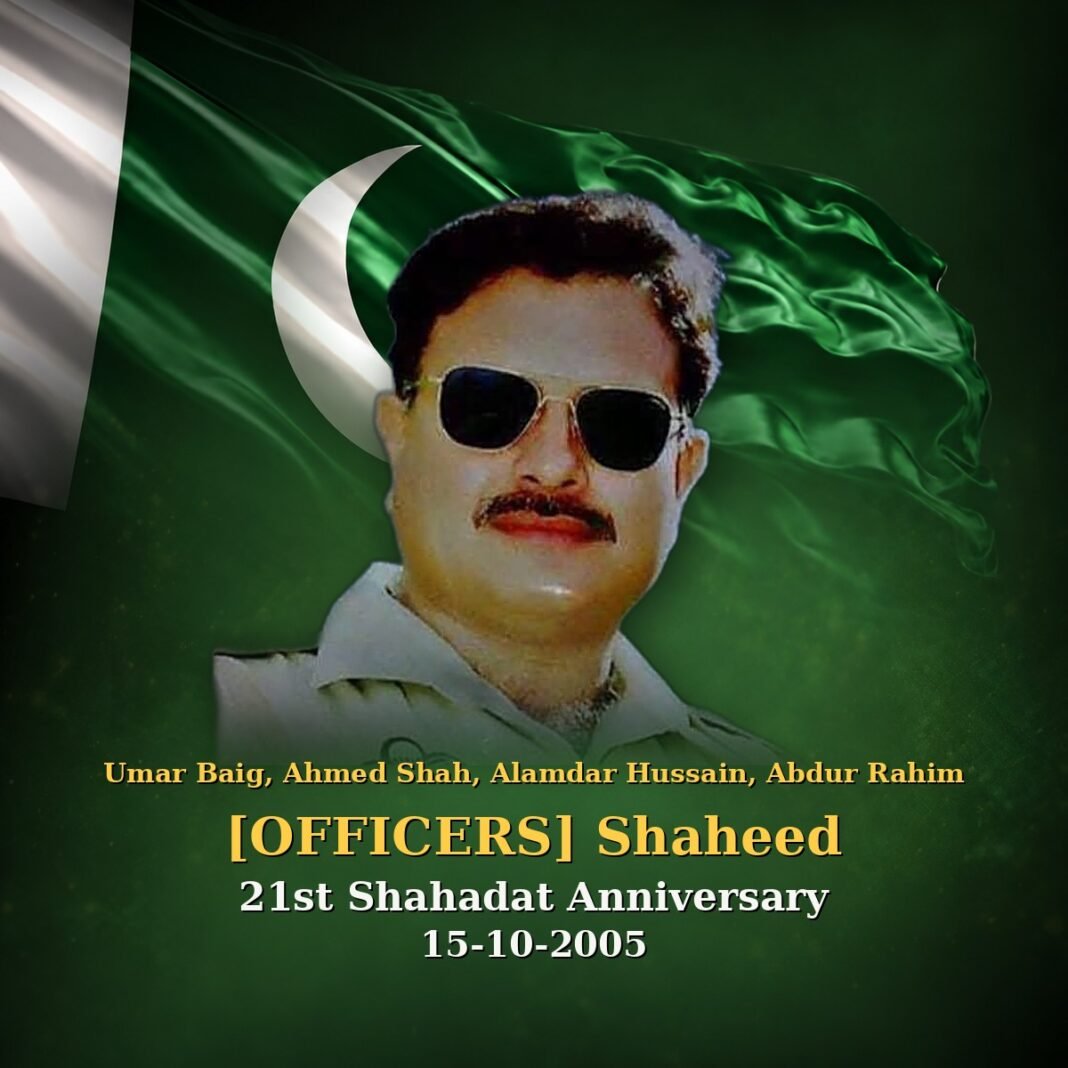
On 15 October 2005, a helicopter carrying Major Umar Baig, Lieutenant Colonel Ahmed Shah, Captain Alamdar Hussain and Captain Abdur Rahim crashed near Bagh during earthquake relief operations. The officers, who had been flying relief missions in treacherous mountain weather, embraced martyrdom while serving humanity in its hour of greatest need.
Lieutenant Colonel Ahmed Shah, an experienced aviator, led his crew with the steady hand of a veteran. Major Umar Baig, Captain Alamdar Hussain and Captain Abdur Rahim — each a professional of the highest order — shared his commitment to the mission. They knew the risks of flying in the quake-ravaged mountains, where weather shifted without warning and landing zones were little more than clearings among the rubble. They flew anyway, because people were waiting.
Their story is a reminder that the Pakistan Army’s service extends far beyond the battlefield. In floods, earthquakes and every national calamity, it is the soldier who arrives first and leaves last. These four officers died not in combat but in compassion — and that makes their sacrifice no less sacred.
Twenty-one years on, their names deserve to be spoken with the same reverence accorded to every shaheed. They went up into the mountains to bring life, and they gave their own. On this 21st shahadat anniversary, Pakistan bows its head in gratitude to Major Umar Baig, Lieutenant Colonel Ahmed Shah, Captain Alamdar Hussain and Captain Abdur Rahim — heroes of the 2005 earthquake relief, forever in the nation’s heart.
Their families received the news that every military family dreads, made somehow harder by the knowledge that their loved ones died not in battle but in mercy. Yet there is a profound nobility in that: they died trying to save others. If shahadat is the noblest end a soldier can meet, then surely dying in the service of humanity’s most desperate hour is among its purest forms.