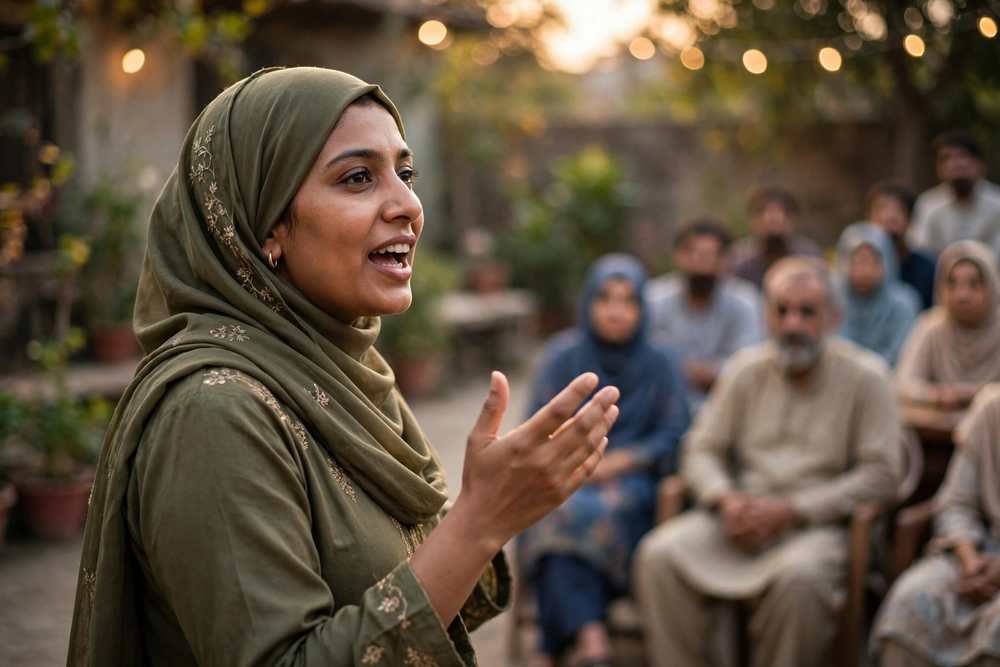
Thousands of Pakistani women run successful businesses from their kitchens, spare rooms, and phones — stitching suits, baking cakes, tutoring students, and selling pickles to customers they have never met in person. A home-based business is often the most realistic path to financial independence for women in Pakistan: no commute, no boss, and hours that fit around family life. This guide covers 9 proven home business ideas, their typical startup costs, where to sell, and the one loan scheme that reserves a quarter of its funds for women.
A note on costs: the startup figures below are typical ranges reported by Pakistani business guides — treat them as realistic estimates for planning, not official statistics.
1. Online Tutoring
Parents across Pakistan — and Pakistani families abroad — pay for tutors in school subjects, Quran with tajweed, English speaking, and exam preparation (MDCAT, ECAT, CSS, IELTS). Typical rates run from Rs. 5,000 to 25,000 per student per month depending on level.
Startup cost: ~Rs. 15,000–50,000 (laptop upgrade, whiteboard, mic, light). Where to sell: Facebook/WhatsApp parent groups, Preply, iTalki. Start this week: record a 2-minute free demo lesson on your phone and post it in local WhatsApp parent groups.
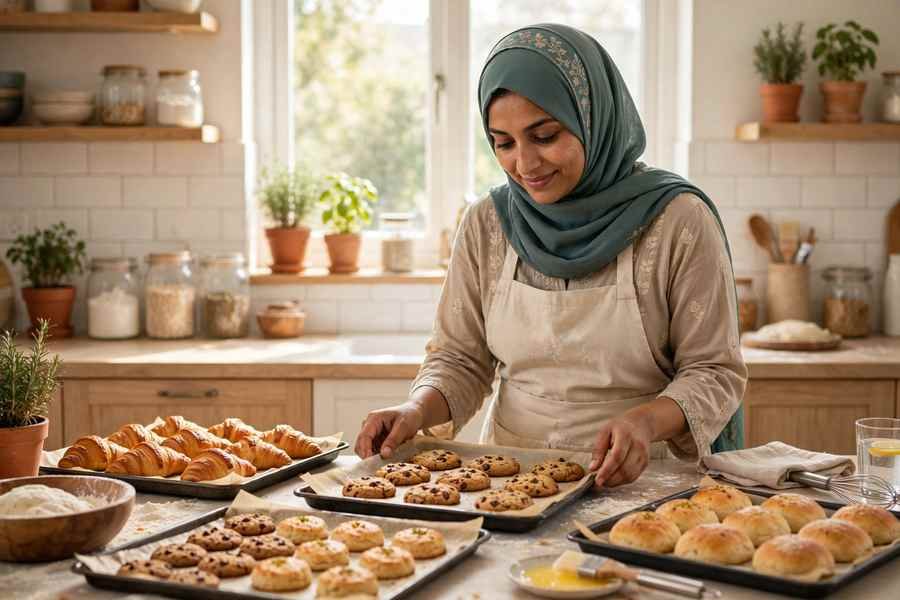
2. Home Bakery
Custom cakes, cupcakes, and desserts for birthdays and weddings are a perennial market. Home bakeries in Pakistan can target healthy margins — 2026 guides note illustrative operating margins around 27% for well-run home bakeries.
Startup cost: ~Rs. 20,000–50,000 (oven if needed, ingredients, packaging). Where to sell: Instagram/Facebook pages, WhatsApp Business, local food groups, foodpanda Home Chefs. Start this week: bake for family and friends, collect honest feedback, and launch with 3–4 signature items.
3. Home Kitchen / foodpanda Home Chefs
Cooking daily meals, frozen parathas, or weekend specials from your own kitchen. foodpanda’s Home Chefs program has grown to over 6,000 home chefs across Pakistan — around 75% of them women, according to the company’s CEO (2025) — with a company-commissioned study putting average monthly home-chef earnings at Rs. 120,000.
Startup cost: ~Rs. 5,000–15,000 (packaging, initial groceries). Where to sell: foodpanda Home Chefs (register at restaurant.foodpanda.pk), WhatsApp Business. Start this week: sign up, list 5–10 dishes, and design a free menu on Canva.
4. Stitching and Boutique
The classic home business — and still one of the most reliable. Custom stitching, unstitched suit sets, kids’ clothes, and abayas all sell through WhatsApp status and Instagram.
Startup cost: ~Rs. 30,000–80,000 (sewing machine, fabrics, threads). Where to sell: WhatsApp status/groups, Instagram, Daraz seller account, local markets. Start this week: stitch samples of 3–5 designs and model them on WhatsApp status for orders.
5. Freelancing (Upwork and Fiverr)
Writing, graphic design, video editing, virtual assistance, and coding — Pakistani freelancers are competitive internationally. Fiverr costs nothing to start (20% commission per order); Upwork charges around 10% plus paid Connects.
Startup cost: Rs. 0–20,000 (laptop + internet). Tax note: freelancers must declare foreign income to FBR. Registering with PSEB unlocks a reduced 0.25% final tax on export income under Section 154A (versus 1% unregistered) — extended to June 2029 by the Finance Act 2026. Registration costs about Rs. 1,000 via the PSEB/Tech Destination portal. Start this week: build 3–5 portfolio samples and publish one Fiverr gig.
6. YouTube and Content Creation
Cooking, parenting, education, and lifestyle channels run by Pakistani women attract loyal audiences — and eventually brand deals and ad revenue (the YouTube Partner Program requires 1,000 subscribers and 4,000 watch hours).
Startup cost: Rs. 0–30,000 (phone + ring light/tripod). Start this week: post 2 videos a week for 90 days in one niche. Consistency beats equipment every time.
7. Beauty Services at Home
Bridal makeup, facials, hair treatments, and mehndi — neighbourhood clients who trust you become repeat income. Short beautician courses are widely available in every city.
Startup cost: ~Rs. 40,000–100,000 (parlour chair, basic products and equipment). Where to sell: WhatsApp groups, Facebook page, Google Maps listing, your own neighbourhood. Start this week: offer discounted first services to 10 neighbours and collect before-after photos (with permission) for your page.
8. Pickles, Frozen Foods, and Homemade Masalas
Homemade mixed pickle, frozen shami kebabs, and fresh masala blends have built-in repeat customers — people reorder weekly. Food is the fastest-repeat home business in Pakistan.
Startup cost: ~Rs. 10,000–30,000 (ingredients, jars, packaging). Where to sell: WhatsApp Business, Instagram, Daraz, local stores. Start this week: sell one product in your neighbourhood via WhatsApp, then expand the range.
9. Handmade Crafts
Candles, resin art, crochet, embroidery, and gift boxes — crafts with good photography sell at premium prices on Instagram and at exhibitions and bazaars.
Startup cost: ~Rs. 10,000–40,000 depending on the craft. Start this week: make 10 pieces, photograph them in natural daylight, and list them on Instagram and Daraz.
Do You Need to Register Your Home Business?
The short answer: not immediately, but plan for it. You can register free on FBR’s IRIS portal with your CNIC (Form 181) to get an NTN; sole proprietors add their business name, activity, and address proof. Most small home sellers start without formal registration and become filers once income is regular. You only need a sales tax registration number (STRN) if you are selling taxable goods or services at scale — most home startups do not need one at the beginning.
The Loan Scheme That Reserves 25% for Women
The Prime Minister’s Youth Business and Agriculture Loan Scheme (PMYB&ALS) is active in 2026 — and 25% of its loans are reserved for women, with priority processing. Tier 1 offers up to Rs. 500,000 interest-free; the maximum goes up to Rs. 7.5 million. Eligibility is ages 21–45 (18 for IT and e-commerce). Applications are online at pmybals.pmyp.gov.pk with a Rs. 100 NADRA verification fee, through partner banks including First Women Bank.
5 Rules That Separate Successful Home Businesses From Failed Ones
- Start with one product or service. Ten half-ready offerings sell less than one excellent one.
- Photograph everything in daylight. Good photos matter more than a logo for online sales.
- Reinvest every rupee for the first 3 months. Growth comes from compounding, not from spending early profits.
- Keep business money separate — even a separate JazzCash or bank account — so you always know your real profit.
- Tell everyone. Your first 10 customers will almost always come from your own network: relatives, neighbours, school and college friends.
A home business will not replace a salary in its first month. But for thousands of Pakistani women, it has become something a job could never offer — income on their own terms, on their own schedule, from their own home.