DRAFT — Karachi mangrove loss raises flood and erosion risks, Suparco warns
- Suggested slug: karachi-mangroves-loss-flood-erosion-risk-suparco
- Category: National News
- Focus keyphrase: Karachi mangroves
- SEO title: Karachi mangroves loss raises flood, erosion risks
- Meta description: Suparco satellite images show Karachi’s mangroves near Mai Kolachi replaced by reclaimed land, raising flood and coastal erosion risks.
- Tags: Karachi, mangroves, Suparco, climate change, coastal erosion, flooding, Sindh, environment
- Original element: explainer context + local Karachi angle + Suparco’s own Space4Climate data (115pc mangrove afforestation increase at Shah Bandar, Sujawal, 2019-2026) as own data point; 2000 vs 2025 satellite comparison verified on Suparco’s page via Dawn
- Source: https://www.dawn.com/news/2038190 (Dawn, published 19 Oct 2026, 06:39 PKT)
- Story date: 19 October 2026
—
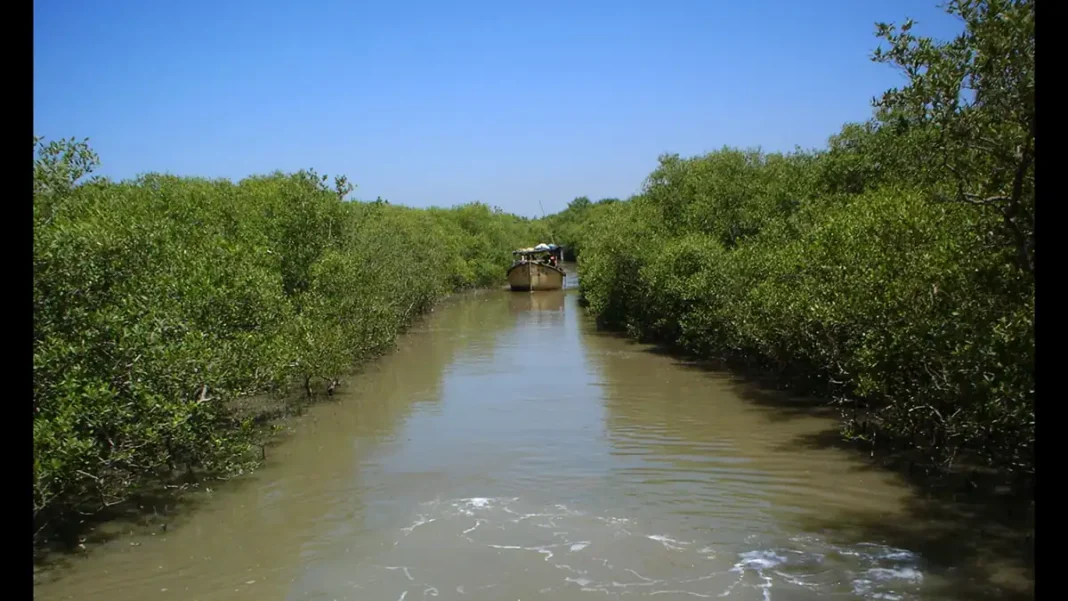
New satellite images from Pakistan’s space agency show stark change for the Karachi mangroves along the coast near the Mai Kolachi Bypass. Mangrove stands and natural tidal creeks that existed in 2000 have largely given way to reclaimed land by 2025.
The Space and Upper Atmosphere Research Commission (Suparco) released the comparison images in a note on its Space4Climate webpage. It said areas once covered by continuous mangrove forest had progressively been converted into reclaimed land and urban plots. The warning adds to earlier concerns about the threats facing Karachi’s mangroves. The agency warned that this shift weakens Karachi’s natural defence against climate stress.
“This transformation reflects a transition from ecosystem-based coastal protection to hard, land-intensive development. Mangrove removal directly weakens the coastal system’s ability to respond to climate stress,” Suparco said in its note.
Why the Karachi mangroves matter for the city
Mangroves do far more than look green from the air. They regulate coastal temperatures, trap sediments and absorb atmospheric carbon. Their root systems slow storm surges, hold the shoreline in place and sustain fisheries that thousands of families depend on.
When mangroves are cleared, the losses stack up. Suparco said their removal eliminates an important blue-carbon reservoir and breaks hydrological connectivity. Surface runoff increases. Tidal flows change. Over time, the agency warned, this raises the chance of localised flooding, shoreline instability and long-term land subsidence.
The concern is not abstract. Earlier this year, uneven rainfall exposed how little margin the city’s drainage and coastline have left, as covered in the Sindh monsoon rainfall deficit report for 2026. Against that backdrop, losing natural coastal protection leaves the city more exposed.
Suparco put it plainly. Unlike engineered structures, mangroves adapt and regenerate, offering protection that grows stronger over time. Their replacement with static infrastructure transfers climate risk directly to urban assets and populations.
Calls for urgent action on Karachi’s coast
Climate policy specialist Mohammad Saleem Shaikh warned that Pakistan must protect its mangrove forests and natural tidal creeks. He said their destruction threatened coastal communities, livelihoods and economic stability. Referring to Suparco’s satellite evidence, he called for urgent measures to stop further degradation.
He said mangroves stored carbon, reduced coastal erosion, weakened storm surges and sustained fisheries and biodiversity. Their loss could increase Pakistan’s vulnerability to rising sea levels and cyclones, particularly along Karachi’s coastline and the Indus Delta.
Shaikh urged the federal and Sindh governments to strengthen environmental enforcement, prevent encroachment and ensure that coastal development projects underwent comprehensive environmental assessments. Mangroves, he said, should be treated as natural climate infrastructure essential for disaster resilience and future generations.
When Dawn contacted officials, Senator Sherry Rehman, chairperson of the Senate Standing Committee on Climate Change, declined to comment. Karachi Mayor Murtaza Wahab did not respond to messages.
A counter-trend in Shah Bandar
The picture is not all bleak. Suparco’s Space4Climate page also showed a substantial mangrove afforestation event in the Shah Bandar region of Sujawal, further down the coast. Satellite imagery acquired between 2019 and 2026 showed new mangrove cover taking hold there.
Comparative analysis of 19 Areas of Interest showed a 115 per cent increase in mangrove forest cover relative to the 2019 baseline of 116.46 hectares. Newly established mangrove vegetation of 151.24 hectares accounted for around 6.5 per cent of the total 2,321.8-hectare study area. The contrast matters. Where restoration is planned and monitored, mangroves can return. Where reclamation rules, they vanish.
Pakistan’s coastline stretches over a thousand kilometres, and Karachi holds the country’s economic heart. Readers can find more on the country’s coastal geography in our guide to the length of Pakistan’s coastline. The broader story of a changing climate in the north is covered in our report on climate change in Chitral’s Kalash valleys.
FAQs
What did Suparco’s satellite images show about Karachi’s mangroves?
Suparco compared satellite images from 2000 and 2025 near the Mai Kolachi Bypass. They show mangrove stands and tidal creeks replaced by reclaimed land.
Why are mangroves important for Karachi?
Mangroves regulate coastal temperatures, trap sediments, absorb carbon, weaken storm surges, reduce erosion and sustain fisheries. They also adapt and regenerate, unlike concrete structures.
What risks does Suparco link to mangrove removal?
The agency warned of localised flooding, shoreline instability, long-term land subsidence and greater vulnerability to sea-level rise and cyclones along Karachi’s coast and the Indus Delta.
Is there any positive news about Pakistan’s mangroves?
Yes. Suparco recorded a 115 per cent increase in mangrove cover in the Shah Bandar region of Sujawal between 2019 and 2026, showing that planned restoration can work.
What action has been proposed?
Climate specialist Mohammad Saleem Shaikh urged stronger environmental enforcement, an end to encroachment, environmental assessments for coastal projects, transparent satellite monitoring and restoration using native species.
*Source: Dawn, October 19, 2026.*