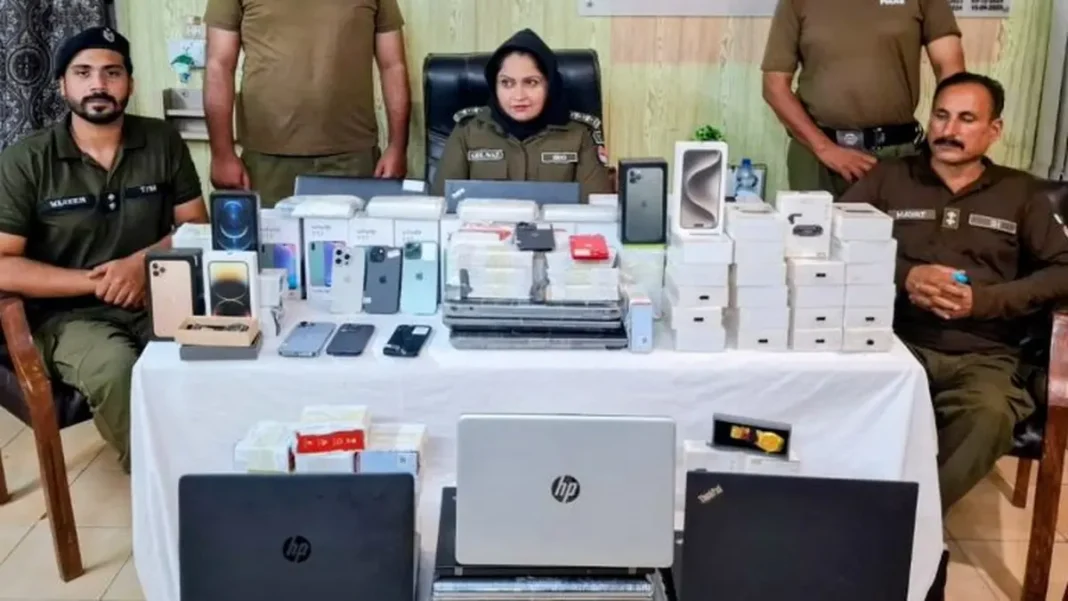
The National Cyber Crime Investigation Agency arrested 281 suspects in cybercrime cases in Lahore, including 21 foreigners, in one of the largest NCCIA cybercrime arrests reported this year.
The agency also seized a large haul of digital devices during the operations, pointing to organised networks behind the scams.
What the NCCIA seized
The NCCIA Lahore recovered 362 mobile phones, 191 computer systems, 74 laptops, 127 other digital devices and 550 SIM cards during the operations.
The scale of the seizure suggests the suspects were running coordinated operations rather than acting alone. Investigators usually send such devices for forensic examination to trace financial transactions, call records and digital communications.
The seized material is expected to help the agency map the networks behind the scams and identify other people linked to them.
Why foreigners appear in NCCIA cybercrime arrests
The presence of 21 foreigners among the arrested suspects fits a pattern seen in earlier operations. In raids earlier this year, the NCCIA detained 114 foreigners in a Lahore operation and 276 foreign nationals in an Islamabad call-centre raid, according to media reports.
Investigators say international groups have been misusing tourist visas to set up shell tech companies in Pakistan. These fronts are then used to run online fraud, digital extortion and impersonation scams.
The agency has been working with the Pakistan Telecommunication Authority to block illegally issued SIMs. The PTA has in the past tightened SIM sales rules to curb misuse of biometric verification.
Cases under the cybercrime law
Cases against the suspects are expected to be registered under the Prevention of Electronic Crimes Act (PECA), 2016, the law under which the NCCIA operates. The law was amended in 2025 to strengthen action against digital offences.
In recent operations, suspects allegedly posed as relatives, visa agents, bank employees and government officials to win victims’ trust, according to media reports. Fake investment offers and fabricated official identities were among the tactics used.
An arrest does not establish guilt. Every accused person is entitled to the presumption of innocence unless proven guilty by a competent court. The figures were first reported in Dawn’s Pakistan coverage.
The agency has also been in the news for an earlier NCCIA inquiry in a separate matter, and Pakistani nationals have faced cross-border fraud cases abroad.
Protecting yourself from online scams
Most cybercrime cases begin with a phone call, a text message or a social media contact. Citizens should never share one-time passwords, bank details or CNIC copies with unknown callers.
Readers can learn how to spot phishing scams, how online banking fraud works in Pakistan, and how crypto investment scams trap victims before transferring money to anyone online.
Frequently asked questions
How many suspects did the NCCIA arrest in Lahore?
The NCCIA Lahore arrested 281 suspects in cybercrime cases, including 21 foreign nationals, in operations reported on Saturday.
What did investigators seize from the suspects?
Officials recovered 362 mobile phones, 191 computer systems, 74 laptops, 127 other digital devices and 550 SIM cards.
What kinds of scams were the suspects running?
In recent operations, suspects allegedly used impersonation, fake investment offers and fabricated official identities to defraud citizens, according to media reports.
What law applies to cybercrime cases in Pakistan?
Cases are registered under the Prevention of Electronic Crimes Act (PECA), 2016, which was amended in 2025. The NCCIA investigates offences under this law.
How can the public stay safe from cyber fraud?
Do not share bank details or one-time passwords with strangers, verify investment offers independently, and report suspicious calls or messages to the NCCIA or the police at once.