


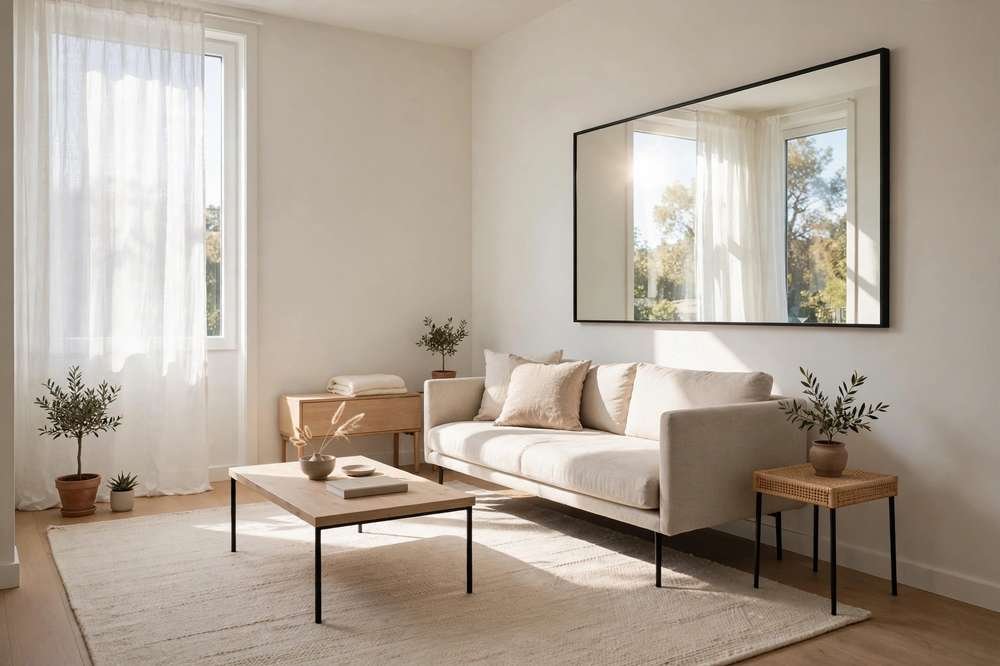
Living in a small room does not mean living cramped. Interior stylists and home stagers — the professionals who prepare homes to look their best — use the same handful of visual tricks again and again, because they genuinely work. These seven expert staging tips can make a small bedroom, drawing room or apartment feel noticeably bigger, without knocking down a single wall. Most of them cost little or nothing, which makes them perfect for rented flats and family homes across Pakistan.
Tip 1: Use Light Colours and One Consistent Palette
Why it works: light colours reflect light instead of absorbing it. Whites, off-whites, light greys, soft beiges and pale pastels bounce daylight around the room, making walls feel further away. Dark colours absorb light and visually pull the walls in.
Consistency matters too. When walls, large furniture and soft furnishings all sit in the same light colour family, the eye flows across the room without stopping. There are no sharp visual boundaries, so the brain reads the whole space as one open area.
- Paint walls a light neutral: off-white, light grey, cream or pale beige.
- Keep sofas, beds and curtains in similar light tones — contrast chops a room up.
- Add colour through small accents (cushions, throws, a plant), not big dark furniture.
Pakistani-home note: many rented apartments already have white or off-white walls — ideal. Match your bedding, sofa covers and curtains to them. Affordable washable sofa covers in cream or light grey can transform a dark old sofa without buying a new one.
Tip 2: Maximise Natural Light and Use Mirrors Strategically
Why it works: a bright room feels bigger than a dim room of the same size. Light tells the brain “there is open space here,” while darkness hides edges and pulls walls in. Stagers treat light as the single most powerful space-maker.
Mirrors double the effect. A mirror reflects light and the room itself, creating the illusion of a second space beyond the wall — which is exactly why stagers use them before every viewing.
- Hang a large mirror directly opposite a window so it throws daylight across the room.
- Use a full-length mirror on a wardrobe door or empty wall — it doubles the visible room.
- Try mirrored or glass-top furniture: they reflect light and take up less visual space than solid wood.
- Keep windows uncovered or use sheer curtains during the day; heavy dark curtains eat light.
Pakistani-home note: many Pakistani flats keep windows covered for privacy, which darkens the room. Use sheer white curtains for daytime privacy instead of thick drapes, and close the heavy curtains only at night. A large wall mirror is one of the cheapest staging upgrades in local markets.
Tip 3: Choose Low-Profile, Multi-Functional Furniture With Visible Legs
Why it works: we judge a room’s size partly by how much floor we can see. A bulky sofa or bed that sits flat on the ground hides the floor underneath, so the brain assumes there is no space there. Furniture raised on legs lets you see floor continuing underneath — and that visible floor reads as free space.
Low-profile furniture works the same way vertically: lower backs and arms leave more visible wall above them, making ceilings feel higher. Multi-functional pieces go further, replacing two bulky items with one — a storage bed instead of a bed plus a dresser, or a drop-leaf table that folds away.
- Pick sofas, beds and chairs with slim legs rather than chunky bases that reach the floor.
- Choose a storage bed or storage ottoman — one piece doing two jobs.
- Use a folding or extendable dining table if dining space is tight.
- Keep furniture backs low: a low sofa back shows more wall and light above it.
Pakistani-home note: the classic heavy carved-wood bedroom set looks grand but eats a small room alive. If replacing it is not an option, remove one piece — the dressing table or the extra side table — and see how much bigger the room feels. One less item often beats any decoration.
Tip 4: Go Vertical — Draw the Eye Up
Why it works: our eyes move up and down when judging a room’s height, and whatever is highest sets our sense of scale. Long vertical lines — floor-to-ceiling curtains, tall narrow bookshelves, vertical stripes — pull the gaze upward. When the eye travels up, the brain concludes the ceiling is high and the room is generous.
- Hang curtains from as close to the ceiling as possible, falling to the floor — the long line stretches the wall visually.
- Use tall, narrow shelving units rather than wide, low cabinets.
- Try vertical stripes (wallpaper, a striped runner, tall panelling) for an instant height illusion.
- Hang artwork slightly above eye level to lift the gaze.
Pakistani-home note: floor-to-ceiling curtains are common in Pakistani homes already — just make sure the rod is mounted near the ceiling, not right above the window. This one change costs nothing if you are already hanging curtains, and it is the fastest height trick there is.
Tip 5: Declutter and Use Hidden, Closed Storage
Why it works: every visible object is information your brain has to process. A room full of small items and covered surfaces creates visual noise — and visual noise makes a space feel busy, chaotic and smaller. Stagers call this the “hotel room test”: hotel rooms feel spacious partly because almost everything is hidden away.
The rule is simple: if you can see it, it counts as clutter. Closed cupboards, boxes, baskets and under-bed storage hide daily-life mess so the eye sees clean surfaces and open space instead.
- Do a one-hour declutter: clear every surface, then put back only what you use daily or truly love.
- Use closed storage — cupboards, lidded boxes, baskets with lids — instead of open shelves of mixed items.
- Give every item a home; the “put it back” habit is what keeps a small room feeling big.
Pakistani-home note: joint-family homes collect things — extra crockery, spare bedding, gifts, gadgets. You do not have to throw anything away; just move rarely used items into closed storage or another room. Under-bed storage boxes are cheap, widely available, and hide an enormous amount of clutter.
Tip 6: Use Scale Tricks — One Big Rug, Fewer Bigger Pieces
Why it works: many small items make a room look busy and broken up — each one is a separate visual event. A few larger pieces simplify the room: the eye sees fewer objects, the space feels calmer, and paradoxically bigger. The same logic applies to rugs: a small rug floating in the middle chops the floor into pieces, while one large rug covering most of the floor unifies it into a single generous surface.
- Use one large rug covering most of the floor (front legs of the sofa and bed on it) instead of several small mats.
- Choose a few substantial furniture pieces over many small ones — one proper sofa beats a sofa plus three stools plus two side chairs.
- Keep accessories minimal: one large vase or artwork instead of ten small trinkets.
- Match the rug to your light palette so it extends the room’s colours rather than breaking them.
Pakistani-home note: many Pakistani drawing rooms have a small rug in the centre surrounded by bare floor and lots of small side tables. Try the reverse: one big rug under the main seating, and remove two or three small tables. The room will look calmer and feel larger immediately.
Tip 7: Keep Sight Lines Open
Why it works: standing in a doorway, your brain measures the room by the longest unbroken line of sight. If a tall cupboard blocks the view to the window, the room ends at the cupboard. If you can see all the way to the far wall and window, the room feels as deep as it really is. Stagers therefore arrange furniture so nothing tall stands between the entrance and the far wall or window.
Glass and open-back furniture help too: you can see through them, so they barely interrupt sight lines. A glass coffee table, an open-back bookshelf or an airy console holds your things without walling off the room.
- Place tall furniture (wardrobes, bookshelves) against side walls, never blocking the doorway-to-window line.
- Keep window views clear — do not park a tall plant or cabinet directly in front of a window.
- Choose glass-top tables, open-back shelves and airy frames where possible.
- Keep walls mostly clear: one or two pieces of art beat a crowded gallery wall in a small room.
Pakistani-home note: in small flats, the bed or a big almari often ends up right inside the bedroom door, blocking the view. Shift it to a side wall — even by a foot — and the room will feel deeper the moment you walk in. It is free, and it is one of the biggest single changes you can make.
What Not to Do: 3 Mistakes That Shrink a Room
These are the three mistakes stagers see most often:
- Dark, heavy furniture: a massive dark-wood bed set or bulky black sofa absorbs light and dominates a small room. If you cannot replace it, lighten everything around it and remove one piece.
- Too many small items: ten cushions, six photo frames, four small tables and a pile of trinkets create visual chaos. Fewer, larger items always win in small spaces.
- Blocking windows and doorways: furniture pushed against windows steals light and depth. Keep glass areas clear and sight lines open from the entrance.
Quick Room-by-Room Recap
- Bedroom: light bedding, storage bed with legs, one large rug, mirror opposite the window, wardrobe on a side wall, curtains at ceiling height.
- Drawing room / lounge: light sofa covers, legged or glass coffee table, one big rug under seating, decluttered surfaces, a large mirror to double the space.
- Small flat overall: one consistent light palette, sheer daytime curtains, closed storage, vertical lines, and clear sight lines from every doorway.
Frequently Asked Questions
What is the cheapest way to make a small room feel bigger?
Declutter and rearrange — both are free. Remove excess items, shift tall furniture to side walls so sight lines stay open, and hang existing curtains near the ceiling. A large mirror is the best low-cost purchase after that.
Do dark colours ever work in small rooms?
Occasionally — one dark accent wall can add depth if the other three walls are light and the room gets good daylight. But as a general rule, light colours are safer and more reliable.
Can I use these tips in a rented apartment?
Yes — almost all seven tips are renter-friendly. Curtain rods, mirrors, rugs, sofa covers, storage boxes and furniture arrangement need no landlord permission. Only repainting needs approval, and light-coloured walls are usually already in place.
How many furniture pieces should a small room have?
There is no fixed number, but the staging rule is: every piece should earn its place. If an item is rarely used, blocks light or duplicates another piece’s job, remove it. Five to seven well-chosen pieces beat twelve crowded ones.
Do mirrors really make a room look bigger, or is it a myth?
They really work. A mirror opposite a window reflects both light and the room itself, creating a convincing illusion of extra space. It is one of the oldest tricks in home staging, used by professionals before every property viewing.
The Bottom Line
Making a small room feel bigger is not about spending money — it is about seeing the room the way a stager does. Light colours and one palette, daylight plus mirrors, legged low-profile furniture, vertical lines, hidden storage, smart scale, and open sight lines: seven expert tips that work in any small room, from a rented flat to a family home. Start with the free ones — decluttering and rearranging — and you will feel the difference today.