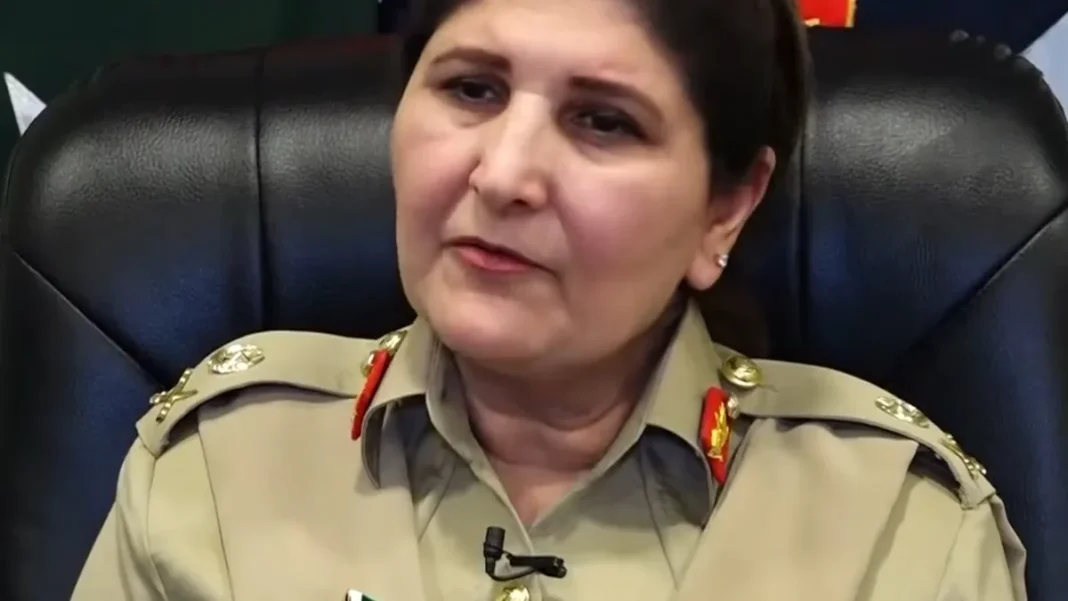
PESHAWAR: A social media post claiming retired Lieutenant General Nigar Johar Khan announced an investigation into Khyber Pakhtunkhwa’s Sehat Card programme is fake. The provincial government rejected the Nigar Johar Sehat Card probe claim on Tuesday.
Special Assistant to the Chief Minister for Information Samar Haroon Bilour said the post, attributed to the retired army officer, was fabricated. She called it malicious propaganda spread against a person of great integrity and said such tricks had passed their expiry date.
The fake post claimed Nigar Johar had named a probe into the Sehat Card programme as a top priority. Bilour said the retired general endorsed no such statement. The Sehat Card is the KP government’s flagship health insurance scheme; the programme recently marked a milestone with the first Sehat Card kidney transplant at Khyber Teaching Hospital.
Bilour also dismissed a second fake item circulating online: a notification claiming the termination of Professor Dr Nosherwan Barki. She said both items were misleading and designed to spread confusion about the provincial health initiative.
The information adviser said certain elements were spreading misleading information about the provincial health programme. She added that the KP government would not engage in political victimisation and would continue public-interest projects with transparency.
She said the government would keep projects serving the public interest running and hold anyone found guilty of negligence or irregularities accountable without discrimination.
Who is Nigar Johar?
Nigar Johar is the first woman in Pakistan Army history to reach the rank of lieutenant general. She served as the army’s surgeon general before her retirement and is widely known for her leadership in military healthcare.
False claims made in her name carry weight precisely because of her public standing. That is what makes this fabricated post damaging, and why the provincial government’s denial matters.
Why the fake Nigar Johar Sehat Card probe claim spread
The Nigar Johar Sehat Card probe claim did not appear in a vacuum. Health programmes that touch millions of families attract rumours, and the Sehat Card is the KP government’s flagship health insurance scheme. It provides free medical treatment to registered families at empanelled hospitals across the province.
The programme has also faced genuine questions in the past over unpaid hospital dues and empanelment issues. Fabricated claims land more easily when they echo real anxieties. That is exactly why verification matters: a real problem can be reported and debated, but an invented one only poisons the conversation.
The timing also counts. The claim surfaced amid a political standoff in the province between the KP governor and the chief minister, when information space is crowded and unverified claims travel fast. Readers should treat unsourced screenshots naming public figures with caution, especially when they announce dramatic actions with no official statement attached.
How to spot the fake
The genuine announcement would have come through an official channel: a government press release, a verified social media account, or an on-record statement. In this case, none existed. The KP information adviser’s own on-record denial is the official position.
When a post claims a retired public figure announced something dramatic, the first check is simple. Search for the same announcement in established news outlets. If only screenshots and forwarded messages carry it, that is a warning sign.
Frequently asked questions
Is Nigar Johar investigating the Sehat Card programme?
No. The claim is fake. The KP government confirmed that the retired lieutenant general made no such announcement and that the social media post attributed to her was fabricated.
Was Professor Dr Nosherwan Barki terminated?
No. The notification claiming his termination is also fake, according to KP information adviser Samar Haroon Bilour.
What did the KP government say about political victimisation?
Bilour said the government would not engage in political victimisation and would continue public-interest projects with transparency and accountability without discrimination.