Nvidia Taiwan Smuggling Case: Firm Disputes Charges
Nvidia has told Taiwanese political officials that it opposed criminal charges against one of its managers in the Nvidia Taiwan smuggling case, Bloomberg reported, citing people familiar with the matter. The case involves 74 AI servers allegedly smuggled to China, and the officials told Nvidia they had no role in the proceedings.
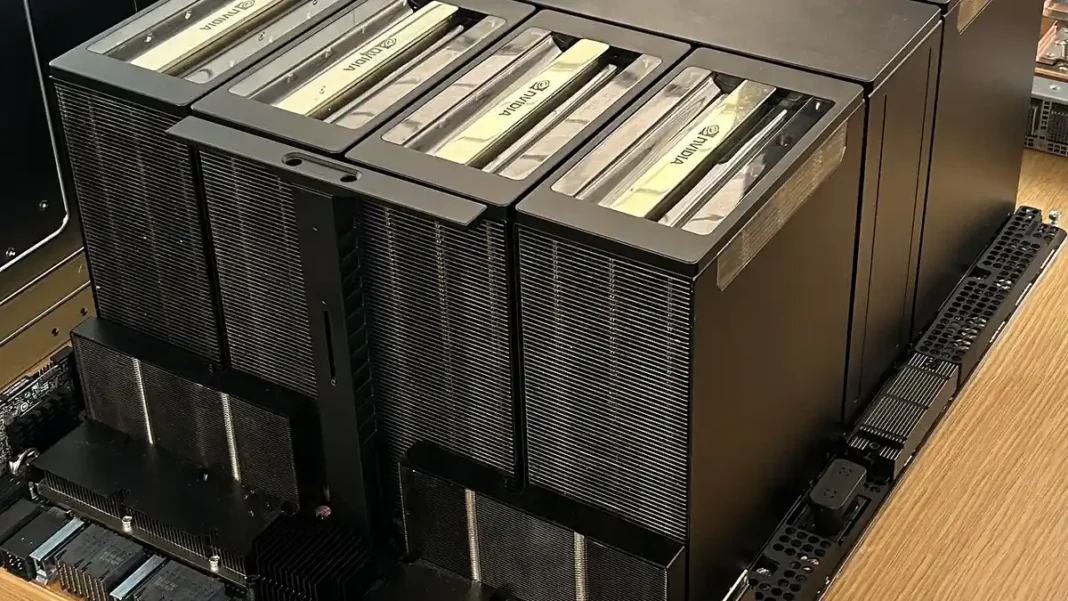
The case centres on a manager identified by his surname, Chang. Taiwanese authorities detained him in July, and prosecutors in Keelung indicted him in August on charges of forgery and breach of trust. They allege he played a central role in a network that shipped 74 Supermicro servers fitted with Nvidia B300 chips to China. Taiwan’s Coast Guard seized another 56 servers in May.
Prosecutors say Chang helped secure Nvidia’s approval for a 130-server order even though the intended Taiwanese data centre lacked enough power and bandwidth to handle it. They also allege he concealed the fact that payment came from a Chinese entity. The case is now before a district court, and Chang faces up to five years in prison if convicted. Bloomberg could not reach him for comment.
The B300 is one of Nvidia’s most advanced AI chips. The United States restricts sales of such hardware to China, which makes any diversion of the chips through third countries a serious matter for both Washington and Taipei.
Nvidia Taiwan smuggling case: what the company says
Nvidia told Bloomberg that its internal review found no indication Chang knew employees at other companies were allegedly diverting the servers. The company said it contacted officials to provide information the Taiwanese authorities had requested and to look after its employee.
Chen Po-wen, a spokesperson for Keelung prosecutors, said his office was unaware of Nvidia’s contacts with the government. Bloomberg could not establish which request for information Nvidia meant. The chipmaker also sought advice from its main manufacturer, TSMC, which declined to get involved.
Nvidia had only recently advertised for a government relations director in Taiwan, a sign that the company is building up its official presence on the island at a time when chip controls have become a front line in the United States-China rivalry.
A separate US investigation
Bloomberg also reported that Nvidia general counsel Tim Teter contacted a United States Commerce Department official during a separate investigation into whether Singapore-based Megaspeed diverted advanced chips to China. Commerce later paused its investigation and handed the matter to the Justice Department. Megaspeed denies wrongdoing.
Megaspeed founder Alice Huang is a former executive whom US officials suspected of spying for China, an allegation Beijing denies. Nvidia co-founder Jensen Huang resigned as chief executive on November 12 after acknowledging in a letter to staff that he had been unfaithful to his wife. He did not name Alice Huang in the letter. The two are unrelated.
The Taiwan case and the US probe are separate, but they point to the same pressure: advanced AI chips have become strategic goods, and governments are watching every route by which they might reach China.
Why the case matters for the chip trade
The case shows how export controls are enforced in practice. The rules are set in Washington, but the hardware moves through Taiwan, Singapore and other hubs, and the checks fall on local prosecutors, customs officers and coast guards.
Feature Pakistan reported that the US Congress is pushing tighter AI chip export controls affecting Nvidia, the framework inside which this case sits. Feature Pakistan reported on Jensen Huang’s resignation, which has already shaken the company at the top. The Taiwan prosecution adds a legal risk on top of the policy risk.
For Pakistan, the stakes are indirect but real. Feature Pakistan reported on Alibaba’s latest AI model, a reminder that China is building its own AI industry while access to foreign chips tightens. Feature Pakistan reported on the US-China rivalry at the ASEAN summit, where technology controls were part of the contest. If advanced chips grow scarcer and dearer, AI projects in countries such as Pakistan will feel the squeeze.
What happens next
The case will proceed in the district court in Keelung, where prosecutors must prove Chang knowingly helped divert the servers. Nvidia is expected to keep pressing its case with Taiwanese officials while insisting its own review cleared its employee of knowledge. The separate US investigation into Megaspeed is now with the Justice Department, which will decide whether to bring charges.
Frequently asked questions
What is the Nvidia Taiwan smuggling case about?
Taiwanese prosecutors allege a network shipped 74 Supermicro servers fitted with Nvidia B300 AI chips to China, with an Nvidia manager playing a central role.
Who is the manager charged?
The manager has been identified only by his surname, Chang. He was detained in July and indicted in August on forgery and breach of trust charges.
What does Nvidia say?
Nvidia says its internal review found no indication Chang knew other companies’ employees were allegedly diverting the servers, and it has disputed the charges with Taiwanese officials.
What are B300 chips?
The B300 is one of Nvidia’s most advanced AI chips, used to train and run large AI models. The United States restricts sales of such hardware to China.
What happens next?
The case will proceed in a district court in Keelung. Chang faces up to five years in prison if convicted.