In short: Hibah grew up believing Pakistan was simply the best country in the world. At 18, after seeing poverty, caste prejudice and injustice up close, she asks harder questions, and concludes that patriotism is not one day of flags and songs but the everyday work of building the country. She still says it: I love Pakistan.
The Pakistan I saw when I was 8 years old was completely different from the Pakistan I know now, when I am 18.
The Pakistan of My Childhood
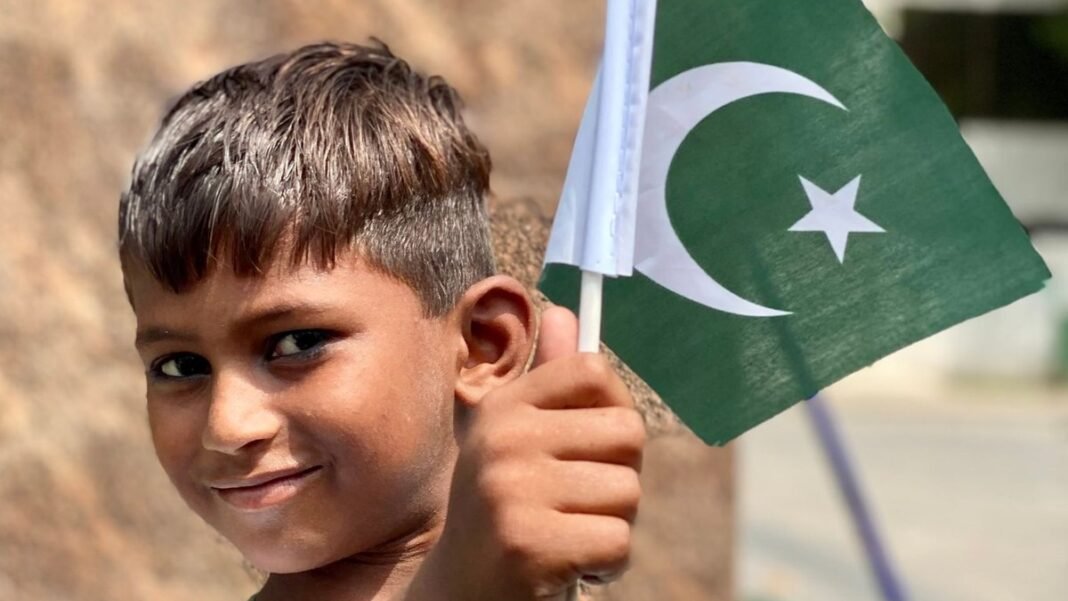
When I was a child, Pakistan was not a country of statistics, poverty, politics, or differences in communities. It was simple. It was green and white. I remember 14 August like it was yesterday. Waking up early, my mother made me wear the green-and-white shalwar kameez she had saved for this day, and little me holding a small flag whose plastic stick was digging into my palm.
The school was decorated with balloons, everyone singing the national anthem and songs with full might, and the feeling was heavy, as if we wanted to cry, not really knowing why. I could hear speeches but couldn’t really understand what comes after independence. A responsibility?
For a child, that was everything. Pakistan meant celebration. It meant pride. It meant, just for a day, we all were the same. No rich or poor, no this or that religion or caste. Just Pakistanis.
And I believed that Pakistan was the best country, not because I had studied it; I was just a kid. But I heard stories of Quaid-e-Azam, the sacrifices of Muslims, and the struggle of achieving this land. At that time, I didn’t know what sacrifices really meant. I thought I should be grateful for it, and so I was. I never asked questions, because all I could hear was PAKISTAN IS A GREAT COUNTRY from my grandparents, my teachers, and even television, and so I believed it.
The First Cracks in the Picture
As I grew older, I began to witness small cracks in the picture of Pakistan which I had painted in my head. I remember the first time I really noticed; I was maybe thirteen.
We were standing at the traffic signal with my father when a child came across our window. He was barely eight years old, barefoot and wearing torn clothes. He was asking for money. My father gave him a few coins and rolled up the window again. When I looked back at him, he had already moved to the next car. He might have done it a thousand times and would probably do it a thousand times again.
I asked my father, “Why isn’t he at school, baba?” My father stopped for a minute and then uttered, “Beta, some people don’t have any choice.” And it left me speechless.
The next morning, I saw a transferred, introverted student. When our teacher saw him, the first question he asked him was about what caste he belonged to. And after a few days, I felt he was treating that newcomer with a different attitude, unlike how he treats other students. Is caste difference a real thing?
I asked my grandfather: Why do some children of my age stand at traffic lights while others sit in classrooms? Why do people differentiate based on caste, religion, or color? Aren’t we a nation that has to remain united? And he told me Pakistan came into existence so Muslims and other minorities could live freely without any discrimination.
So why do people ask about caste before a name, or ask about family background before marriages? Why do they treat each other differently based on religion, gender, or the place where they are born?
My father was scrolling on his phone when I was getting ready for bed, and suddenly a news story popped up on his phone. It said: “A 5-year-old girl was harassed”. At that moment, I couldn’t sleep all night, thinking age is just a number to everyone in this cruel world. What did that child do to deserve this? I began to ask myself, “Are we really free?”
Slowly, the Pakistan I had imagined as a child began to look different.
The Flag on My Wall
I remember sitting in my room one night, staring at the picture of the flag on my wall. The same flag I used to adore when I was a child, but this time I felt different. My heart was aching, my mind was full of questions, and I felt betrayed. I asked myself, “Was the Pakistan I once believed in turning out to be a lie?”
As a child, I once saw unity on 14th August; now I see divisions throughout the year. I heard talks about equality, but all I could see was inequality. I had celebrated freedom, but I wonder whether people experience freedom the same way as I do. The child in me wanted to defend Pakistan, but I couldn’t ignore what I was really seeing. How could both be real? Pakistan being beautiful and fearful at the same time?
Then one day I realized something. Maybe I hadn’t been wrong as a child. I just looked at Pakistan through my trustful, innocent eyes, seeing what I was shown, believing what I was told.
What Patriotism Really Means
The brotherhood, unity, equality and justice aren’t childish fantasies. These are the values Pakistan was supposed to build on. But we never finished building it. Independence was a beginning; shaping the country is the real work. And it’s our generation’s responsibility to decide what kind of country we want to leave behind. It clearly shows the real problem is us.
I used to call myself a “patriotic person”. Until today, I realized patriotism does not mean celebrating 14 August, holding flags, singing songs and shouting “Pakistan Zindabad” with full power. It means building our country, not out of fear of others, but out of faith in each other, and understanding that a nation is not built by the leaders; it is also shaped by ordinary people through their everyday choices.
By choosing every morning not to stay silent when things are wrong. Treating people with dignity regardless of their background, religion, caste and color. Choosing honesty when corruption is easier, and taking responsibility instead of blaming and neglecting it.
Patriotism isn’t blind pride in what Pakistan is. It’s a fierce love for what Pakistan can still become. And despite everything, I still love Pakistan, maybe differently. I love how people sacrificed their lives for Pakistan when they had a choice to live their own lives, but still they thought about a future that they couldn’t even predict.
They left their homes just to cross borders, not knowing what the future held for them. They fought for generations after them. That’s what Pakistan has given us. But ask yourself, “What have we given to Pakistan?”
The Pakistan I Want to See
I love how people support each other when disaster hits. They don’t ask about caste or religion; they simply help, assisting by donating clothes, food, or money. For a moment, we all become one: a nation, Quaid’s vision.
I don’t want a Pakistan where patriotism only exists for one day; I want this unity every day. I want a Pakistan where a person’s character matters more than the caste, where religion is not used as a weapon, where people are found taking responsibility for their own actions and not just blaming the government or the system. A Pakistan where no child gets disappointed by their innocent hopes as they grow up, where talent is valued more than pockets or seats.
A Pakistan where no man goes home empty handed, where no mom has to lie to her kids about money, where no child sees their parents breaking, where no patient dies because of poverty, where no student is driven to take their own life over unfair examinations, where no dream is broken, and where every one of us can proudly say: Saya-e-Khuda-e-Zuljalal.
Related reading on Feature Pakistan: Why Are Women Still Denied Freedom? by Amna Pirzada and Degree: A Ticket to the Unemployment Queue? by Aniqa Tarique.
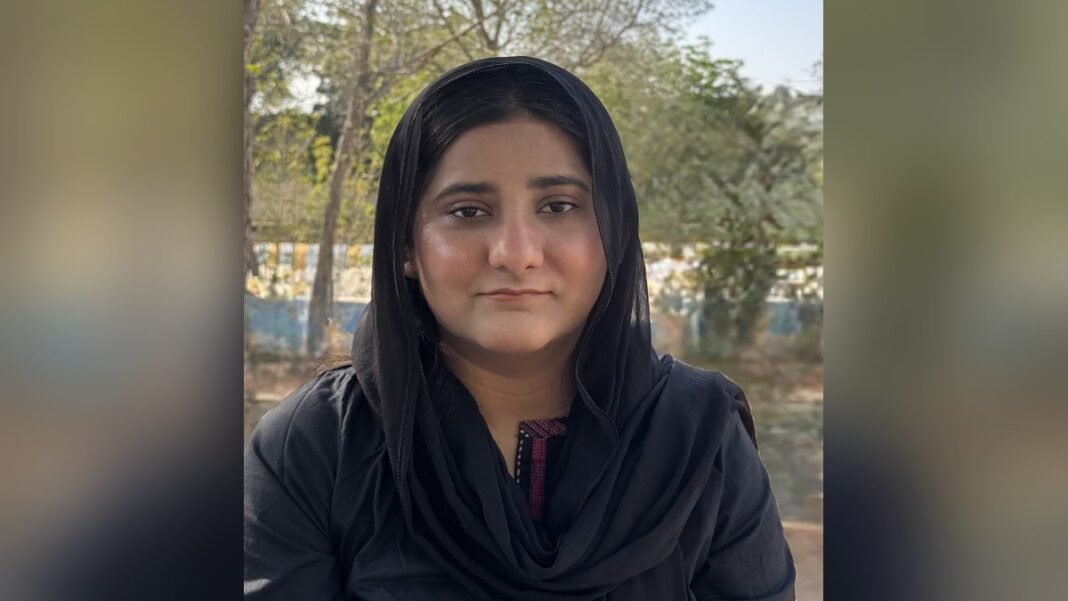
About the author: Hibah, an English student, is drawn to the power of words and the stories that shape how we see the world. Inspired by everyday moments, unspoken feelings, and different perspectives, she hopes to explore meaningful ideas through writing.
Disclaimer: The views and opinions expressed in this article are those of the author and do not necessarily reflect the official policy or position of Feature Pakistan.