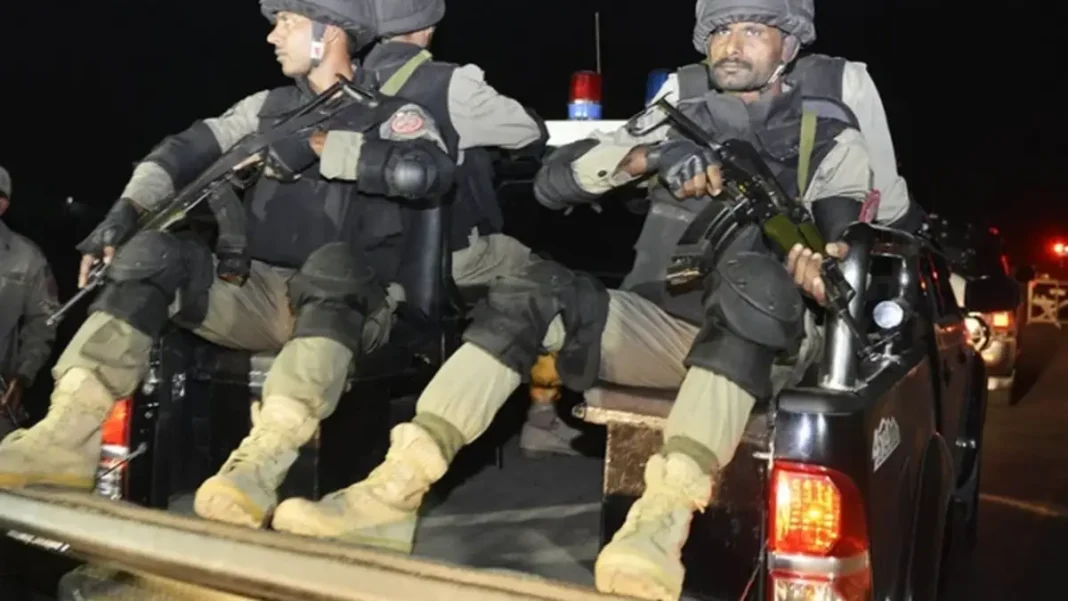
Three TTP-linked suspects die in Swat CTD raid; two escape
A joint Swat CTD operation with district police in the Kanju area of Swat ended with three wanted suspects linked to the Tehreek-e-Taliban Pakistan dead on Thursday. Two of their companions slipped away during the encounter and remain at large, with a search under way to track them down.
The operation targeted a group connected to TTP commander Muzaffar alias Khalid, which intelligence reports said was hiding in the mountainous stretches of Segram and Lalo Banda under Kanju police station’s limits and preparing acts of sabotage.
Swat CTD operation: what happened at Sakhadoob
The Swat region’s Counter-Terrorism Department received confirmed intelligence that several militants tied to Muzaffar alias Khalid’s group were present in the area. A prepared team moved in and reached Sakhadoob, still within Kanju police station limits.
The suspects opened fire the moment they spotted the security personnel. A gunfight followed, and the militants took cover inside a nearby house, firing indiscriminately at the raiding party.
Once the firing stopped, police and CTD personnel searched the house. They found the bodies of three suspects. The two remaining men had already escaped before the search began. Security officials said efforts to find them were under way.
Weapons, documents and a police-station map recovered
The raiding team recovered three AK-47 rifles, six magazines and a large quantity of ammunition from the dead suspects. A gas cylinder used for cooking and several utensils were also found at the hideout.
During the body search, police found the national identity cards of all three suspects, a map of the Shakardara police station and a diary. The map points to possible surveillance of the police station before the raid.
Who the three suspects were
Police identified the dead men as Abdullah, son of Syed Bashir, and Mansoor Ali, son of Abdul Muttalib, both residents of Neela Gram in the Matta area of Swat. The third man was Ghufranullah, son of Afzal Khan, a resident of Shidala in Shakardara, Swat.
Preliminary police information links the three to a string of attacks this year. These include a firing attack on Afzal Khan Gujjar, firing on the house of Nemat Ali Khan and the targeted killing of Saleemullah alias Sajid of Neela Gram. Police said several other attacks were also being connected to the group.
Why this operation matters
The raid comes at a tense moment for Khyber Pakhtunkhwa, where the National Assembly recently endorsed a federal emergency over rising terrorism. Our coverage has tracked the pattern: security forces killed three militants in an intelligence-based operation in Mir Ali earlier this month, while elders in Bannu negotiated the release of 13 hostages from militants. A jirga in South Waziristan has demanded an end to quadcopter strikes and curfews.
Swat itself carries heavy weight in Pakistan’s fight against militancy. The valley was once the centre of a Taliban insurgency that the army crushed in 2009. Fresh TTP cells surfacing in its mountains, with police-station maps and organised hideouts, show why the CTD treats even small cells as a serious threat.
For now, police in Kanju remain on alert while the hunt for the two escapees continues.
FAQs
How many suspects died in the Swat CTD operation?
Three TTP-linked suspects died in the joint CTD and district police operation at Sakhadoob in the Kanju area of Swat. Two of their companions escaped and are being searched for.
What weapons were recovered from the hideout?
Security forces recovered three AK-47 rifles, six magazines and a large quantity of ammunition. They also found identity cards, a map of Shakardara police station and a diary.
Which TTP commander were the suspects linked to?
Police said the suspects belonged to the group of TTP commander Muzaffar alias Khalid and were hiding in the Segram and Lalo Banda areas, planning acts of sabotage.
When did the operation take place?
The intelligence-based operation took place on Thursday, Oct 15, 2026, in the Kanju area of Swat, Khyber Pakhtunkhwa.